In Progress
Jessica Hische
18m17 ch
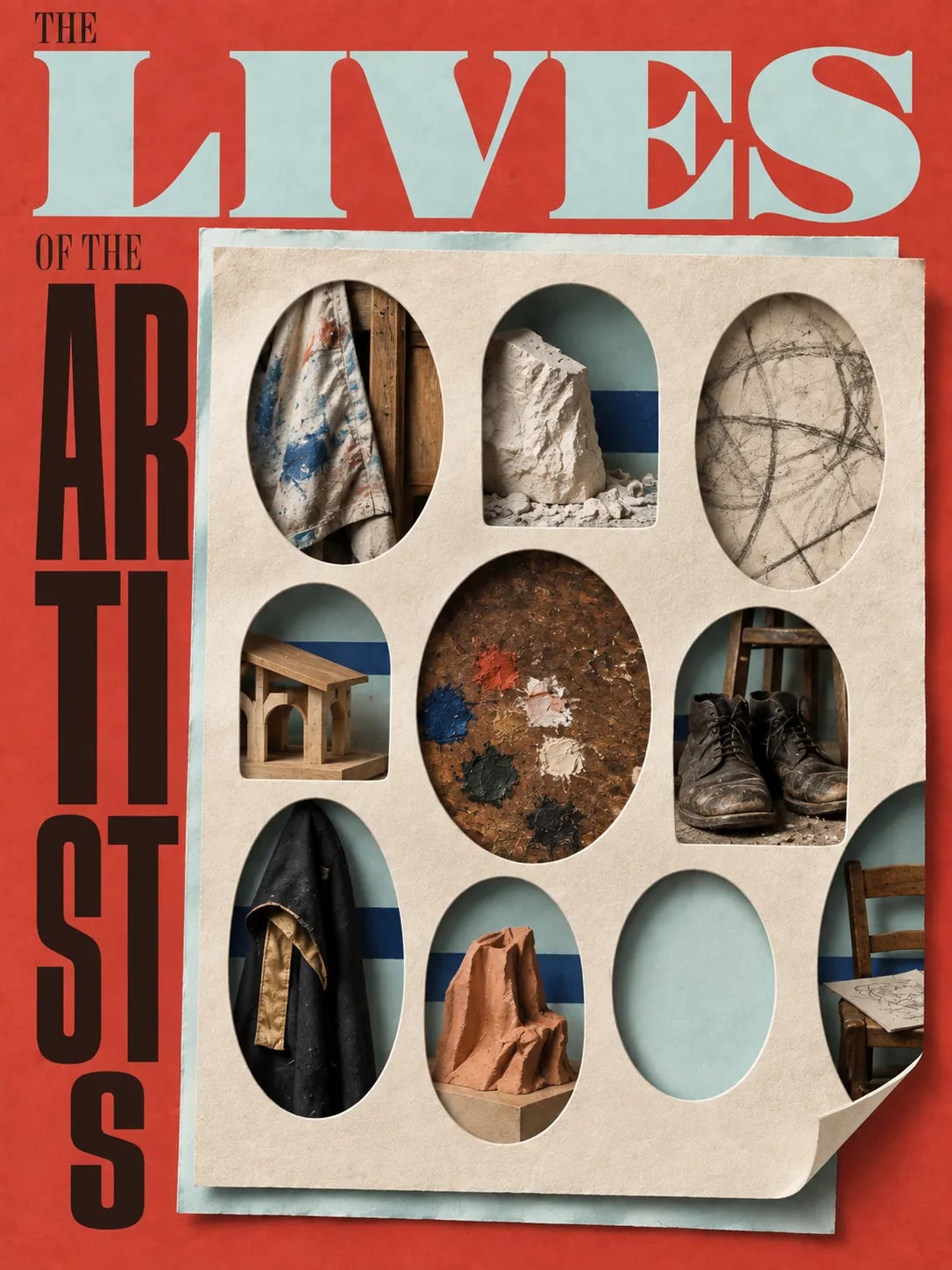
Giorgio Vasari's "The Lives of the Artists" is a foundational work that meticulously chronicles the evolution of Italian Renaissance art from its perceived decline to its ultimate perfection. He organizes this history into three distinct periods, highlighting key figures and their innovations in painting, sculpture, and architecture. Beyond mere biographical facts, Vasari delves into artists' methods, technical advancements like perspective and oil painting, and their personal temperaments. Through vivid anecdotes and critical judgments, the book offers a deep understanding of the creative process and the social context of art. It culminates in the "superlative perfection" of masters like Leonardo, Raphael, and Michelangelo, cementing their legendary status. This comprehensive narrative elevates the study of artists, demonstrating that their achievements are as worthy of historical record as the deeds of princes.
Press play to hear the insight read aloud. Each word highlights in sync with the narration.
Intro
The world regained its beauty and genius through artists of extraordinary spirit and unwavering dedication, and their lives form the path of this magnificent journey. Their stories unfold as a testament to human creativity, revealing how through immense effort and God -given talent, these masters transformed crude beginnings into a pinnacle of artistic perfection. This is a chronicle of profound dedication, inspiring rivals, and the relentless pursuit of an ideal that reshaped the very fabric of human expression, leaving an indelible mark on the soul of Italy and the world.
1. The Awakening of Art: Cimabue and Giotto
The Awakening of Art, Simabue and Giato For many years, the arts had lain dormant. Their good methods lost amidst the ruins of war. But in Florence, a new light began to dawn with Chimabue, born around 1240. Even as a child, his mind was sharp and drawn to drawing, filling his books with figures of men and horses instead of grammar. Observing Greek painters in Florence, Chimabue quickly surpassed his teachers, refining their awkward, modern style into something more alive and natural. His works, such as the Madonna for Santa Trinita, were praised for their beautiful style and greater powers of invention, marking a significant step towards a rebirth of art. So celebrated was his work that a painting of the Madonna was carried in a joyful procession from his home to the church, leading the district to be called Borgo Allegri. Yet, Chimabue's fame, immense for his time, was soon challenged by his own disciple, Giato, born around 1267. Giato, a humble tiller son from the Florentine countryside, possessed an extraordinary quickness of intellect. It is said that Giato's solitary efforts brought drawing, a skill almost forgotten, fully back to life, achieving a naturalness and emotion previously unseen. His works spread across Italy, from Florence to Rome, Naples and Avignon. Giato's genius shone in countless frescoes and panels, expressing deep emotion, such as the Virgin Mary's fright at Gabriel's greeting in the body of Florence, or the profound sorrow of friars at the death of St. Francis in Santa Crochet. He depicted diverse human emotions with remarkable grace, from the patience of a fisherman to the disgust of a servant tending to Job. His work demonstrated a profound understanding of perspective and foreshortening even in his earliest figures. His self -portrait can be seen among the well -preserved scenes in the upper church of San Francesco in Assisi. So confident was he in his skill that, when asked for a sketch for Pope Benedict IX, he famously drew a perfect circle freehand, a testament to his unmatched precision. He was buried in Santa Maria del Fiori, a revered figure who had nearly brought the art of painting back to life.
Continue reading with the cont. app
The full chapter-by-chapter breakdown is waiting for you in the app.
Continue readingI. VASARI'S VISION & THE EVOLUTION OF ART
Beyond Biography: Giorgio Vasari's aim was not merely to list artists or their works. Instead, he sought to investigate the methods, manners, and means artists employed, exploring their errors and successes to instruct on prudent living and provide pleasure. He believed his task elevated the study of artists to the highest level, comparable to classical historians.
Birth of Art History: Vasari is credited with virtually inventing the discipline of art history. Lacking prior systematic reference works, he relied on his "historian's mind" and acute visual memory to distinguish artists by quality and style.
The Three-Stage Theory:
First Period (Rebirth): Marked by artists like Cimabue and Giotto, who initiated the revival of art after its decline, laying foundations for subsequent perfection. While imperfect, their works were seen as miraculous given the times.
Second Period (Increased Skill): Figures such as Ghiberti, Brunelleschi, Donatello, and Masaccio brought more sophisticated techniques, rules of painting, sculpture, and architecture. They refined what the first period began.
Third Period (Superlative Perfection): Culminated in the genius of Leonardo, Raphael, and Michelangelo, achieving a perfection that surpassed even the ancient world. This period represents the "flower of art".
The Power of the Written Word: Vasari emphasizes that written accounts endure longer and are more influential than physical works. This is notably highlighted in Simone Martini's life, where Petrarch's sonnets gave him greater lasting fame than his paintings.
II. CORE ARTISTIC CONCEPTS & PRACTICES
The Primacy of Design (Disegno): Central to all arts, design was considered the "father and mother of all the arts". It encompassed the artist's ability to conceptualize an idea philosophically before execution, planning compositions and envisioning objects. Lack of strong design was seen as a flaw, even in gifted colorists like Titian, who lacked "a sound knowledge of human anatomy".
Imitation of Nature: Artists strived to reproduce and imitate the "best and most beautiful parts" of Nature. This drive led to lifelike figures, emotional expression, and physical realism. Masaccio is particularly praised for purging painting of harshness by directly following Nature, making his works seem "lifelike, true, and natural".
Perspective & Foreshortening: A crucial development, especially in the second stage of Renaissance art. Paolo Uccello obsessively pursued perspective, perfecting the depiction of buildings and figures receding in space. Filippo Brunelleschi ingeniously discovered and applied rules for correct perspective, drawing cityscapes that "kindled the spirits of other artisans".
Technical Innovation & Materials: Artists constantly sought new techniques. Luca della Robbia pioneered glazed terracotta, an innovative and profitable method not known to the ancients. The introduction of oil painting by Antonello da Messina from Flanders revolutionized panel painting, offering greater softness, vitality, and blending ease.
Artistic Temperament & Process:
Inspiration vs. Diligence: Some artists, like Leonardo, achieved more by deep thought and "searching for inventions in their minds" rather than continuous physical labor. Others, like Andrea del Verrocchio, excelled through "endless study" even without a strong natural gift. Vasari noted that "rough sketches, which are created in an instant of artistic frenzy, express the idea behind them in a few strokes" more effectively than over-finished works.
Evolution of Style: Artists like Titian evolved from a "finely executed" early style to one with "large and bold brush-strokes" that looked better from a distance.
Rivalry & Collaboration: Competition between artists, such as the Baptistery doors contest involving Ghiberti, Brunelleschi, and Jacopo della Quercia, spurred them to "surpass the others". Collaborations, like Ghiberti's with many young masters, also fostered growth. However, rivalry could also lead to resentment and attempts to undermine (e.g., Bramante/Raphael against Michelangelo).
III. INSIGHTS FROM ARTIST LIVES
Cimabue (The Dawn): Beyond his innovations in style and naturalism, Cimabue's haughty and proud nature led him to destroy works if he found defects. He was Giotto's master, and Dante highlights how Giotto's fame eclipsed his own.
Giotto (The Reviver): Praised as a "disciple of Nature" for bringing drawing back to life. His famous "O" (a perfect circle drawn freehand) symbolized his effortless mastery. He was a polymath, excelling as a painter, sculptor, and architect (Campanile of Florence). His wit and clever remarks were legendary.
Filippo Brunelleschi (The Architect-Engineer): His genius in architecture, especially the Florence Cathedral dome, overcame immense skepticism and reliance on traditional wooden frameworks. He rigorously studied ancient Roman structures. His patience and ingenious problem-solving were matched by his unyielding determination against detractors. He also pioneered elaborate stage machinery for religious plays.
Donatello (The Master Sculptor): Revolutionized bas-relief and demonstrated a profound understanding of human anatomy (e.g., his Mary Magdalene). He was uniquely driven by criticism, believing it would lead him to "greater glory". His "peasant" Christ anecdote with Brunelleschi showcases his humility in the face of superior artistic vision.
Masaccio (The Naturalist Painter): He moved painting towards naturalism and true relief, insisting that figures stand firmly on the ground or be correctly foreshortened. His "absent-minded" and unworldly nature earned him the nickname "Masaccio".
Leon Battista Alberti (The Theorist): Valued for his intellectual contributions and writings on art more than his practical works. He believed "theory and practice meet and join together" to perfect art.
Antonello da Messina (The Oil Innovator): His crucial role was introducing the superior oil painting technique from Flanders to Italy. He even generously shared this "secret" with Domenico Veneziano, valuing kindness over exclusive knowledge.
Fra Filippo Lippi (The Unconventional Genius): His "lustful" and rebellious nature often distracted him from work, yet Cosimo de' Medici famously declared that "rare geniuses are celestial forms and not beasts of burden". He was instrumental in introducing larger-scale figures and moving away from "old-fashioned" styles.
Piero della Francesca (The Geometrician): Excelled in the mathematical aspects of art, particularly geometry and perspective. His depiction of "Night" with figures illuminated by a divine light revolutionized how darkness was rendered, influencing modern painters.
Leonardo da Vinci (The Divine Polymath): Embodied universal genius, excelling in art, engineering, and anatomy. His insatiable curiosity and relentless pursuit of perfection often meant his works remained unfinished, as he constantly sought "excellence to excellence". The Mona Lisa exemplifies his ability to capture lifelike detail, including the "pulse beating" in the throat.
Michelangelo Buonarroti (The Pinnacle of Design): Considered a "man sent by God" to demonstrate perfection in all three arts. His powerful works, like David (carved from a spoiled marble block) and the Sistine Chapel ceiling, redefined artistic limits. He fiercely defended his artistic vision against rivals and patrons, even leaving Rome in protest. His longevity and dedication meant he "never ceased working on something" even at 90. His Last Judgment made "the dead seem dead, and the living seemed alive".
Titian (The Master Colorist): Celebrated for his unparalleled mastery of color, making figures seem "almost alive and very natural". Unlike the Florentines, he often worked directly on canvas without extensive preliminary drawings, believing his method was the "truest and best". His later style, with broad strokes, was designed to be viewed from a distance.
The Intersection of Art and Life: The book frequently interweaves artists' personal quirks, rivalries, and life circumstances with their artistic achievements, showing how these elements shaped their work and legacy (e.g., Andrea del Castagno's alleged murder, Sandro Botticelli's Savonarola influence, Donatello's generosity to his peasant).
More like this
Editorial insight by cont. Not affiliated with, endorsed by, or sponsored by the author or publisher. Buy or borrow the full book at Amazon.