The Lives of the Artists
Giorgio Vasari
17m20 ch
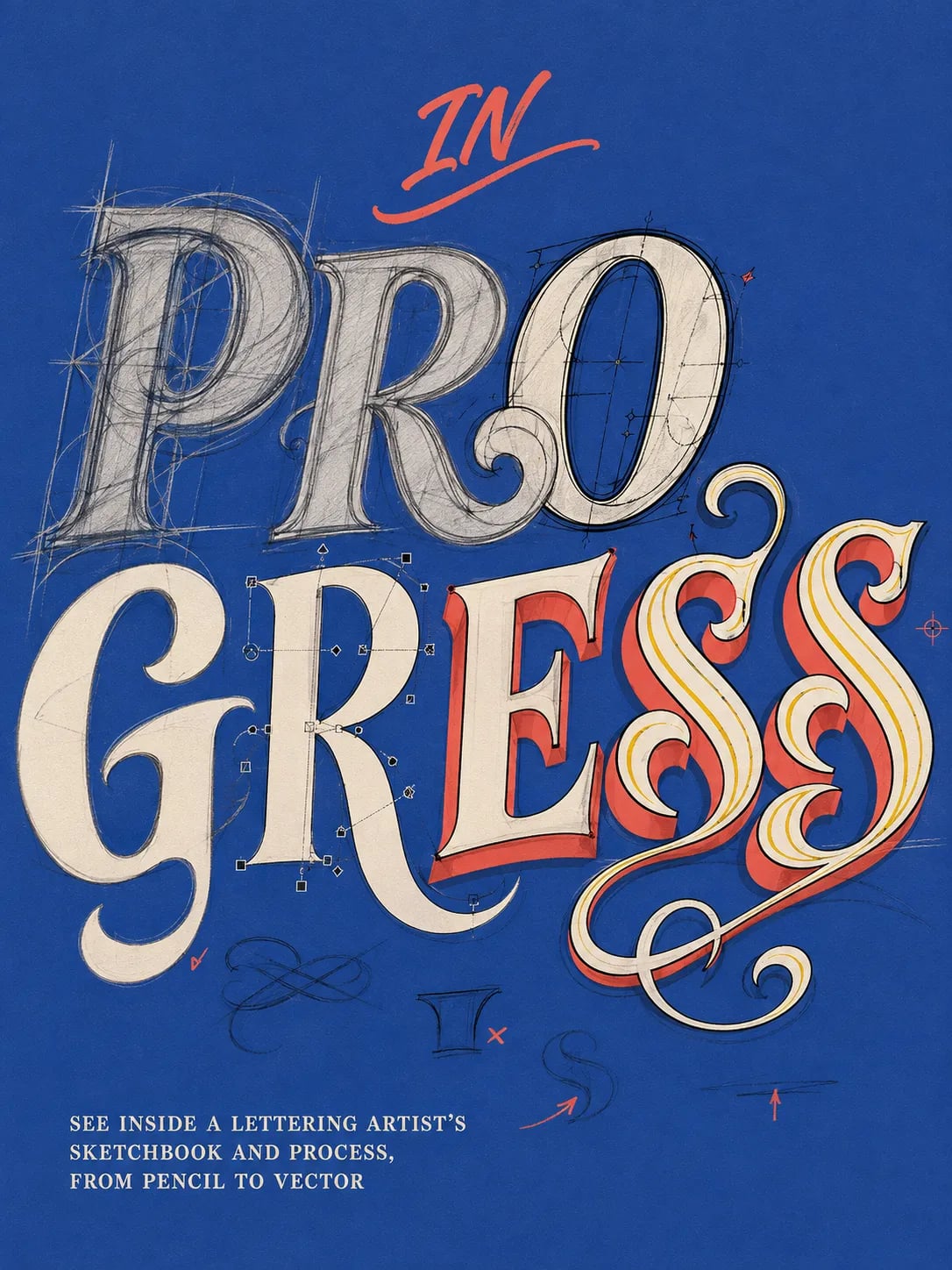
The book by Jessica Hische provides an intimate journey into the world of a prominent letterer, illustrator, and type designer. It meticulously breaks down her entire creative process, from initial conceptualization and analog sketching through digital vector drawing and final client delivery. Readers gain practical insights into distinguishing typographic arts and managing diverse projects across editorial, book, advertising, and logo categories. Hische shares her personal evolution, including early struggles and the discovery of "procrastiwork," inspiring creatives to identify and pursue their own professional passions. She offers guidance on navigating the freelance career path, emphasizing effective time management and client relations. Ultimately, the book serves as a comprehensive resource, offering both technical guidance and philosophical encouragement for aspiring and established artists.
Press play to hear the insight read aloud. Each word highlights in sync with the narration.
Intro
explore the subtle craft of letter forms where imagination aligns with structure and passion is expressed with clarity and precision. It's an exploration of how a deep -seated drive to create nurtured from childhood can evolve into a fulfilling career even when the path isn't immediately clear. You'll discover how personal experiences, challenges, and serendipitous encounters shape an artist's unique process, leading to a remarkable body of work that touches the world. Prepare to delve into the detailed craft behind beautiful typography and uncover the dedication, tools, and mindset that transform a blank page into finished art, all while finding profound connection in the creative community.
1. The Unfolding Path of a Creative Spirit
– The Unfolding Path of a Creative Spirit From a young age, there was an undeniable pole to draw all day long, a passion pursued without a clear idea of how it would become a career. Raised in a relatively rural part of Pennsylvania, a town not known for its arts and culture, there was surprisingly little parental resistance to declaring a love for the arts. The early years were happy, filled with corn mazes, sports, and coloring contest awards, but junior high and high school proved to be a challenging period marked by a struggle to fit in and academic under -achievement. Despite attempts to steer class schedules toward the arts, resistance was met, and the administration suggested extra math classes as more practical for college applications. A pivotal moment arrived with parental separation, igniting a fire to become independent and find one's voice, leading to a renewed focus on school and real friendships based on kindness. This tumultuous time, though not desired again, forged a different, more independent and empathetic person, profoundly influencing a deep love for humanity and connection.
Continue reading with the cont. app
The full chapter-by-chapter breakdown is waiting for you in the app.
Continue readingCore Philosophy & Career Path
Discovering Passion through "Procrastiwork": The work you naturally gravitate towards, even when avoiding other tasks, is likely the work you should pursue as a career. Paying attention to these habits can guide your professional direction, as it did for the artist in choosing lettering as a major and career path.
Finding Your Niche: The process of finding a professional passion is akin to discovering music. You start broad, then delve deeper into subgenres and influences until your specific niche becomes clear. This often leads to specializing in very specific areas within a broader field, like illustrating chocolate.
Embracing Challenges: Personal challenges, like a tumultuous teenage period marked by parental separation, can foster independence, empathy, and a strong drive for self-discovery and connection with others. This period fueled a deeper focus on school and real friendships, ultimately shaping a more resilient and people-loving individual.
The "Career Constellation": A career path isn't always linear; it's a constellation of interconnected decisions and "bursts of energy" that shift direction. Finding graphic design was one such burst, providing an outlet for built-up energy and momentum.
Understanding the Typographic Arts
Lettering vs. Calligraphy vs. Type Design:
Calligraphers write words, mastering specific tools for consistent, expert output. Understanding calligraphy is fundamental, as it provides "pen logic" that improves lettering and design.
Letterers draw words, allowing for unique, custom artwork that can defy traditional pen rules. This medium often combines aspects of illustration (fast pace, varied subject matter) and design (typography, style variety).
Type Designers create systems of letters (typefaces) that function perfectly in endless combinations as software fonts. This involves meticulous engineering to ensure usability across various platforms and settings.
The Creative Process: From Concept to Final Art
Iterative Stages: A robust creative process typically involves distinct, iterative stages: (1) Research & Brainstorming, (2) Thumbnails, (3) Sketching, (4) Final Artwork, and (5) Revisions. Continuously refining this process is key to improving work and happiness.
Research & Brainstorming:
Content is King: The content itself is the greatest source of inspiration for designs. For book covers, this means deeply reading the book to understand characters, settings, mood, and tone, beyond just plot summaries.
Absorb Everything: Visual research should be a daily habit. Be a "sponge," drawing inspiration from books, museums, fashion, and even amateur sign painting.
"Primordial Ooze" of Ideas: Research allows ideas to form. Brainstorming sessions (ideally in the morning with a calm mind) involve free-flowing word-association lists, no matter how outrageous, to spark concepts.
Thumbnails: These are rough sketches used to quickly explore typographic layouts and hierarchical arrangements, especially for longer phrases, ensuring important words stand out.
Sketching (Analog First):
Portability & Joy: Analog sketching allows work anywhere, connecting the artist to the fundamental joy of drawing by hand.
Preventing Injuries: Mixing analog and digital work helps prevent repetitive stress injuries like carpal tunnel.
Stages of a Sketch:
Skeleton: Light hairline drawing to establish width, x-height, cap height, and general proportions.
Body: Adding weight to the skeleton, influenced by "pen logic" (thick downstrokes, thin upstrokes) and desired boldness/contrast.
Clothes: Decorative elements like serifs and swashes. These should be natural extensions, not just tacked on, and consistent with the "pen logic". Serifs are influenced by their historical origin as entrance/exit strokes.
Client Presentations: Presenting pencil sketches (even if "tight") encourages clients to focus on concepts and layouts, rather than getting distracted by digital details or color.
Vector Drawing (Digital Finalization):
Pen Tool Mastery: The pen tool is the single most important tool for vector drawing, allowing precise control over Bézier curves and anchor points.
Proper Point Placement: Anchor points should be plotted at the "extrema" (northernmost, southernmost, easternmost, westernmost) of curves for smoother, more efficient editing. Bézier handles should never cross each other.
Building in Components: The vector drawing process mirrors sketching, building from a skeleton, then adding body and clothes as separate, editable components.
Avoiding Repetition: While reusing letterform sections can be faster, custom artwork for clients often requires unique drawing for each instance to avoid looking "too much like a font".
Color Last: Color experimentation is typically done after the letterforms are finalized, ensuring sufficient contrast for legibility and using global color swatches for efficient changes.
Tools & Software
Analog Essentials: Hard-cover sketchbooks, dark cover-weight paper (to prevent bleed-through), tracing paper (for iteration), small notebooks for ideas/notes, a well-curated pencil case, rulers, Blackwing pencils, pencil extenders, erasers, technical pencils, black ballpoint pens, brush pens, and manual pencil sharpeners. Specialized calligraphy pens (parallel, pointed) are useful for experimentation.
Digital Essentials:
Hardware: MacBook Pro with an external display, Apple wireless keyboard, Wacom Intuos tablet (though a mouse is often preferred for precision vector work), solid-state external hard drive for backup, smartphone (for scanning sketches), Kindle Paperwhite (for work-related reading), laser printer (for printouts and criticism), and inkjet printer (for large test prints).
Software: Adobe Creative Cloud (Illustrator for vector, Photoshop for manipulation, Lightroom for photos, InDesign for layout/contracts), RoboFont (for typeface design).
Project Management & Professional Practice
Time Management: Utilizing digital calendars (Apple Calendar, Google Calendars) for various aspects of life and business (finals, sketches, meetings, personal life, travel). An "Ultra-Schedule" can block off time for specific tasks like email, combating distraction. Handwritten to-do lists offer a calming sense of accomplishment.
Freelance Workflow: Effective organization with to-do lists (e.g., Apple Reminders for invoices, bug fixes, speaking requests, incoming jobs) helps manage an inbox and prioritize tasks.
Side Projects: Crucial for portfolio gaps, skill development, creative exercise, and knowledge sharing (e.g., Daily Drop Cap, Don't Fear the Internet). They can provide significant career momentum.
Client Interaction:
Clear Contracts: Especially vital for logo projects when working directly with clients.
Educating Clients: Help clients understand your process and design decisions. Formal presentations may be necessary depending on the client.
Collaboration: Working with good art directors is key; they push artists to produce great work and ensure it fits beautifully into the final context.
Payment for Unused Work: Contracts should specify payment for work created even if a campaign goes in another direction and the artwork isn't used.
Types of Client Work (Process Adaptations):
Editorial: Fast-paced, high volume, great for building a portfolio quickly. Offers more experimental freedom due to one-off usage.
Books: Requires deep reading of the manuscript to abstractly represent the story through lettering. Often involves unique printing challenges like foil stamping.
Advertising: Often involves joining later in the creative process after agencies handle initial research. High pay-to-pain ratio due to licensing fees. Less control over final production details.
Logos: Frequently involves direct client work, necessitating crystal-clear contracts and client education. Logo "refreshes" (modernizing existing brands) are often preferred over starting from scratch. Printing out logos at various sizes is critical for identifying imperfections and verifying legibility.
Miscellaneous: Diverse projects (invitations, film titles, gift cards) that still follow the established process, proving its adaptability. Occasionally involves typeface design if used repeatedly.
Professional Growth & Mindset
Continuous Refinement: An artistic process is something refined throughout an entire life, adapting as needs and circumstances change.
Importance of Criticism: Seeking help and criticism from peers is incredibly important for personal growth, alongside self-awareness.
Community Building: Sharing work and experiences through side projects and social media helps build a supportive community of like-minded individuals.
Love of Work: Finding what you love to do and making it your career is a profound source of fulfillment. The goal is to enable others to find and get paid for what they love too.
More like this
Editorial insight by cont. Not affiliated with, endorsed by, or sponsored by the author or publisher. Buy or borrow the full book at Amazon.