The Lives of the Artists
Giorgio Vasari
17m20 ch
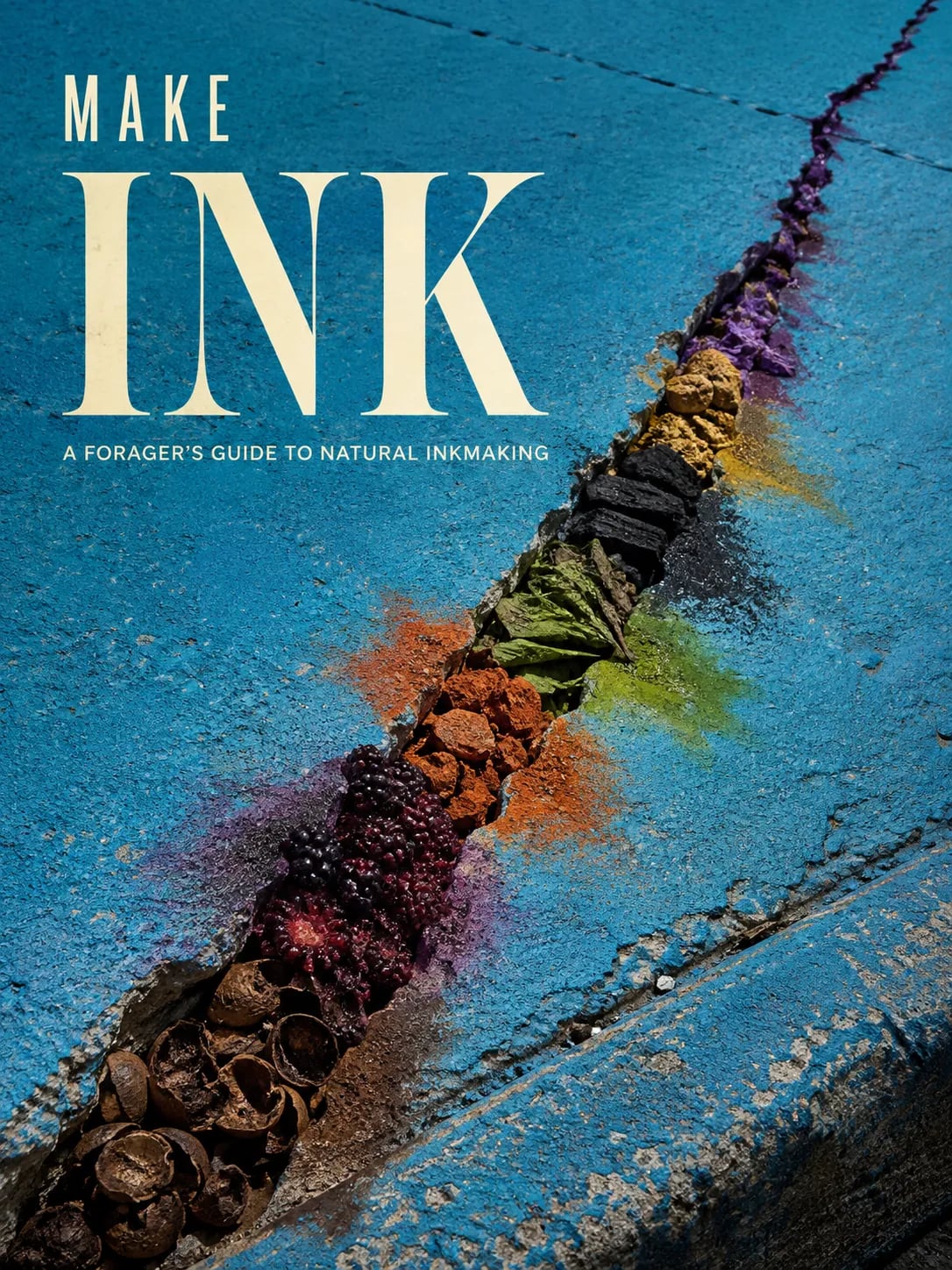
This book guides readers into the nuanced practice of natural inkmaking, beginning with the author's unexpected foray into crafting ink from foraged black walnuts. It systematically demystifies the process, instructing on how to locate and utilize diverse pigments from commonplace urban elements and natural environments. Readers acquire practical skills through fundamental recipes, exploring a full spectrum of colors, while simultaneously gaining insights into the scientific and historical significance of each hue. The narrative fosters a spirit of experimentation, encouraging an appreciation for the spontaneous outcomes that arise and emphasizing the deep, personal connection inherent in working with dynamic, living inks. The book ultimately provides a satisfying journey into the alchemy of color, linking creation with nature and historical understanding.
Press play to hear the insight read aloud. Each word highlights in sync with the narration.
Intro
Boundless color hides in overlooked urban spaces and in nature's soft murmurs, transforming what seems ordinary into something extra -ordinary. This journey invites you to look closer, to feel with your hands, and to discover the vibrant potential hidden within simple materials. It's a story of patience and curiosity, of alchemy and connection, revealing how the very essence of communication, ink, can be made with intention, transforming raw elements into profound expressions of ourselves and the living world around us. This is an exploration of color as a dynamic, evolving force, a blend of art, craft, and science that invites endless possibilities.
1. The Unexpected Journey into Color
The Unexpected Journey Into Color The path to understanding ink often begins unexpectedly. Imagine the thrill of rediscovering a beloved black walnut ink from years past, leading to the realization that a familiar tree in a part holds the key to recreating that rich, deep brown hue. This revelation ignited a passion for creating art supplies that are safe and natural, even for children. The process of boiling black walnut holes for days, tweaking recipes, and learning about natural binders like shellac quickly deepened this fascination. But the pursuit didn't stop at brown. It blossomed into a desire to explore all colors drawn from vines, roots, nuts, berries, and common weeds, as well as industrial materials like rusted nails and copper wire. Ink at its core is a simple combination of color and liquid designed to leave permanent marks. It is a tool of communication as vital to the growth of civilization as the wheel or the cultivation of wheat, allowing ideas to be saved, transported, and shared.
Continue reading with the cont. app
The full chapter-by-chapter breakdown is waiting for you in the app.
Continue readingInk's Defining Purpose: Unlike paint, which primarily creates images or covers surfaces, ink is fundamentally a tool for communication. It's designed to transmit language, ideas, recipes, history, and stories through permanent marks on flat surfaces.
Essential Material Qualities: To effectively convey culture, ink must be a liquid that flows to a fine point, forming clean lines that dry permanently on paper. It needs to be intensely pigmented for legibility and longevity, and its recipes must work with a variety of writing utensils, from dip pens to printing presses.
Natural Ink as a "Living" Substance: Natural ink is dynamic; it's a living, changing substance that evolves over time. It may fade, darken, or shift in hue as it interacts with oxygen and light, leading to unique effects like bleeding, feathering, and staining on paper.
The Inkmaker's Philosophy
Patience is Paramount: The "first ingredient" in natural inkmaking is patience. Achieving concentrated, vibrant color often requires significant waiting and stirring, sometimes days of natural evaporation or repeated additions of plant material, without a fixed "done" time like baking a cake.
Embracing Curiosity and the Unexpected: The process thrives on a spirit of openness and experimentation. Setting out without a precise plan, allowing materials to "speak" to you, and embracing the weird or unexpected are crucial.
Valuing "Failures": Unintended outcomes or "failures" are considered beautiful and valuable because they lead to unexpected results and new insights about the materials. The journey of experimentation itself is a significant part of discovery.
Learning with Your Hands: Direct physical engagement, like feeling materials and getting hands stained, is emphasized as an incredibly calibrated tool for understanding the environment and the craft.
Foraging for Color
Urban Abundance: Excellent ink-making supplies are readily found in cities, especially in "in-between" places where concrete, metal, and human-made structures meet natural elements. Back alleys, cracks in pavement, and areas along fences are prime spots.
Tough Weeds and Industrial Materials: Common weeds, often tougher and containing intensified colors, thrive in urban pockets and are excellent sources. Industrial materials like rusted nails, copper wire, and drywall gypsum also yield unique and vibrant colors.
Diverse Plant Sources: Color can come from any part of a plant, including bark, inner bark, sap, leaves, branches, buds, flowers, fruits, berries, lichen, roots, stems, and nuts.
Two Foraging Approaches: Foraging can be either an exploratory wandering without preconceptions, collecting various materials, or a focused search for a single ingredient after researching its traditional uses and habitat.
Safety and Preparedness: Common sense precautions include dressing for weather, wearing appropriate footwear and gloves, and learning to identify poisonous plants. Always label collected materials with location and time.
Making Ink: The Process
Basic Formula: The fundamental formula is color + binder + water or oil = ink.
Intensifying Color: Boiling away water (reduction), allowing natural evaporation, or repeatedly adding plant materials helps achieve concentrated color. Grinding ingredients into a fine dust also aids intensity.
Prepare Base Color Ingredient: Crush berries, grind dry pigments, or combine plant material with water.
Intensify Color: Add vinegar and salt, then heat to just below boiling for at least 2 hours, stirring occasionally.
Filter Color: Use a colander for large pieces, then a coffee filter-lined funnel for finer particles, especially if using a pen.
Make it Permanent (Add Binder & Preservative): Add gum arabic (binder) after desired color is reached, and a few drops of wintergreen oil or a whole clove as a preservative to prevent molding.
Bottle It: Store in sterilized glass containers with tight-fitting lids. Labeling with ingredients, time, and location is helpful for future reference.
Test It: Observe how the ink dries and interacts with different tools (droppers, pens, brushes) and paper stocks, as subtleties emerge.
The Kitchen as a Lab: Inkmaking can be done in a home kitchen using old pots and utensils. It's an opportunity for "citizen-scientist" discovery, observing how color changes are held in suspension, and how time and temperature affect results.
Key Ingredients & Additives
Binders: Substances that act as "glue" to bind liquid to color, making ink thicker and shinier. Gum Arabic is highly effective and widely used. Shellac flakes are another option, especially for a shiner, layerable ink.
Mordants & Catalysts: These are additives that help color "bite" into paper or shift its hue. Examples include alum (intensifies yellows), copper, iron oxides, cream of tartar, salt, vinegar, and lye (used to change pH levels and color).
Water's Subtle Role: Water is not neutral; its mineral content (e.g., from limestone rock affecting pH) or softness (rainwater) can significantly alter ink color.
Pigments Beyond Plants: While plants are primary, vivid colors can also be sourced from certain insects (kermes, cochineal) and a range of rocks, minerals, and metals. Not all brightly colored biological pigments (like chlorophyll or hemoglobin) are effective for ink.
Exploring Colors & Recipes
Carbon Black: The oldest ink, made by reducing any dry, once-living material (bone, grapevine, peach stones, soot) to ash, grinding it fine, and binding it with water. It's permanent and won't fade.
Iron Gall Ink: Made from oak galls (nubs on oak trees formed by wasp eggs, intensifying tannins) and ferrous sulfate (iron). This formula creates a stable, inerasable black that fuses with paper, historically used for important documents like the Magna Carta and Bibles.
Black Walnut Ink: A rich, dark brown ink made from the green hulls of black walnut trees. Can be boiled or sun-evaporated for intensity.
Sepia: A brownish-black ink derived from the ink sacs of squid, octopus, or cuttlefish, sharing a chemical makeup with prehistoric inks.
Pokeberry Ink: Produces the brightest natural red ink, though it fades in sun. Note: All parts of the pokeberry plant are poisonous.
Iron Oxides & Ochres: The oldest reds, found in the earth, yielding brownish/orange-ish tones.
Copper Oxide Ink: A "magic" blue that changes color over time, emerging from the chemical reaction of copper wire/wool with oxygen, salt, and vinegar. It can destroy metal pen nibs.
Other Sources: Indigo (intense), wild blueberries, black beans, or wild grape juice with baking soda added.
Wild Grape Ink: Fox grapes yield an intense purple that doesn't fade, unlike many other cyanin-based colors. Requires refrigeration to prevent fermentation.
Historical Significance: Historically, purple (Tyrian purple from Murex snails) was immensely rare, valuable, and exclusively associated with power and royalty. The discovery of synthetic mauveine by William Henry Perkin in 1856 democratized purple and marked the beginning of the synthetic color industry.
Turmeric Alcohol Ink: Made from turmeric powder or roots and high-proof alcohol. Turmeric yellows tend to fade over time.
Saffron: A water-based yellow from saffron threads.
Silvery Acorn Cap Ink: Achieved by boiling acorn caps with rusty nails or other iron objects, where the oxidized iron and tannins create a subtle, shifting gray as it dries.
Gypsum White Ink: Made from crumbled drywall (gypsum), white chalk, or soft white rock like limestone, ground into a fine powder and mixed with water and gum arabic. It produces a beautiful line with a paintbrush on colored paper, but doesn't work well in pens.
The Science & Art of Color
Color is Light: Sir Isaac Newton demonstrated that light itself is color, not that light illuminates color. When we see an ink as blue, it's returning blue light while absorbing other frequencies.
Color "Does" Rather Than "Is": As journalist Victoria Finlay noted, substances "do" a color rather than "being" a color, highlighting the dynamic interaction of materials and light.
pH Influence: The pH level (acidity and alkalinity) of additives like lye, baking soda, salt, and vinegar can dramatically shift the color of natural inks. Buckthorn berries, for example, can produce yellow, green, blue, purple, or magenta depending on pH adjustments.
Color as a Playground: The experience of color is a blend of science and magic, influenced by historical, emotional, political, pop-cultural, and religious associations.
Ink's Journey Through History
Ancient Origins: The earliest human markings using color (iron-rich rocks) date back 40,000 years. Ink was independently invented in China and Egypt around 2500 BCE, initially for accounting ledgers but quickly becoming vital for saving and sharing ideas.
Key Innovations: The development of solid ink sticks in China allowed users to make ink as needed. The invention of the fountain pen (953 CE) and the printing press (1436-1450) further revolutionized ink use and communication.
Cultural Significance: Ink and pen were as crucial to the growth of civilization as the wheel or wheat cultivation, enabling the permanent marking of symbols and the transmission of knowledge.
Working with Ink
Paper Matters: The choice of paper significantly affects how ink behaves. Western papers are often "sized" to make ink sit on the surface, while Eastern papers may be unsized, allowing ink to soak and bleed in unique ways.
Recording Experiments: Keeping records in a notebook is essential to track recipes, compare results, and replicate "brilliant mistakes". Photography is also useful for capturing the changing nature of natural inks.
Collaborative Spirit: Inkmaking is a collaborative process, with artists ("beta testers") pushing the potential of inks further than the maker could alone. There's a global community of natural inkmakers and artists experimenting with historical pigments and techniques.
The Act of Creation: The process of making ink, from foraging to bottling, imbues the final mark with a sense of significance, connecting the creator to every piece that went into it. Playing with ink is described as both exciting and calming, with endless possibilities.
More like this
Editorial insight by cont. Not affiliated with, endorsed by, or sponsored by the author or publisher. Buy or borrow the full book at Amazon.