The Lives of the Artists
Giorgio Vasari
17m20 ch
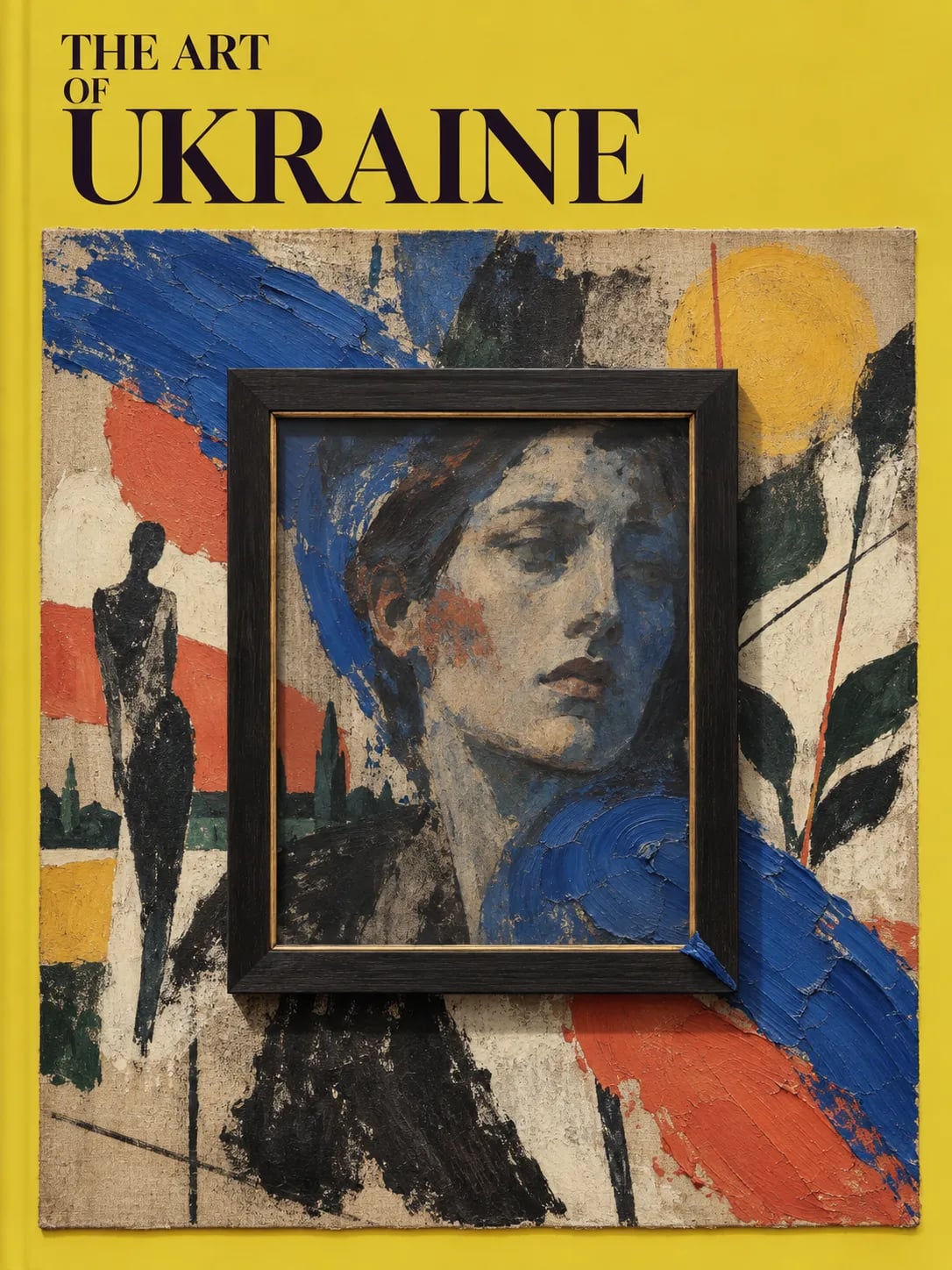
This book traces Ukrainian art from the late 19th century through radical transformations up to the present day. It explores how art developed amidst colonial rule, revolutions, Soviet repression, and Ukraine's struggle for independence. Readers journey through distinct periods of modernism, avant-garde experimentation, Socialist Realism, and the emergence of independent contemporary art. The narrative highlights how Ukrainian artists consistently reflected and shaped their nation's evolving identity, often in defiance of oppressive political climates. It reveals a rich, diverse artistic tradition that has been historically overlooked, providing a deep understanding of Ukraine's unique cultural landscape. Ultimately, the book presents Ukrainian art as a powerful testament to resilience, adaptation, and the enduring human spirit in times of profound change.
Press play to hear the insight read aloud. Each word highlights in sync with the narration.
Intro
This profound narrative invites us to explore the vibrant and often turbulent history of Ukrainian art, a journey inextricably linked with a nation's relentless quest for identity and freedom. From moments of profound revolution to eras of oppressive silence, Ukrainian artists have bravely navigated radical change, transforming their experiences into powerful testaments of resilience and creativity, prepared to be immersed in a story where art not only reflects history, but actively shapes it, revealing the enduring spirit of a country constantly in flux. This exploration delves into the artistic landscape of Ukraine across centuries, showcasing how deep historical wounds and a permanent state of social turbulence have shaped generations of artists. It's a story of unexpected flourishing, brutal repression and continuous reinvention where the very act of creation becomes an act of survival and defiance.
1. A Nation Forged in Turmoil
– A Nation Forged in Turmoil For centuries, Ukraine found itself at the epicenter of vast, violent conflicts. Its lands divided and its people enduring immense suffering. The early 20th century, in particular, brought a relentless succession of traumas. The collapse of empires, World War I, the 1917 revolution, civil war, and the man -made Stalin -orchestrated famine, the Holodomor, millions perished, leaving deep, unhealed wounds that span generations. Yet amidst this turmoil, a path to independence gradually emerged, culminating in Ukraine's Declaration of Statehood on August 24, 1991. This history of constant upheaval and transformation has profoundly shaped the worldview of Ukrainian artists whose work is inherently tied to times of radical change.
Continue reading with the cont. app
The full chapter-by-chapter breakdown is waiting for you in the app.
Continue readingThis book delves into the complex and turbulent history of Ukrainian art, emphasizing how the nation's permanent state of social upheaval and its "painful search for identity" have profoundly shaped its artistic expression. The narrative aims to "center Ukraine and her art", often obscured or appropriated, by presenting a multilayered account of its artistic tradition amidst radical societal changes.
Part I: Beginnings: Before the Collapse of the Soviet Union
A. Early Modernism & National Identity (1880s–1917)
Context: Modernism emerged during a national awakening and search for cultural and historical identity, leading to the importance of folkloric and historical themes.
Key Artists/Styles:
Ilya Repin (e.g., The Zaporozhian Cossacks Write a Letter to the Turkish Sultan) brought metropolitan realism to Ukrainian historical themes, embedding Cossack imagery in mass culture.
Oleksander Murashko combined Secession palette with Parisian elegance and national style, excelling in portraiture.
Fedir Krychevsky infused monumentalism and national motifs with elements of Vienna Secession and Cubism.
Avant-Garde & Cubo-Futurism: Flourished in Kyiv, influenced by European movements.
Oleksandra Ekster was a pivotal figure, bringing European art developments to Kyiv and influencing Ukrainian Cubo-Futurism. Her studio was a hub for future luminaries.
Hylaea group (e.g., Davyd Burliuk) had strong ties to Ukraine, characterized by raw energy.
Querofuturism: Led by Mykhailo Semenko, this group made a radical break from conservative Ukrainian tradition, symbolized by his provocative declaration to "burn my Kobzar" (Taras Shevchenko's work) to push for a modern, urban Ukrainian culture.
B. Revolution and the Red Renaissance (1917–Early 1930s)
Ukrainian National Republic (UNR): Its brief existence (1917-1921) spurred the creation of national symbols and currency, notably designed by Heorhii Narbut. The Ukrainian Academy of Arts was founded in Kyiv.
Kultur-Lige (Jewish Culture League): A significant movement in Kyiv (1918), which adapted modern artistic developments (like Cubo-Futurism) to Jewish-Yiddish culture, giving birth to the Jewish avant-garde. El Lissitzky was a co-founder, transforming Jewish folklore themes into non-objective ideological art.
"Red Renaissance": A vibrant cultural flourishing in the 1920s, driven by national communists who believed in creating modern Ukrainian culture under the Bolshevik project. This era saw immense growth in all art forms, but tragically ended with the Stalinist repressions of the 1930s.
Artistic Responses to Trauma: Artists like Anatol Petrytsky (The Crippled) and Fedir Krychevsky (Life) depicted the devastation and suffering resulting from World War I and the revolution, often with influences from Austrian modernism and German Expressionism. Viktor Palmov's For Rule by Soviets! reflected a revolutionary struggle without a sense of futility.
Kyiv Art Institute (KAI): Reorganized in 1922, it became a progressive art school, adhering to Bauhaus ideals and hosting prominent avant-garde teachers like Kazimir Malevich and Vladimir Tatlin. Malevich's Second Peasant Cycle reflected the forced collectivization and Holodomor in Ukraine.
Kharkiv Constructivism: Kharkiv, as Soviet Ukraine's capital, saw a rise in architectural and graphic design. Vasyl Yermilov (e.g., Avanhard journal designs) was a leading figure, known for incorporating humor and transgression into Constructivism, which ultimately led to the suppression of his work and the Avanhard journal.
Panfuturists and Cinema: Mykhail Semenko's group prioritized "poetry painting" and the burgeoning art of cinema, notably collaborating with the All-Ukrainian Photo and Cinema Administration (VUFKU), which produced classics like Oleksander Dovzhenko's Earth.
C. Stalinism and the Cult of Personality (Early 1930s–1953)
Socialist Realism: Imposed as the "only true and correct artistic direction" from 1934, suppressing formal experimentation and demanding adherence to ideological narratives. This led to a "virtual reality" in art that ignored mass repressions and poverty.
The Purges: The "Red Renaissance" was violently ended by Stalin's Great Terror, which began earlier and was particularly severe in Ukraine. Many cultural figures, including the Boichukists (e.g., Mykhailo Boichuk, Vasyl Sedliar, Ivan Padalka) and Mykhail Semenko, were executed and their works destroyed or erased from history.
World War II Impact: Led to a temporary shift towards humanism in art, with artists like Zinovii Tolkachev documenting the horrors of Nazi death camps firsthand. War propaganda included posters by Vasyl Kasiian.
Stalinist Grand Style: Post-war art emphasized gigantic proportions and "applause" style, glorifying the party and its leaders. Examples include Mykhailo Khmelko's To the Great Russian People! and Tetiana Yablonska's Bread, which more realistically portrayed the post-war reality of women laborers.
Folk Art as Alternative: Practiced by self-taught artists, folk art became a "sheltered niche" allowing unique traditions to survive, often led by women. Maria Prymachenko (Folk Surrealism) and Kateryna Bilokur exemplify this unique artistic freedom during an oppressive era.
D. A Multicultural Mosaic: Western Ukraine (Pre/Post-USSR)
Transcarpathian School: Distinguished by bright palettes and modernist influences (Paul Cézanne) due to its unique historical context outside direct Soviet influence until 1944.
Lviv's Interwar Modernism: A vibrant cultural center with Ukrainian, Polish, and Jewish heritage, influenced by Vienna Secession, Cubism, Expressionism, and Futurism. Groups like Artes and Association of Independent Ukrainian Artists (ANUM) promoted avant-garde art. This multicultural modernism was largely suppressed in Soviet historical narratives. Artists like Roman Selsky persevered.
E. "Different" Art & Late Soviet Period (1953–End of 1980s)
The Thaw: Following Stalin's death (1953) and Khrushchev's de-Stalinization (1956), a period of loosened censorship brought international art exhibitions to Moscow, exposing Soviet artists to modernism and abstract expressionism. This liberalization was short-lived, leading to crackdowns on "formalism".
"Austere Style": A reaction against Socialist Realism's falseness, emphasizing "hard truths" and sincerity, often with themes of space conquest and idealized Komsomol youth.
The "Sixtiers" (Shistdesiatnyky): A cultural-political movement focused on national cultural revival and fighting Russification. Artists like Alla Horska and Viktor Zaretsky were key, notably investigating mass graves of Stalinist victims. Their neo-modernist approach was a bold political statement.
Kyiv Neo-Avant-Garde: An intellectual underground scene. Artists like Valerii Lamakh (monumentalist who also created esoteric philosophical works), Hryhorii Havrylenko (experimented with abstraction and figurative art), and Vilen Barsky (pioneered conceptual language in art, visual poetry). They engaged in "internal migration," seeking universal truths amidst stagnation.
Mosaics and Monumentalism: A revival in Ukrainian monumental art during this period, with mosaics becoming a prominent form, often incorporating abstract or modernist elements. The tragic destruction of Ada Rybachuk and Volodymyr Melnychenko's "The Wall of Memory" exemplifies the Soviet regime's suppression of inconvenient truths.
Kharkiv School of Photography: A powerful phenomenon characterized by social focus and challenging Soviet norms. The Vremia group (Boris Mikhailov, Yevgeniy Pavlov, Yurii Rupin) developed the "theory of the blow" to deconstruct Soviet mythology through shock and brutality, depicting forbidden subjects like the nude body and grim everyday life.
Odessa Nonconformism & Conceptualism: An active unofficial art scene with "apartment exhibitions". Later, a new generation led by Leonid Voitsekhov, Sergey Anufriev, and Yuri Leiderman embraced Conceptualism, focusing on text and discourse, often with an ironic, rebellious spirit. Performances like "Ways to Use a Flag as a Murder Weapon" became iconic statements on Soviet reality.
Part II: The Art of Independent Ukraine
A. The New Wave on the Ruins of Utopia (Late 1980s–2004)
Post-Soviet Transition: The collapse of the USSR (1991) brought freedom but also economic collapse, crime, and the rise of oligarchs.
Ukrainian New Wave: A generation that rebelled against Soviet art, embracing postmodernism and global trends, initially calling themselves "trans-avant-garde". Their large-scale, expressive paintings, like Arsen Savadov and Heorhii Senchenko's Cleopatra's Sorrow, marked a "total break with the Soviet system".
Resolute Edge of National Post-Eclecticism: (e.g., Oleg Tistol, Kostiantyn Reunov) explored national stereotypes and decolonization through humor and irony, often in Moscow squats.
Kyiv Squats (ParCommune): Buildings like 18a Paryzka Komuna became legendary hubs for artists to experiment with large-scale works, fostering a "sexual and psychedelic revolution" as a form of transgression against state ideology. Oleh Holosii (Psychedelic Attack of the Blue Rabbits) and Oleksandr Hnylyzkyj were central figures.
Emergence of Curators: Oleksandr Solovyov was a pivotal figure, a "co-participant" and chronicler of the New Wave. Marta Kuzma (Soros Center for Contemporary Art) played a crucial role in introducing international practices and supporting new media. Natalia Filonenko introduced feminism into the art scene.
Photography in the 1990s: Explored the social impact of post-Soviet collapse. Arsen Savadov's "Donbas Chocolate" (miners in ballet tutus) became a landmark, juxtaposing grim reality with absurd beauty. Oleksandr Chekmenev's Passport documented the plight of vulnerable populations during passport exchanges. Boris Mikhailov's controversial Case History captured the "Homo Sovieticus" struggling with homelessness, becoming an allegory for the human condition.
B. The Orange Generation (2004–2013)
Orange Revolution (2004): Sparked a burst of creative energy, characterized by its "distinct aesthetic" and focus on "political performance". Oleksandr Roytburd captured the mood with ironic yet romanticized works.
Revolutionary Experimental Space (REP): A new generation of artists, forming a collective that focused on art actions and interventions in public spaces, often with a critical view of the protests' actual impact (e.g., Euroremont project critiquing post-Soviet kitsch). Nikita Kadan and Zhanna Kadyrova were key members.
Rebooting Kharkiv School (SOSka): Formed in 2005, sharing REP's solidarity and focus on socio-political issues, highlighting the lineage of the Kharkiv school of photography. Their public art actions, like They're on the Street, critiqued the political landscape.
Post-Media Figurative Art: A return to painting by New Wave artists, now influenced by glamor and the pervasive media images of the 2000s. Vasyl Tsaholov's Ukrainian X-Files and Illya Chichkan's Psychodarwinism exemplify this ironic, postmodern approach. Oleksiy Sai pioneered "Excel Art" using corporate software.
Performative Turn: Growing use of performance art, often as political protest. Mykola Ridnyi's Lie and Wait and the controversial actions of the Femen Group. Alevtina Kakhidze's performances questioned the role of art and artists' relationship with oligarchic funding.
Art and the Street: Increased interaction between street art and conventional art. Artists like Vova Vorotnikov (Lodek) and the duo Interesting Fairy Tales (Waone, AEC). The commercialization of street art led some to post-graffiti.
New Wave Photography: Emerged from the digital age and social networking, often drawing on Boris Mikhailov's aesthetic of "ugly" and banal everyday life. Groups like Synchrodogs and Gorsad gained international acclaim for their "anti-glamor" aesthetics and exploration of post-Soviet provincial life.
C. Between a War and a Rave: The 2013 Revolution and Beyond
Euromaidan (2013-14): The Revolution of Dignity and subsequent annexation of Crimea and war in Donbas became a "fruitful, and complicated period in the history of new Ukrainian art". Art often anticipated conflict, as seen in Nikita Kadan's work on police violence and Maksym Mamsikov's prophetic Beach.
Maidan Aestheticization: The protest city became an "all-encompassing art installation". Artists like Maksym Bilousov (Guards of the Maidan) documented the unique spirit. The "Artistic Barbican" served as an improvised gallery. Photography became a primary medium for documentation, capturing both heroic and tragic moments.
Post-Trauma Art (Post-2014 War): Artists responded to the trauma. Nikita Kadan's installations (e.g., Shelter) reflected the war's impact and historical memory. Mykola Ridnyi's Blind Spot explored limited perspectives. Maria Kulikovska's performances, often about Crimea, confronted destruction and displacement. Alevtina Kakhidze's The Story of Strawberry Andreevna documented life in occupied Donbas through phone conversations with her mother.
"Apostles of Individualism": A new generation of artists focused on large-format, commercially successful art, influenced by international trends exhibited at the PinchukArtCentre. Roman Mykhailov's "fire" themed works and Nikita Shalenny's technically complex installations exemplify this.
Conceptual Shift (Late 2010s): Rise of neoconceptualism, focusing on collective discursive practice and institutional critique rather than market. Open Group's The Shadow of Dream Cast Upon Giardini della Biennale sparked debate about elitism and participation.
The Rise of Women: The 2010s saw a radical shift, with women increasingly holding "leadership roles" in the Ukrainian art establishment (approaching 80-90%). This allowed for more open discussion of subjective female experience and themes like domestic violence (e.g., Alina Kleitman's Ask Mom).
Provinces & New Club Culture: Interaction between rave culture and political discourse. The DE NE DE initiative explored decommunization controversies and rediscovered regional histories. Rave scene artists created works reflecting the "wild, wild east" aesthetic.
"Forward into the Past": Decommunization became a central theme, leading to a "historiographic turn" and renewed interest in traumatic 20th-century events and Soviet legacy (e.g., Mykola Ridnyi's film Grey Horses about Nestor Makhno).
Ukrainian Art Now (2022 Invasion): The full-scale Russian invasion transformed artistic practice. Drawing became the primary artistic medium (war diaries), offering intimate and believable personal experiences. Artists like Kinder Album, Efrem Lukatsky (war photography), HOW ARE YOU? project (documenting life in a bomb shelter), Oleksiy Sai's Tolstoyevsky (critiquing weaponization of Russian culture), and Kateryna Lisovenko's defiant paintings reflect resilience, hope, and determination amidst devastation.
More like this
Editorial insight by cont. Not affiliated with, endorsed by, or sponsored by the author or publisher. Buy or borrow the full book at Amazon.