1689 Boston revolt
Uprising in New England against Governor Andros
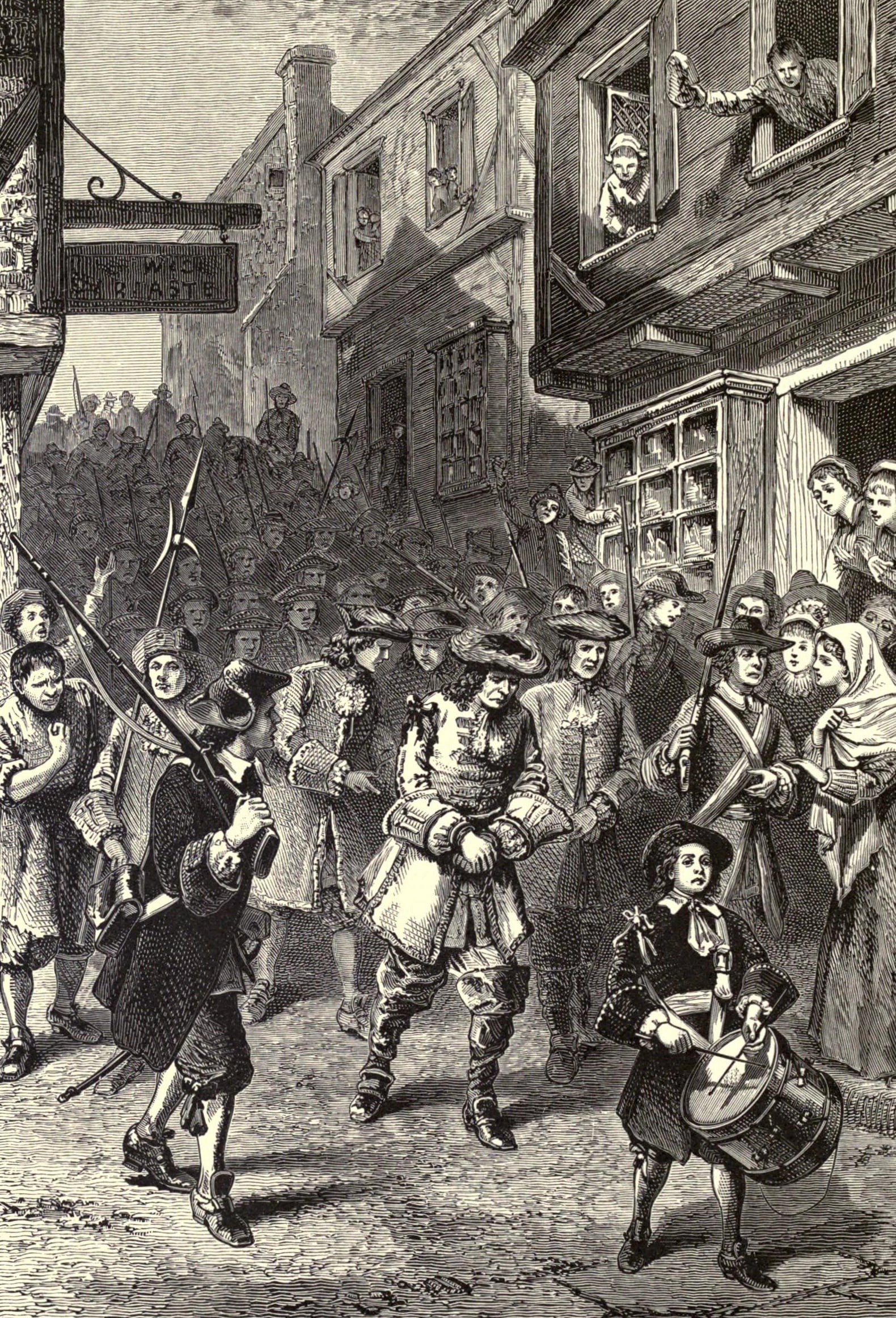
The 1689 Boston revolt was a popular uprising on April 18, 1689, against the rule of Sir Edmund Andros, the governor of the Dominion of New England. A well-organized "mob" of provincial militia and citizens formed in the town of Boston, the capital of the dominion, and arrested dominion officials. Members of the Church of England were also taken into custody if they were believed to sympathize with the administration of the dominion. Neither faction sustained casualties during the revolt. Leaders of the former Massachusetts Bay Colony then reclaimed control of the government. In other colonies, members of governments displaced by the dominion were returned to power.
Andros was commissioned governor of New England in 1686. He had earned the enmity of the populace by enforcing the restrictive Navigation Acts, denying the validity of existing land titles, restricting town meetings, and appointing unpopular regular officers to lead colonial militia, among other actions. Furthermore, he had infuriated Puritans in Boston by promoting the Church of England, which was rejected by many nonconformist New England colonists.
From Wikipedia and its contributors, under CC BY-SA 4.0. Text reformatted for this reading view.