Charles Darwin
English naturalist and biologist (1809–1882)
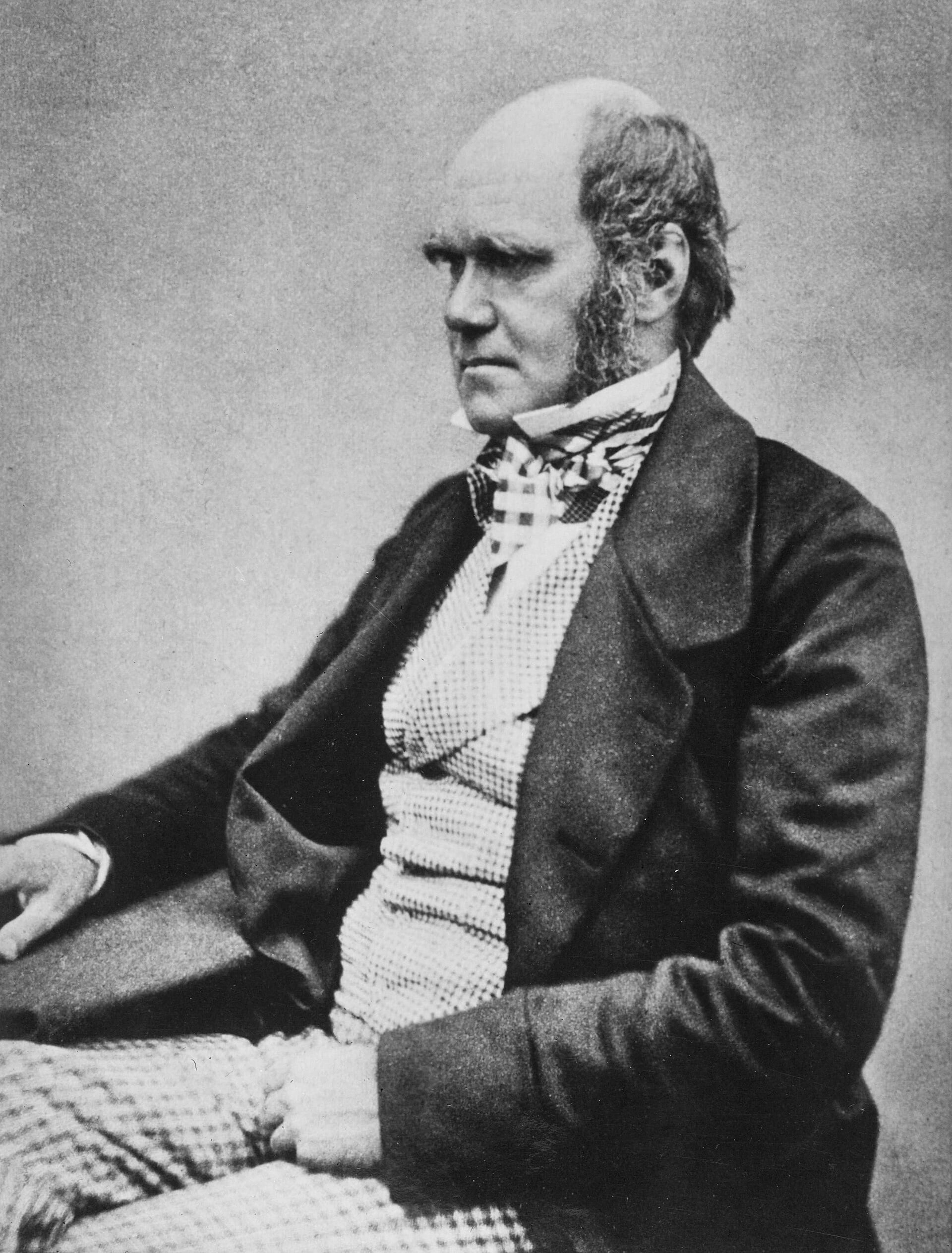
Charles Robert Darwin ( DAR-win; 12 February 1809 – 19 April 1882) was an English naturalist, geologist, and biologist, widely known for his contributions to evolutionary biology. His proposition that all species have descended from a common ancestor is now accepted and considered a fundamental scientific concept. In a joint presentation with Alfred Russel Wallace, he proposed that this branching pattern of evolution resulted from a process he called natural selection, in which the struggle for existence has a similar effect to the artificial selection involved in selective breeding. Darwin has been described as one of the most influential figures in human history and was honoured by burial in Westminster Abbey.
Darwin's early interest in nature led him to neglect his medical education at the University of Edinburgh; instead, he helped Robert Edmond Grant to investigate marine invertebrates. His studies at the University of Cambridge's Christ's College from 1828 to 1831 encouraged his passion for natural science. However, it was his five-year voyage on HMS Beagle from 1831 to 1836 that established Darwin as an eminent geologist. The observations he made during his voyage supported Charles Lyell's concept of gradual geological change. The Voyage of the Beagle (1839), Darwin's travel journal, made him a popular author. His first scientific work was The Structure and Distribution of Coral Reefs (1842). Along with his work on barnacles, it won him the Royal Medal in 1853.
From Wikipedia and its contributors, under CC BY-SA 4.0. Text reformatted for this reading view.