Genghis Khan
Khan of the Mongol Empire from 1206 to 1227
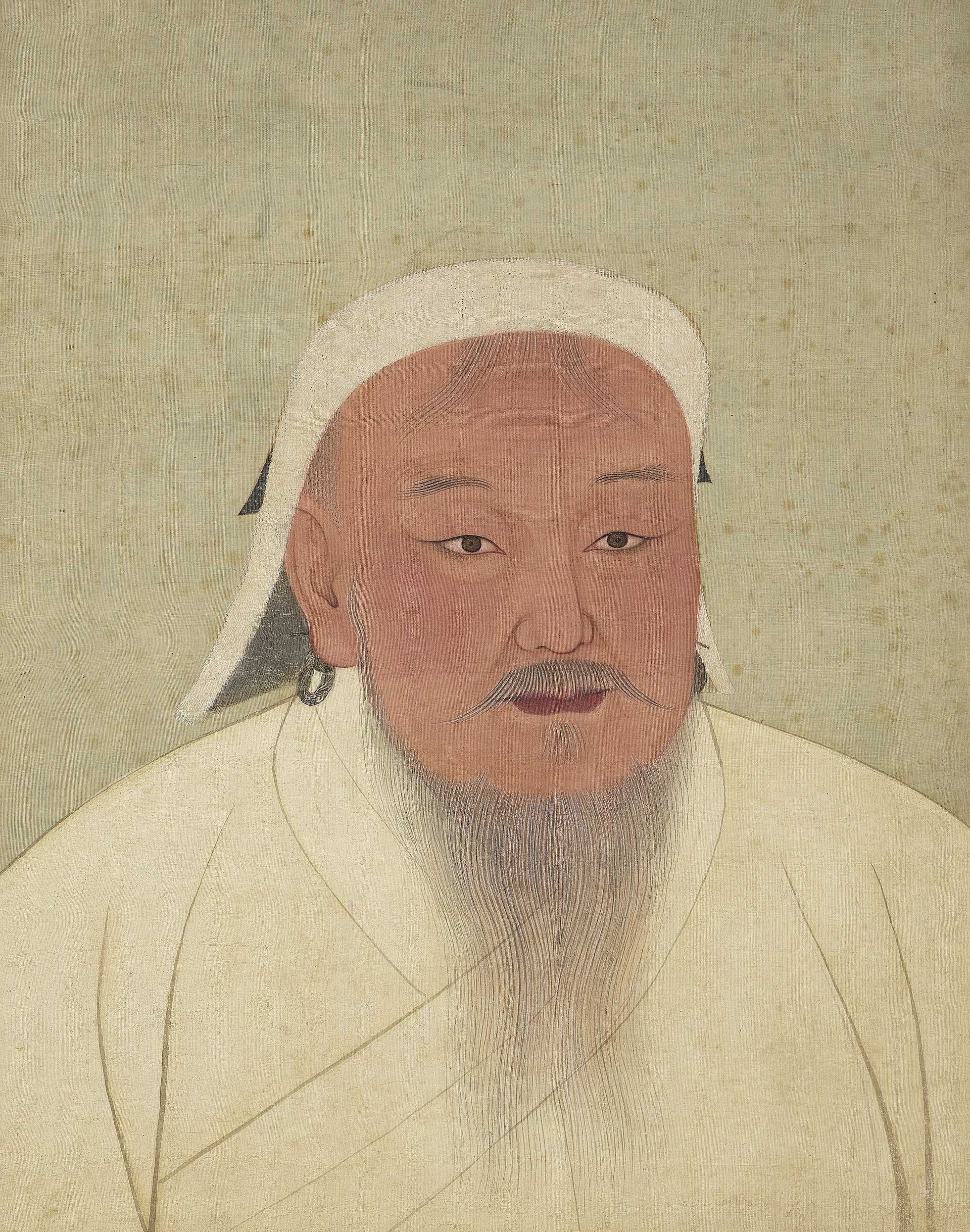
Genghis Khan (born Temüjin; c. 1162 – 18 or 25 August 1227), also known as Chinggis Khan, was the founder and first khan of the Mongol Empire. After spending most of his life uniting the Mongol tribes, he launched a series of military campaigns, conquering large parts of China and Central Asia.
Genghis Khan was born Temüjin between 1155 and 1167 as the eldest child of Yesugei, a Mongol chieftain of the Borjigin clan, and his wife Hö'elün. When Temüjin was eight, his father died and his family was abandoned by its tribe. Reduced to near-poverty, Temüjin killed his older half-brother Behter to secure his familial position. His charismatic personality helped to attract his first followers and to form alliances with two prominent steppe leaders named Jamukha and Toghrul; they worked together to retrieve Temüjin's newlywed wife Börte, who had been kidnapped by raiders. As his reputation grew, his relationship with Jamukha deteriorated into open warfare. Temüjin was badly defeated in c. 1187, and may have spent the following years as a subject of the Jin dynasty; upon reemerging in 1196, he swiftly began gaining power. Toghrul came to view Temüjin as a threat and launched a surprise attack on him in 1203. Temüjin regrouped and overpowered Toghrul. After defeating the Naiman tribe and executing Jamukha, he was left as the sole ruler on the Mongolian steppe.
From Wikipedia and its contributors, under CC BY-SA 4.0. Text reformatted for this reading view.