Small Is Beautiful
E. F. Schumacher
16m19 ch
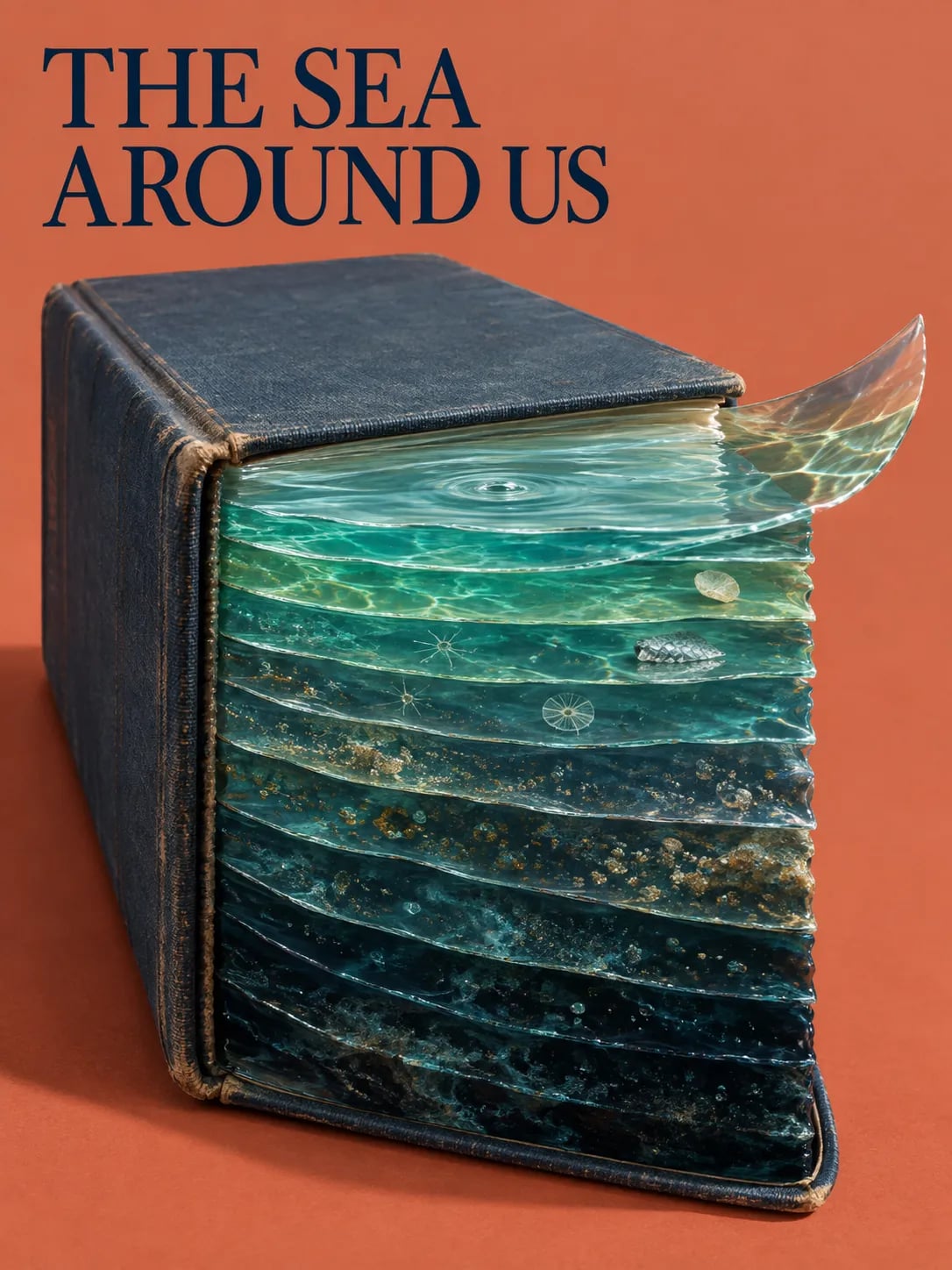
"The Sea Around Us" reveals the ocean as a living, dynamic entity, intricately linked to Earth's history and the very origins of life. It traces the planet's violent birth and the primeval sea's formation, detailing how life emerged from its depths and subsequently colonized the land. Carson masterfully describes the sea's ceaseless movements—from wind-driven waves to global currents and the immense power of tides—unveiling a world far more restless and complex than previously imagined. The book explores the ocean's vast mineral wealth and its critical role in regulating global climate, while also confronting the alarming human impact, particularly through radioactive waste disposal. Readers gain a profound appreciation for the ocean's enduring mysteries, its profound power, and humanity's deep, often forgotten, connection to its depths.
Press play to hear the insight read aloud. Each word highlights in sync with the narration.
Intro
Picture the birth of a planet. Once a seething mass of fire and gas, gradually cooling in the silent expanse of space, shaping the foundation for everything we now call home. From this primordial chaos arose our planet, shrouded in perpetual cloud, waiting for a profound transformation. This is the story of the ocean, the great mother of life. Around so immense and mysterious that even today, with all our ingenuity, we have only begun to unlock its deepest secrets. It is a tale of ceaseless change, powerful forces and an abundance of life that connects every creature, including ourselves, to its ancient, salty embrace.
1. The Earth's Fiery Birth and the Genesis of the Sea
The Earth's fiery birth and the genesis of the sea. Our planet was forged in intense heat, a ball of whirling gases torn from the sun more than two billion years ago. As it gradually cooled, it transformed into a molten mass, its materials sorting into layers, a central sphere of molten iron, an intermediate semi -plastic basalt, and a relatively thin outer shell of solid basalt and granite. During this tumultuous cooling, an event of immense significance occurred, the birth of the moon. It is believed that the moon was torn from Earth by monstrous, steadily increasing solar tides, an event that may have been instrumental in shaping the ocean basins. The Pacific Ocean, with its basaltic floor, is thought to be the great scar left by this cosmic birth. Before the ocean, Earth was enveloped in heavy clouds holding its water, but the surface was too hot for moisture to fall. As the crust cooled, rains began to fall continuously, for centuries, pouring into the nascent ocean basins and gradually increasing the sea's salinity by dissolving minerals from the land. In these warm, dimly lit primeval waters, the first simple forms of life, perhaps like bacteria, emerged from non -living chemicals, a mystery modern science has yet to replicate. As the cloud cover thinned and sunlight reached the sea, plants developed chlorophyll, beginning the endless food chain upon which all life, including the first animals, would depend. For eons, the continents remained barren, silent landscapes of naked rock, while life thrived and evolved in the nurturing embrace of the sea.
Continue reading with the cont. app
The full chapter-by-chapter breakdown is waiting for you in the app.
Continue readingI. Mother Sea: Beginnings and Ancient History
Earth's Genesis & Ocean Formation: Our planet began as a superheated gas ball, slowly cooling to a molten mass before forming a solid crust. Heavy, ceaseless rains then fell for centuries, filling the great ocean basins with water that was initially only faintly salty.
The Dawn of Life: Life originated in the warm, dimly lit primeval sea, from non-living chemicals under unknown conditions of temperature, pressure, and saltiness. Simple microorganisms evolved first, followed by plants using chlorophyll, and then animals, establishing the fundamental food chain of all life.
Human Connection to the Sea: All land animals, including humans, carry a deep biological heritage from the ancient ocean. Our blood, bones, and even cellular protoplasm mirror the chemical composition of the primeval sea.
Ever-Changing Continents and Seas: The boundary between land and sea is constantly shifting. Over geologic time, oceans have repeatedly advanced and receded over continents, leaving behind evidence in ancient rock formations far inland, such as marine limestone in the Himalayas or chalk cliffs of Dover.
The Deep Sea Floor as Earth's Record: The floor of the deep sea is covered by a "long snowfall" of accumulated sediments—layers of volcanic dust, sand, and billions of microscopic shells and skeletons. These layers form an "epic poem of the earth," recording vast stretches of geological history, including volcanic events and the advance and retreat of ice ages.
Dynamic Undersea Topography: Contrary to older beliefs, the deep ocean floor is not a flat plain but a rugged landscape of mountains, trenches, and canyons. The Mid-Atlantic Ridge, for example, is part of the longest and mightiest mountain chain on Earth, encircling the globe for 40,000 miles.
Ephemeral Islands: Most oceanic islands are volcanic in origin and temporary; they are born from explosive eruptions and are eventually worn down or submerged by the sea. These isolated environments foster unique, endemic species.
II. The Restless Sea: Movements and Mysteries
Waves: Primarily wind-generated, but also include seismic sea waves (tsunamis) caused by underwater earthquakes. Waves move energy, not water, and their power is immense, capable of destroying coastal structures and influencing human activities. Scientists now use wave data for weather forecasting and coastal erosion studies.
Ocean Currents as Global Regulators: The Earth's permanent ocean currents are planetary phenomena, driven by winds, solar heating, the Earth's rotation, and continental barriers. They act as the "global thermostat," distributing heat and cold over vast distances and profoundly influencing global climate and weather patterns.
Key Current Systems:
The Gulf Stream: A massive, warm current in the Atlantic that significantly warms the climate of Europe. Its structure is complex, consisting of narrow, swift "tongues" rather than a broad river.
The Humboldt Current: A cold, nutrient-rich current flowing northward along the west coast of South America, supporting exceptionally abundant marine life (like anchobetas and the guano industry) and influencing coastal aridity.
Deep-Sea Mysteries:
The Scattering Layer: A widespread, mysterious "phantom bottom" detected by echo sounders, which moves rhythmically up at night and down by day. It is composed of living organisms, likely small fish (due to swim bladders), shrimp, and squid, which migrate vertically in response to light, possibly for feeding or safety.
Internal Waves: Gigantic, unseen waves (up to 300 feet high) that move beneath the surface at boundaries between water masses of different temperatures or salinities. Their full effects on deep-sea life are largely unknown but believed to be significant.
Tides: The most powerful force affecting the sea, tides are caused by the gravitational pull of the moon (dominant) and sun. Their local behavior is complex, varying greatly in range and rhythm depending on topography and basin oscillation periods. Tides dictate human navigation and profoundly influence the life cycles of marine organisms, such as the precise spawning of certain worms and fish.
III. Man and the Sea About Him: Interdependence and Future
The Ocean's Power and Human Impact: Humans have historically believed the sea to be inviolate, but modern actions, particularly the disposal of radioactive waste, have proven this belief naive. The deep sea is dynamic, ensuring universal distribution of contaminants, and marine life concentrates radiochemicals, posing food chain hazards to humans.
Mineral Wealth from the Sea: The ocean is Earth's greatest storehouse of minerals, constantly replenished by erosion from land. While direct extraction of some elements like gold is not economically feasible, commercially vital minerals like bromine and magnesium are increasingly sourced directly from seawater or from "fossil" deposits of ancient seas. Petroleum, a legacy of ancient seas, is also increasingly sought from offshore wells.
Evolution of Oceanographic Knowledge: Human understanding of the ocean has evolved from ancient, mythical views (e.g., the encircling "Sea of Darkness") to modern scientific exploration. Early navigators relied on observations of stars, birds, and sea signs, while modern oceanographers use advanced instruments and global cooperative efforts (like those initiated by Matthew Fontaine Maury) to map the unseen depths and predict ocean phenomena.
Climate Change and the Ocean's Role: The ocean is a critical player in long-period climatic changes, including ice ages and warming trends. Natural cycles of oceanic circulation, potentially influenced by deep-sea tides, affect global temperatures, ice cover, and the distribution of marine and land life. The Arctic is currently experiencing a significant warming trend, impacting navigation, fisheries, and wildlife.
Enduring Mysteries: Despite phenomenal advances in understanding, the sea retains profound mysteries, particularly in its deepest, dark regions. It remains a dynamic, powerful, and ever-present force in the Earth's existence, encompassing the origins of life and receiving all at its end.
More like this
Editorial insight by cont. Not affiliated with, endorsed by, or sponsored by the author or publisher. Buy or borrow the full book at Amazon.