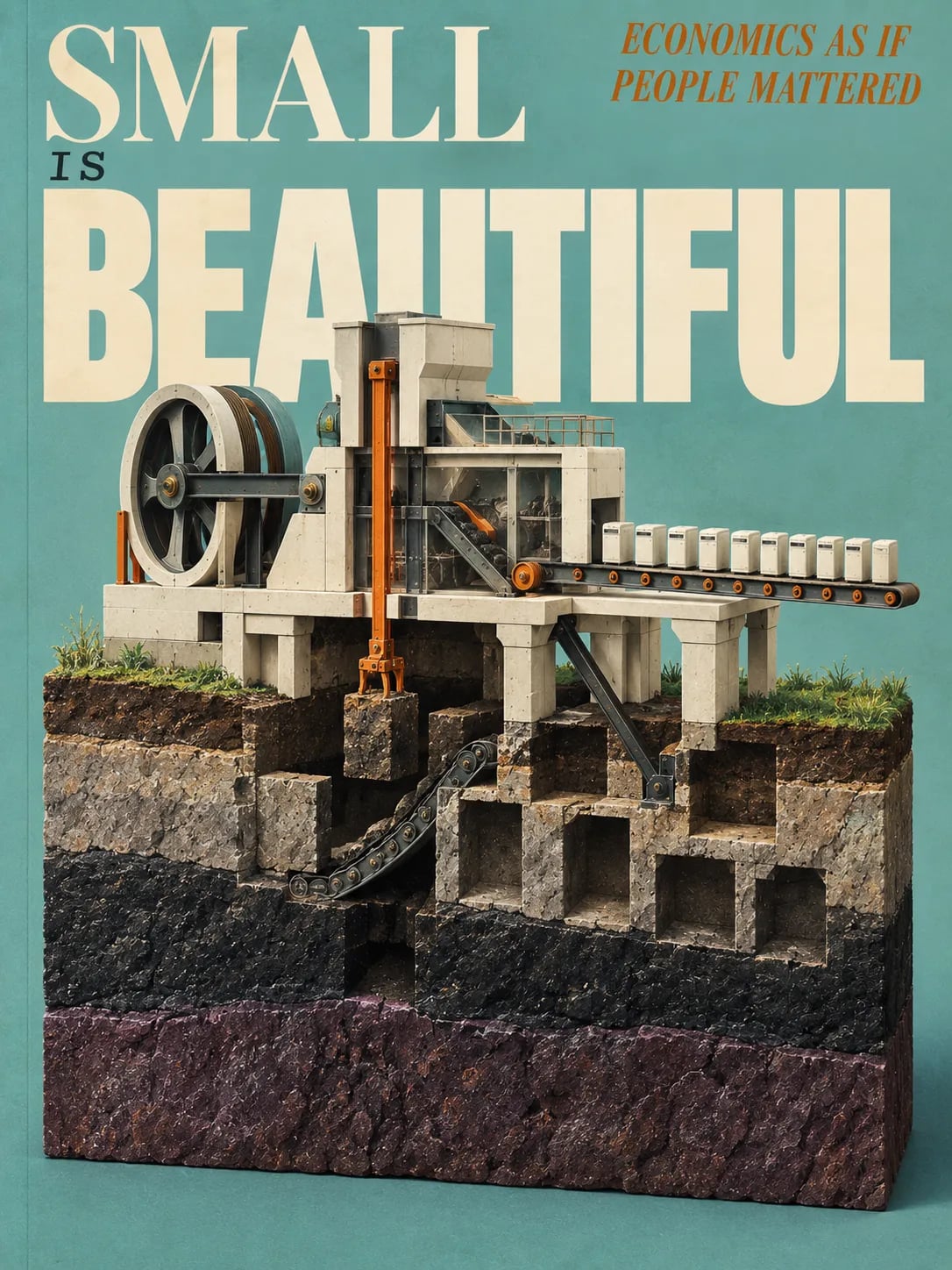
Small Is Beautiful
E. F. Schumacher
16m19 ch

This book explores the critical need for atmospheric restoration, focusing on the urgent challenges of climate change. It begins by highlighting the disproportionate impacts of climate change on vulnerable communities and the widespread sources of greenhouse gas emissions from daily life, such as homes, food, and transportation. The narrative then shifts to explore innovative solutions and technologies, including the transition to electric vehicles, the creation of fossil-free steel, and the potential of methane removal and carbon capture. Ultimately, the author emphasizes that achieving a livable climate requires both drastic emissions cuts and the active removal of gases already in the atmosphere, advocating for systemic change driven by individual and collective action. The book inspires hope by showcasing dedicated individuals and organizations worldwide working towards a sustainable future.
Press play to hear the insight read aloud. Each word highlights in sync with the narration.
Intro
At the heart of this profound challenge lies an inspiring vision, answering the urgent call to restore our planet's atmosphere. It's a story woven from personal anxieties, global inequities, and the quiet determination of individuals and groups striving to heal what has been damaged. We'll explore the science, the innovation, and the deeply human reasons why this endeavor is not just a scientific pursuit, but a moral imperative, offering a powerful message of hope for a future we can still salvage.
1. The Weight of a Generation's Question
– The Weight of a Generations Question A profound realization can begin with nothing more than an ordinary dinner conversation. A young assistant professor, ostensibly with every advantage, poses a startling question. Will I make it to the end of my lifetime? And then a more personal gut punch, and will I be okay? This vulnerability, reflecting a deep -seated grief, underscores a stark reality. While some are fortunate enough to possess resources for adaptation, countless others, and countless species, are not. This imbalance intensifies through stories like that of Faria Khan from Pakistan, whose country, contributing less than 1 % of global carbon emissions, found a third of its land submerged by climate -turbo -charged monsoons. This stark injustice, termed climate colonialism, penalizes low polluting nations for the fossil fuel development of wealthier ones, making the quest for solutions inextricably linked with issues of equity, justice, and collective responsibility.
Continue reading with the cont. app
The full chapter-by-chapter breakdown is waiting for you in the app.
Continue readingCORE PROBLEM & VISION
The Urgent Question: The book begins with poignant questions about climate change's impact on an individual's lifetime and well-being, highlighting a deep, generational grief. This fear is not just for the privileged; it’s disproportionately felt by those in low-polluting nations like Pakistan, which suffer devastating climate impacts despite minimal contribution to global emissions – a concept termed "climate colonialism".
Atmospheric Restoration: The central vision is to restore the atmosphere to preindustrial levels of greenhouse gases, drawing a parallel to the meticulous conservation and restoration of priceless art like the Sistine Chapel frescoes. This is a "cathedral thinking" approach, a multi-generational commitment to healing the planet.
Methane: The Key Near-Term Lever: While carbon dioxide is Public Enemy #1 for long-term warming, methane (CH4) is Public Enemy #2 and the prime target for rapid climate action. It is 80 to 90 times more potent than CO2 in the first two decades after release and has risen much faster. Crucially, methane naturally cleanses from the air in about a decade, meaning that eliminating human-caused methane emissions could restore its concentration to preindustrial levels within a lifetime, saving approximately 0.5°C of warming. This rapid decay makes methane reduction an unparalleled opportunity for quick climate impact.
TACKLING EMISSIONS FIRST
Fairness, Consumption, and Environmental Justice:
Inequality in Emissions: The top 1% of the world's population contributes more fossil carbon emissions than half the people on Earth.
Energy Use vs. Well-being: Surprisingly, research shows that beyond a minimum threshold, increased energy consumption in wealthy nations does not translate to a better quality of life. High-consuming countries could use far less energy without compromising health, happiness, or prosperity.
Environmental Justice: Poorer, often minority, communities are disproportionately burdened by pollution. "Sacrifice zones"—areas bearing exceptional environmental hazards from polluting industries—are unjust and must be dismantled, not perpetuated by new energy infrastructure. This includes exposure to hazardous waste facilities and power plants.
Home Energy and Health Hazards:
Indoor Gas Pollution: Burning natural gas in homes releases cancer-causing benzene, carbon monoxide, and asthma-triggering nitrogen dioxide (NO2). Benzene can reach hazardous levels in kitchens and linger for hours in other rooms, including bedrooms.
Health Impacts: Studies link gas cooking to a 42% increased risk of current asthma in children. NO2 pollution from gas stoves contributes to hundreds of thousands of childhood asthma cases and thousands of deaths annually in the U.S..
Methane Leaks: A significant portion (three-quarters in one study) of methane emissions from gas stoves occurs when they are off, equaling the yearly emissions of half a million U.S. cars.
Electrification as Solution: Electrifying homes by replacing gas appliances with electric alternatives is crucial for reducing both greenhouse gas emissions and indoor air pollution. Modern electric appliances are often simply "better" than their gas versions.
Food and Agriculture: Planet of the Cows:
Livestock's Footprint: Food production accounts for one-third of global greenhouse gas emissions. Beef production drives 80% of Amazon deforestation and uses significantly more land and water than plant-based alternatives.
The "Cow Problem": Cows outweigh all remaining wild terrestrial vertebrates by a factor of ten and produce methane through burps (not flatulence).
Plant-Based Solutions: Companies like Impossible Foods aim to replace the industrial meat industry, arguing that plant-based alternatives are vastly more efficient, requiring 96% less land, 87% less water, and 89% less emissions than beef.
Feed Additives: Research into feed additives (like seaweed and 3-NOP) shows promise for reducing bovine methane emissions by up to 80% or more, potentially providing economic benefits to farmers through increased weight gain.
Transportation: REVved Up:
Major Emission Source: Transportation contributes one-sixth or more of global fossil carbon pollution and 30% of U.S. greenhouse gas emissions.
Electric Vehicle (EV) Transition: EVs offer superior performance (torque, acceleration), lower operating costs, and zero tailpipe emissions. While global EV sales are surging, fleet turnover is slow, meaning new fossil-fuel vehicles bought today will still be polluting for decades.
Health Impacts: Tailpipe emissions kill 50,000 Americans and 400,000 people worldwide annually, primarily from ozone and particulates. Living near busy roads increases risks of strokes, heart attacks, dementia, and asthma.
Hydrogen's Role: Hydrogen vehicles are a niche market, perhaps better suited for long-haul trucking and large vehicles due to battery weight constraints. However, hydrogen is prone to leakage and, when leaked, is 10 to 30 times worse for the climate than CO2.
Industrial Emissions: Stop the Steel:
Steel's Enormous Footprint: Steel production is responsible for a towering 11% of global carbon dioxide emissions, more than most countries.
Fossil-Free Steel: Companies like SSAB are pioneering the production of fossil-free steel using green hydrogen instead of coal for heat and oxygen removal, emitting only water vapor. This requires significant investment but is gaining customer demand.
Carbon Pricing: A global price on carbon pollution is crucial to accelerate the shift to fossil-free manufacturing, as it changes economic feasibility. Countries like Sweden and Finland, which have priced carbon for decades, have seen significant emission declines.
Infrastructure Leaks: Pipe Dreams:
Urban Methane Leaks: Hundreds of thousands of gas leaks, often from aging cast-iron pipes over a century old, "pepper" city streets. These contribute to climate-warming methane emissions and pose explosion risks.
Policy and Progress: Publicly mapping these leaks (e.g., in Boston, Washington D.C.) can catalyze policy changes, allowing utilities to recover costs for repairs and replacements.
Transition Needed: The ultimate solution is a managed, just transition away from natural gas to cleaner electric alternatives. This includes mandating electric appliances in new construction and incentivizing electrification in existing homes.
Lessons from Success: CFC Repair:
Montreal Protocol as a Model: The Montreal Protocol, which phased out ozone-depleting chlorofluorocarbons (CFCs), is a landmark environmental success story [xxii, 99]. It prevented billions of skin cancers and millions of deaths, and also cooled the planet by phasing out potent greenhouse gases.
Key Takeaways: Bipartisan political support, the "insurance policy" concept against catastrophe, industry R&D for replacements, and global monitoring (like Matt Rigby's detective work identifying illegal CFC production in China) were critical.
Vigilance and Time: Even for short-lived gases like methyl chloroform, atmospheric restoration takes decades. For long-lived CFCs, full atmospheric restoration will take centuries, emphasizing the need for sustained vigilance.
THE NECESSITY OF DRAWDOWN
Beyond Emissions Cuts: Given past failures to reduce emissions, removing greenhouse gases already in the atmosphere ("drawdown") is now necessary to keep global temperature increases below 1.5°C or 2°C. This will be expensive, far more so than preventing emissions initially.
Natural Climate Solutions: Reforestation, wetland restoration, and changes in agricultural practices (like no-till farming and plant-based diets) can remove billions of tons of carbon. Rewilding, especially of peatlands, can stop significant soil-based carbon emissions and allow ecosystems to re-emerge as carbon sinks.
Bioenergy with Carbon Capture and Storage (BECCS): This hybrid approach involves growing plants to absorb CO2, burning the biomass for energy, and then capturing and storing the CO2 underground. It's the only drawdown technology that provides energy. Archer Daniels Midland (ADM) operates the world's largest BECCS plant, capturing CO2 from ethanol production. Challenges include cost, public acceptance, and concerns about prolonged fossil fuel use.
Mineralization of CO2: The Carbfix project in Iceland demonstrates permanently storing CO2 by dissolving it in water and pumping it into basalt rock, where it mineralizes into stone in less than two years (far faster than previously thought). This leverages Iceland's abundant geothermal energy.
Direct Air Capture (DAC): Companies like Climeworks are developing technologies to capture CO2 directly from the atmosphere using specialized chemicals. It's currently expensive (>$500/ton) but deemed essential for ambitious temperature targets.
Methane Removal Technologies (X-Methane): Methane removal is a newer field, but promising. It involves oxidizing methane to CO2, which is a net climate benefit due to methane's higher potency. Approaches include catalysts (in paints or industrial systems) or harnessing methane-eating microbes. While not yet commercial, these could act as an insurance policy against future methane releases from thawing permafrost or warming wetlands.
ENDING THE CYCLE AND INSPIRING ACTION
The Deny-and-Delay Playbook: Fossil fuel companies have long understood climate change but have actively used strategies to deny the science and delay action, prioritizing their investments and shareholder value. Tactics include "whataboutism" (shifting blame), "free rider" excuses, and individualism (shifting responsibility to personal consumption choices to obscure systemic issues). This corporate inaction is "ruinous".
Heroes of Change and Scaled Action: Individual actions are not enough; systemic change and scaled collective action are vital.
Mats Karström: A high school teacher who, through decades of citizen science and advocacy, has protected over 150 old-growth forests in Sweden, demonstrating the power of local action.
Reverend Lennox Yearwood Jr.: Leads the Hip Hop Caucus, fighting poverty and pollution by engaging diverse communities in climate and environmental justice, especially through voter engagement.
Rose Abramoff: A climate scientist who transitioned to civil disobedience, advocating for scientists to shed policy neutrality and engage in direct action to highlight the climate emergency, inspired by historical non-violent movements.
The Amazon: A Tipping Point Warning: The Amazon rainforest, despite being a crucial carbon sink, is increasingly vulnerable to climate change, experiencing unprecedented droughts, heat waves, and fires. The mass deaths of river dolphins in Lake Tefé serve as a tragic "first sign of a tipping point," highlighting the severity of the crisis and the direct suffering caused.
Urgency and Hope: The world is "sprinting to the precipice of 1.5°C" warming. Historical climate records are being shattered globally, with the unimaginable becoming "imaginable now". Despite despair, the book emphasizes that solutions exist, and collective action can "shave every tenth of a degree off" the warming curve. The vision of an atmosphere restored requires patience, long-term "cathedral thinking," and a collective mandate akin to a WWII-scale mobilization. It is a call to believe in the work of our hands to bring about a better future].
More like this
Editorial insight by cont. Not affiliated with, endorsed by, or sponsored by the author or publisher. Buy or borrow the full book at Amazon.