Helping Children Succeed
Paul Tough
26m24 ch
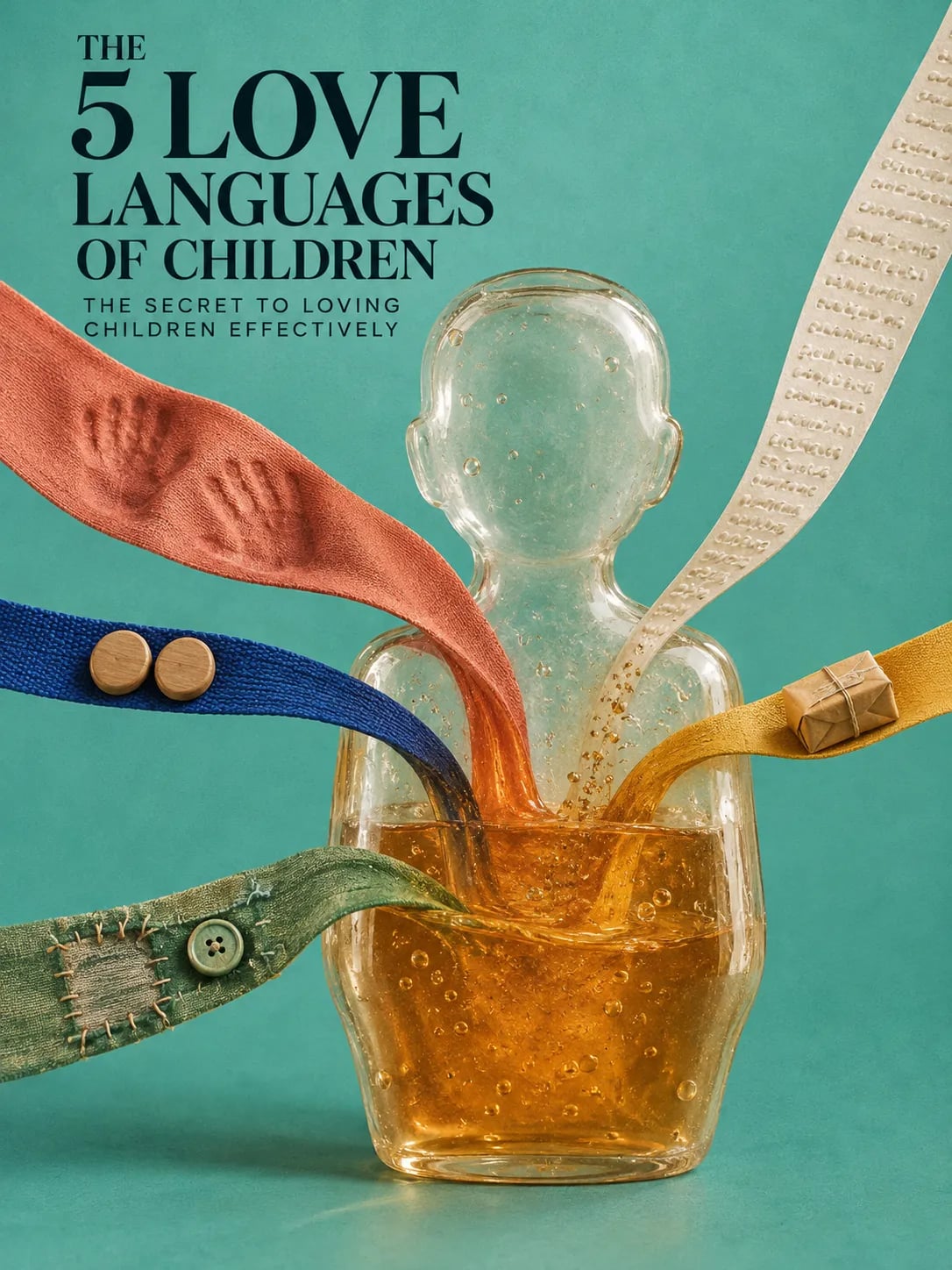
by Gary Chapman and Ross Campbell
"The 5 Love Languages of Children" by Gary Chapman and Ross Campbell introduces five fundamental ways children primarily receive and understand love: physical touch, words of affirmation, quality time, gifts, and acts of service. The book stresses that identifying and speaking a child's unique love language is essential for filling their "emotional tank," providing security, and fostering their development into responsible adults. It guides parents through methods for discovering their child's primary love language, emphasizing unconditional love as the foundational element for all aspects of a child's growth, including learning and discipline. This comprehensive guide equips parents to build stronger, more relaxed, and enjoyable family relationships by effectively communicating love on their child's terms. The principles also extend to supporting single-parent families and strengthening marital relationships, highlighting love's pervasive impact across the family unit.
Press play to hear the insight read aloud. Each word highlights in sync with the narration.
Intro
Welcome to a profound exploration of love within the family. A journey into understanding the deepest emotional needs of children. This listening experience will transform your approach to connecting with the young hearts in your life, revealing how to communicate love in a way they truly comprehend and feel. Imagine a world where every child feels cherished, secure and understood, where their emotional tank is always full, fueling their growth into responsible giving adults. This is the promise that unfolds as we delve into the five fundamental languages of love, offering not just insight, but practical ways to speak directly to your child's heart, fostering a foundation of unconditional affection that will shape their lives forever.
1. Love's Essential Role
– Loves Essential Role At the very core of raising children, everything hinges on the love relationship between parent and child. Without a child feeling genuinely loved and cared for, nothing else works well. It is not enough to simply love your child. They must feel that love, which requires speaking the unique language that communicates to them most effectively. Every child possesses an emotional tank, a wellspring of emotional strength, vital for navigating the challenges of childhood and adolescence. Just as a car needs fuel, children need their emotional tanks filled with love to function properly and reach their full potential. Crucially, this love must be unconditional, meaning it accepts and affirms a child for who they are, not for what they do. This stands in contrast to conditional love, which is based on performance and may use rewards to manipulate behavior, leading to feelings of resentment, insecurity, or a sense of being unloved. Unconditional love is a guiding light that helps parents understand their children deeply and address their behaviors whether good or bad. No child can receive too much appropriate, unconditional love.
Continue reading with the cont. app
The full chapter-by-chapter breakdown is waiting for you in the app.
Continue readingThis book emphasizes that love is the essential foundation for raising emotionally healthy and responsible children. Understanding and consistently speaking your child's primary love language is crucial for their well-being and development, preventing many emotional problems and fostering positive responses to parental guidance.
Core Concepts
Emotional Tank: Every child has an "emotional tank" that needs to be continuously filled with love to provide emotional strength, enabling them to function optimally and reach their potential. A full tank makes children more receptive to discipline and training, while an empty one leads to insecurity, resentment, and misbehavior.
Unconditional Love: This is a complete love that accepts and affirms a child for who they are, not for what they do or achieve. It means loving a child consistently, even through challenging behaviors, and regardless of their physical appearance, abilities, or handicaps. Appropriate unconditional love cannot spoil a child; "spoiling" usually results from a lack of training or inappropriate expressions of love.
The Five Love Languages and Their Significance
**Physical Touch:
**
Expression: Hugs, kisses, cuddling, wrestling, gentle touches, piggyback rides, hand-holding, and comforting touches when a child is hurt or sick.
Importance: It's one of love's strongest voices, essential from infancy for healthy emotional development, and critical throughout childhood and adolescence.
Nuances: Boys may resist softer touches in some stages but still need vigorous contact. Teenagers need it in appropriate times and places, and from same-sex parents too. Negative physical touch (e.g., a slap) can be devastating for a child whose primary language is touch.
**Words of Affirmation:
**
Expression: Words of affection ("I love you"), praise for specific actions/achievements, encouragement for efforts, and positive guidance.
Importance: Nurtures a child's inner sense of worth and security. Children tend to deeply believe what parents say.
Nuances: Praise should be genuine, specific, and justified to be meaningful. Encouragement "instills courage" for new experiences and efforts. Positive guidance focuses on interests and abilities, rather than primarily on prohibitions. Harsh or critical words are deeply damaging, especially to children whose primary language is words of affirmation.
**Quality Time:
**
Expression: Focused, undivided attention, doing things together, positive eye contact, sharing thoughts and feelings, quality conversations, and reading stories.
Importance: Conveys "You are important. I like being with you," making the child feel like the most important person to the parent. It creates lasting memories and strengthens family bonds.
Nuances: Requires sacrifice and deliberate scheduling, especially as children grow. Eye contact should be loving, not just for reprimands. Bedtime rituals and family meals are excellent opportunities for quality time. Even negative attention is preferred over no attention for children starved for quality time.
**Gifts:
**
Expression: Tangible expressions of love, thoughtfully chosen presents or surprises.
Importance: Gifts become symbols of love, reminding children they are cared for and thought about.
Nuances: A true gift is freely given as an expression of love, not as payment or a bribe for good behavior. The grace of giving has little to do with cost, but everything to do with love and thoughtfulness. Excessive or ill-chosen gifts can become substitutes for other love languages, potentially leading to materialism or manipulation.
**Acts of Service:
**
Expression: Doing things for your child that they cannot yet do for themselves, or doing things that you know they would appreciate, with a loving and positive attitude.
Importance: Parenting is a service-oriented vocation. Loving acts of service model unselfishness and responsibility, helping children grow into mature adults capable of serving others.
Nuances: The ultimate purpose is to teach children to give love through service, moving them past self-centeredness. Service should be age-appropriate; as children mature, they should be taught to serve themselves and others. Serving with resentment or bitterness can harm a child's emotional development.
Key Parenting Themes
**Discipline and Love Languages:
**
Discipline, meaning "to train," is a positive act of love. It is most effective when the child's emotional love tank is full.
Do not use a child's primary love language as a form of punishment. For example, do not use condemning words for a child whose language is words of affirmation, or isolation for a child whose language is quality time, or withholding affection for physical touch. This causes deep emotional pain and rejection instead of loving correction.
Parents should use a mix of control methods: requests (positive, respectful, fosters responsibility), commands (necessary when requests fail, but can elicit irritation if overused), gentle physical manipulation (especially for young children and non-defiant behavior), and punishment (used sparingly, fit the "crime," planned ahead, and never as the primary method). Behavior modification should also be used sparingly, as it can be conditional and hinder unconditional love.
It is wise to express love (using their primary language) both before and after administering discipline.
**Learning and Love Languages:
**
Parents are a child's first and most important teachers. A child's ability to learn well depends significantly on their emotional maturity, which is fostered by parents.
A child who feels genuinely loved and secure will have the concentration, motivation, and energy needed for learning. Children starved for love will have little motivation for learning.
Consistently speaking all five love languages provides intellectual stimulation and meets emotional needs, preparing children for learning challenges, especially transitions like moving from concrete to abstract thinking around fourth grade.
To motivate a child, encourage their interests and allow them to take responsibility for their own behavior and learning, such as homework.
**Anger and Love:
**
Anger is a normal emotion that can have a righteous purpose (to motivate correction) but is often mishandled destructively. A child's own anger is a primary lifetime threat if not managed well.
Parents must learn to handle their own anger constructively, being "kind but firm" and modeling appropriate responses. Mismanaged parental anger is "dumped" on children and leads to negative outcomes.
Passive-aggressive behavior (indirect expression of anger) is a destructive way to handle anger, often seen in early adolescence (13-15 years old) as a subconscious test of parental love.
It is better for a child to express anger verbally than behaviorally. Parents should allow children to verbalize their anger, calmly listening and then training them to move towards resolution, rather than suppressing it, which can lead to passive-aggressive behavior.
**Speaking Love Languages in Single-Parent Families:
**
Single parents face immense pressures (time, economic, emotional wounds from divorce/loss). Children in these families still have the same needs, but often have deep emotional wounds (fear, anger, anxiety) from the separation/loss.
The child's love tank may be ruptured by trauma and needs extensive sympathetic listening and processing of grief.
It is vital for single parents to learn and speak their child's primary love language, and to seek help from extended family, friends, and community resources. Other significant adults might be the only ones able to express love to a child in the early stages of grieving.
Parents must also prioritize their own emotional and physical health to be effective caregivers.
**Speaking Love Languages in Marriage:
**
The best way to love your children is to love their other parents. A healthy marital relationship provides security and a stronger model for children.
Spouses also have emotional love tanks and primary love languages. Learning and regularly speaking your spouse's primary love language fosters a deep inner feeling of being loved, strengthening the marriage.
This deep, genuine love is distinct from the temporary "in love" feeling. A strong marital bond allows parents to work as a team, benefiting their children.
Discovering Your Child's Primary Love Language
Identifying a child's love language takes time and observation, especially for children under five. Avoid discussing your "search" directly with children, particularly teenagers, to prevent manipulation.
Here are the key methods for discovery:
Observe How Your Child Expresses Love to You: Young children (5-10 years) often give love in the way they most desire to receive it.
Observe How Your Child Expresses Love to Others: If they consistently offer gifts, affirm others, or seek quality time with others, these are clues.
Listen to What Your Child Requests Most Often: Frequent requests for specific interactions (e.g., "play with me" for Quality Time, "look what I made" for Words of Affirmation) indicate their needs.
Notice What Your Child Most Frequently Complains About: Consistent complaints (more than half) about a lack of a specific type of interaction (e.g., "You're always busy" for Quality Time) are strong indicators.
Give Your Child a Choice Between Two Options: Offer choices representing two different love languages over several weeks (e.g., "gym together" vs. "help pick out shoes" for Quality Time vs. Gifts) and record their preferences.
A Fifteen-Week Experiment: For difficult cases, focus on one love language for two weeks, observe the child's response, take a week off, and then repeat with another language. Look for positive responses or requests for a previously experienced language.
Long-Term Perspective
It is never too late to start speaking your child's love language. Human relationships are dynamic, and efforts to build bridges, even with adult children, can lead to forgiveness and closer bonds. While identifying a primary love language is vital, parents should strive to become "multilingual" in all five love languages. This ensures children receive comprehensive emotional nurturing and prepares them to give and receive love effectively in all their future relationships, making them more balanced and outstanding adults.
More like this
Helping Children Succeed
Paul Tough

It’s OK to Go Up the Slide
Heather Shumaker

We Can Do Hard Things
Glennon Doyle, Abby Wambach, and Amanda Doyle

It. Goes. So. Fast. The Year of No Do-Overs
Mary Louise Kelly
Connected Parenting
Jennifer Kolari

Minimalist Parenting
Christine Koh and Asha Dornfest
Positive Discipline for Today’s Busy (and Overwhelmed) Parent
Jane Nelsen, Kristina Bill, and Joy Marchese

The Tech-Wise Family
Andy Crouch
Editorial insight by cont. Not affiliated with, endorsed by, or sponsored by the author or publisher. Buy or borrow the full book at Amazon.