Triceratops
Genus of Late Cretaceous dinosaur
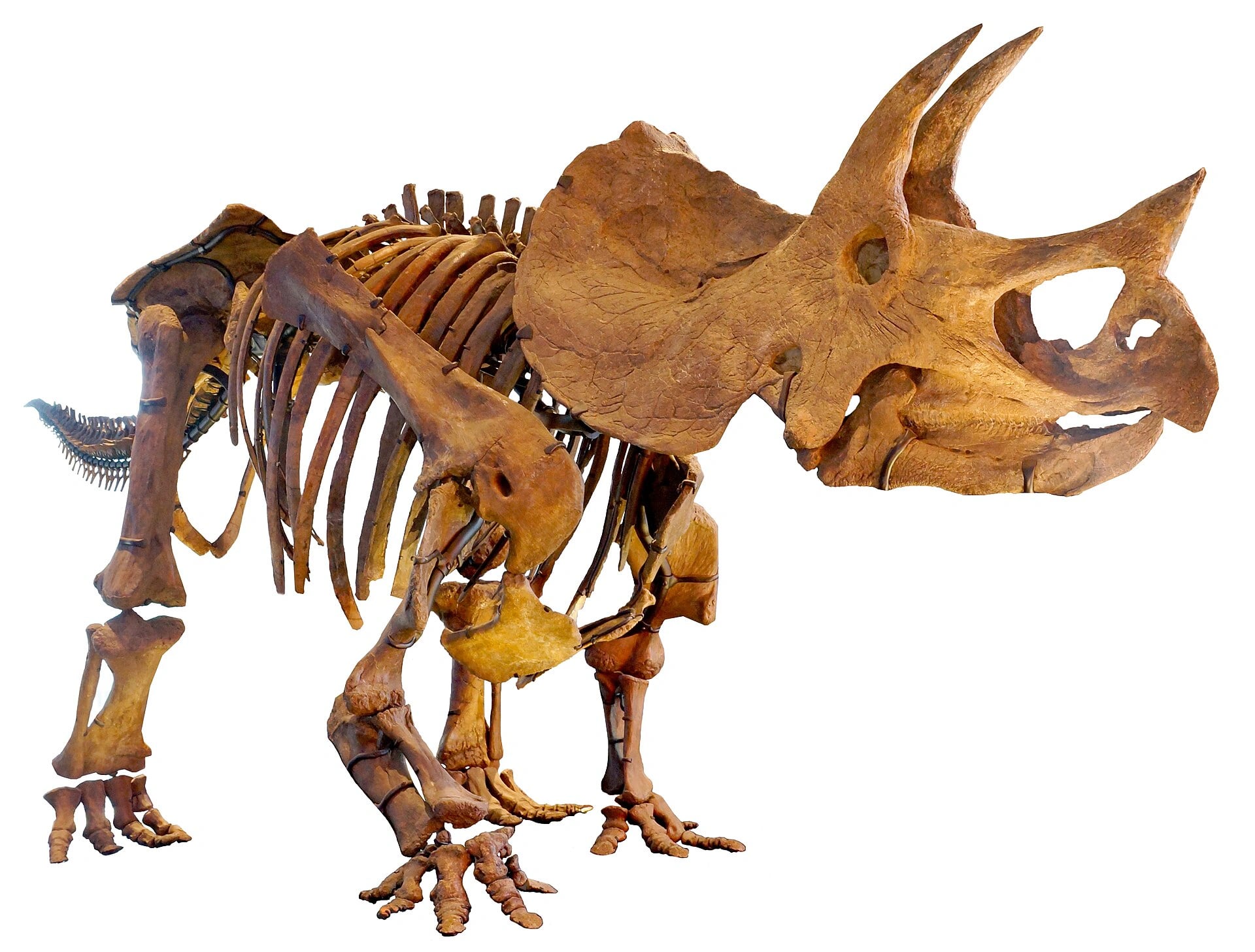
Triceratops ( try-SERR-ə-tops; lit. 'three-horned face') is a genus of chasmosaurine ceratopsian dinosaur that lived during the late Maastrichtian age of the Late Cretaceous period, about 69 to 66 million years ago on the island continent of Laramidia, now forming western North America. It was one of the last-known non-avian dinosaurs and lived until the Cretaceous–Paleogene extinction event 66 million years ago. The name Triceratops, which means 'three-horned face', is derived from Ancient Greek trí- (τρί-), meaning 'three', kéras (κέρας), meaning 'horn', and ṓps (ὤψ), meaning 'face'.
Bearing a large bony frill, three horns on the skull, and a large, four-legged body, exhibiting convergent evolution with rhinoceroses, Triceratops is one of the most recognizable of all dinosaurs and the best-known ceratopsian. It was also one of the largest, measuring around 8–9 m (26–30 ft) long and weighing up to 6–10 t (5.9–9.8 long tons; 6.6–11.0 short tons). It shared the landscape with and was most likely preyed upon by Tyrannosaurus rex. The functions of the frills and three distinctive facial horns on its head have inspired countless debates. Traditionally, these have been viewed as defensive weapons against predators. More recent interpretations find it probable that these features were primarily used in species identification, courtship, and dominance display.
From Wikipedia and its contributors, under CC BY-SA 4.0. Text reformatted for this reading view.