Gothic boxwood miniature
Early 16th-century wood carving from the Low Countries
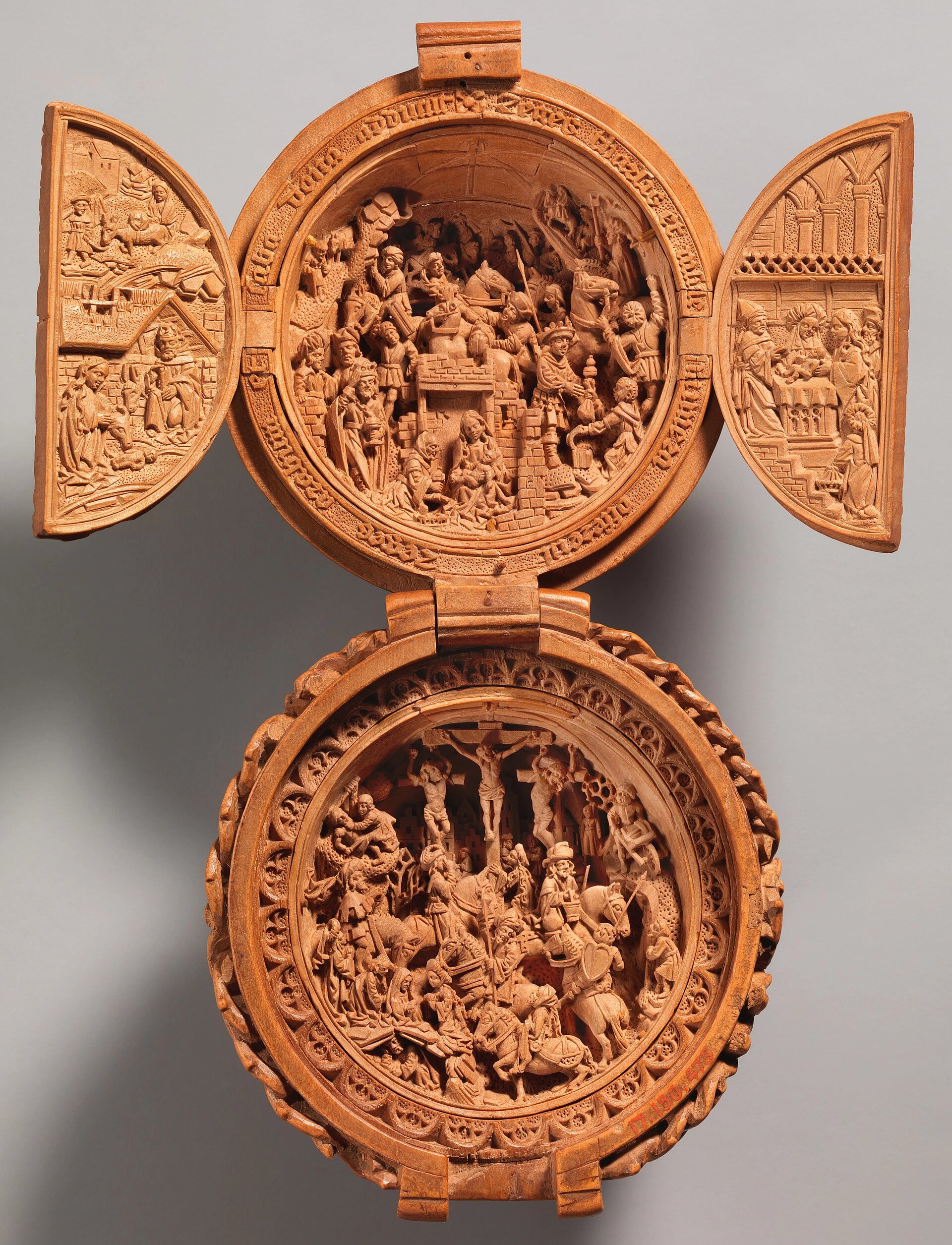
Gothic boxwood miniatures are very small Christian-themed wood sculptures produced during the 15th and 16th centuries in the Low Countries, at the end of the Gothic period and during the emerging Northern Renaissance. They consist of highly intricate layers of reliefs, often rendered to nearly microscopic level, and are made from boxwood, which has a fine grain and high density suitable for detailed micro-carving. There are around 150 surviving examples; most are spherical rosary beads (known as prayer nuts), statuettes, skulls, or coffins; some 20 are in the form of polyptychs, including triptych and diptych altarpieces, tabernacles and monstrances. The polyptychs are typically 10–13 cm (3.9–5.1 in) in height. Most of the beads are 10–15 cm (3.9–5.9 in) in diameter and designed so they could be held in the palm of a hand, hung from necklaces or belts, or worn as fashionable accessories.
Boxwood miniatures were highly prized in the early 16th century. Their iconography, form, and utility can be linked to medieval ivory carvings, as well as contemporary illuminated miniatures, altarpieces, panel paintings, sculpture, woodcuts, and engravings. They typically contain imagery from the life of Mary, the Crucifixion of Jesus, or vistas of Heaven and Hell. Each miniature's production required exceptional craftsmanship, suggesting that they were commissioned by high-ranking nobles.
From Wikipedia and its contributors, under CC BY-SA 4.0. Text reformatted for this reading view.