The Third of May 1808
1814 painting by Francisco de Goya
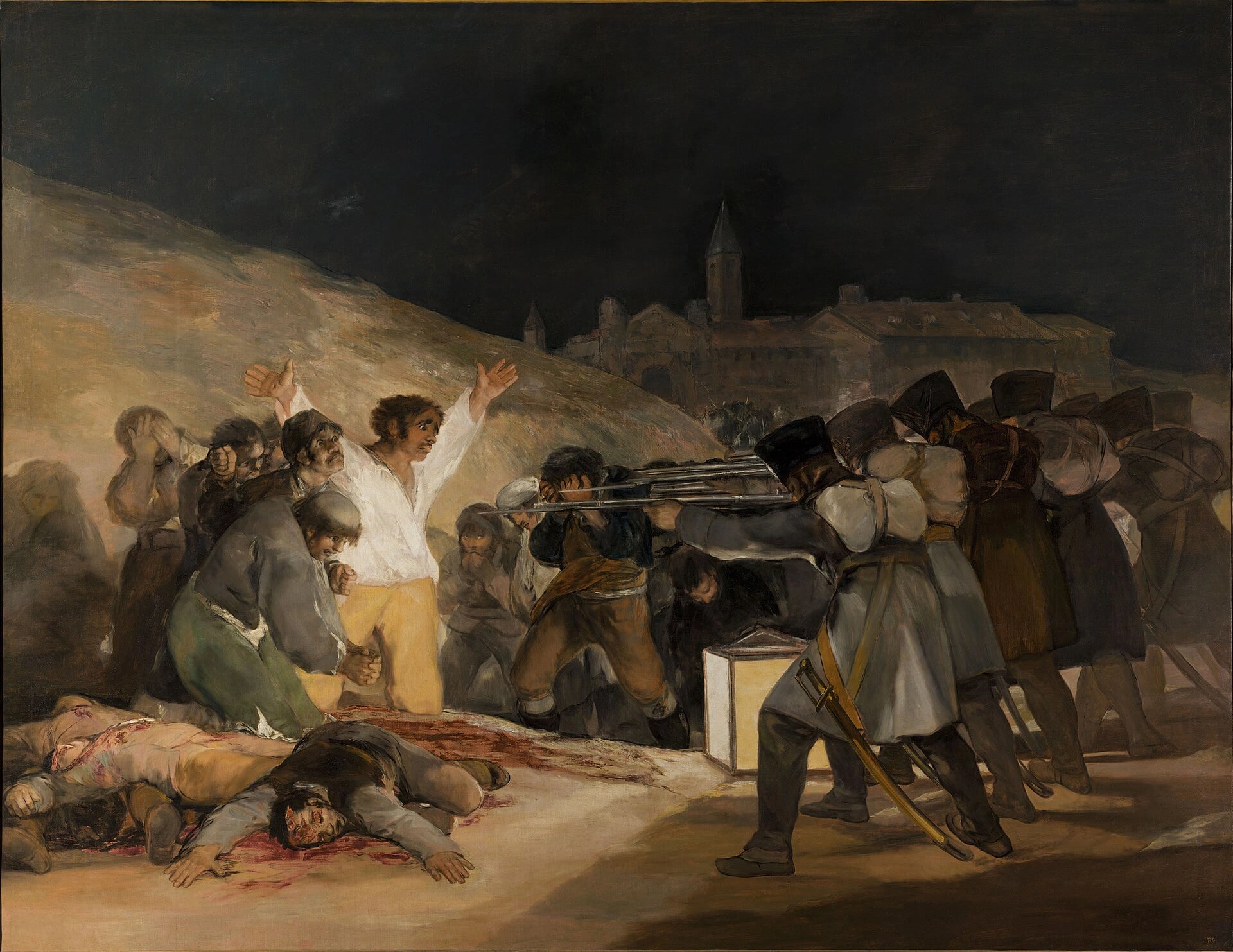
The Third of May 1808 in Madrid (commonly known as The Third of May 1808) and also known, in Spanish, as El tres de mayo de 1808 en Madrid or Los fusilamientos de la montaña del Príncipe Pío, or Los fusilamientos del tres de mayo, is a painting completed in 1814 by the Spanish painter Francisco Goya. In the work, Goya sought to commemorate Spanish resistance to Napoleon's armies during the occupation of Madrid in 1808 at the start of the Peninsular War. Along with its companion piece of the same size, The Second of May 1808 (or The Charge of the Mamelukes), it was commissioned by the provisional government of Spain at Goya's own suggestion shortly after the ousting of the French occupation and the restoration of King Ferdinand VII.
The painting's content, presentation, and emotional force secure its status as a ground-breaking, archetypal image of the horrors of war. Although it draws on many sources from both high and popular art, The Third of May marks a clear break from convention. By diverging from the traditions of Christian art and traditional depictions of war, it has no distinct precedent, and is acknowledged as one of the first paintings of the modern era. According to the art historian Kenneth Clark, it is "the first great picture which can be called revolutionary in every sense of the word, in style, in subject, and in intention".
From Wikipedia and its contributors, under CC BY-SA 4.0. Text reformatted for this reading view.