Ganymede (moon)
Largest moon of Jupiter
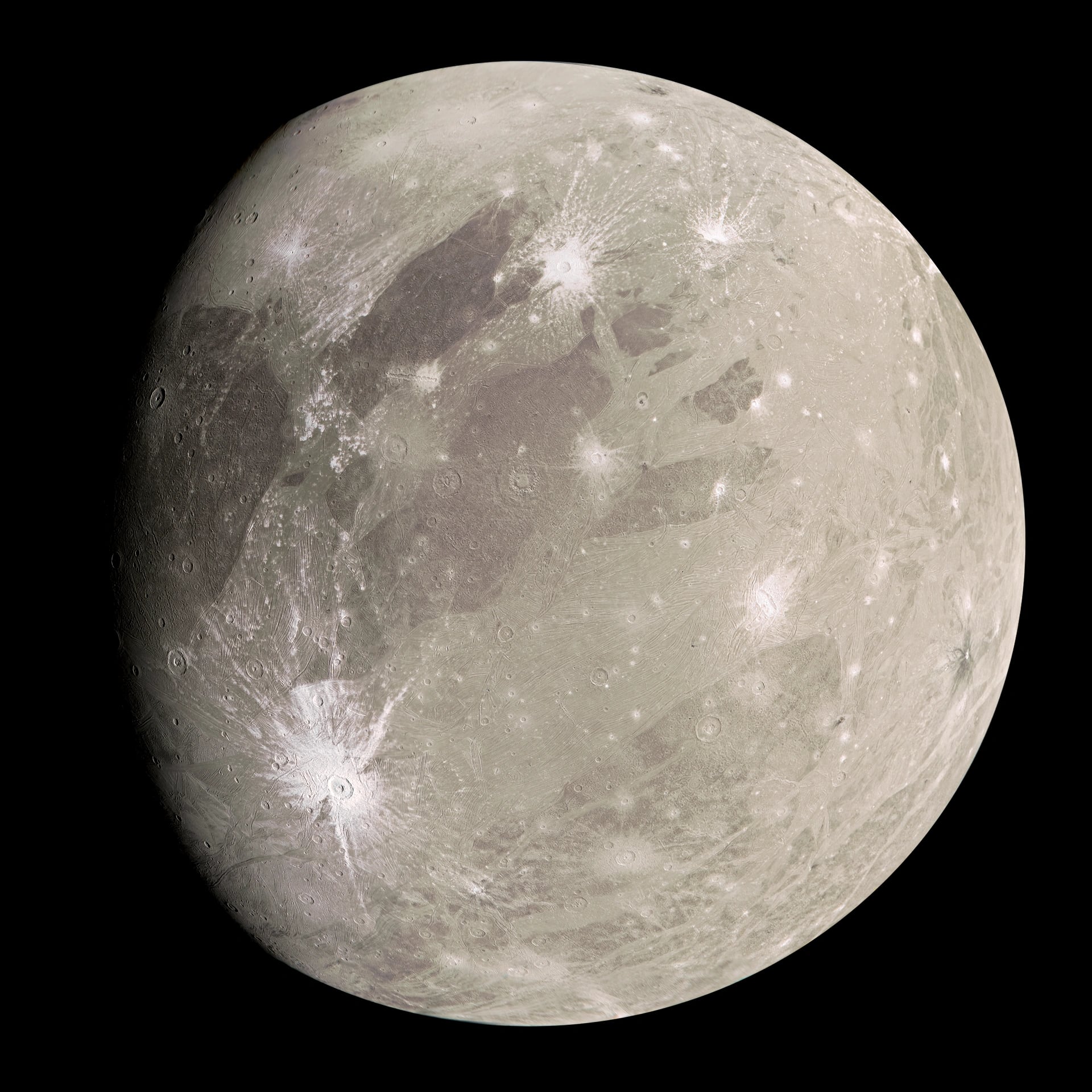
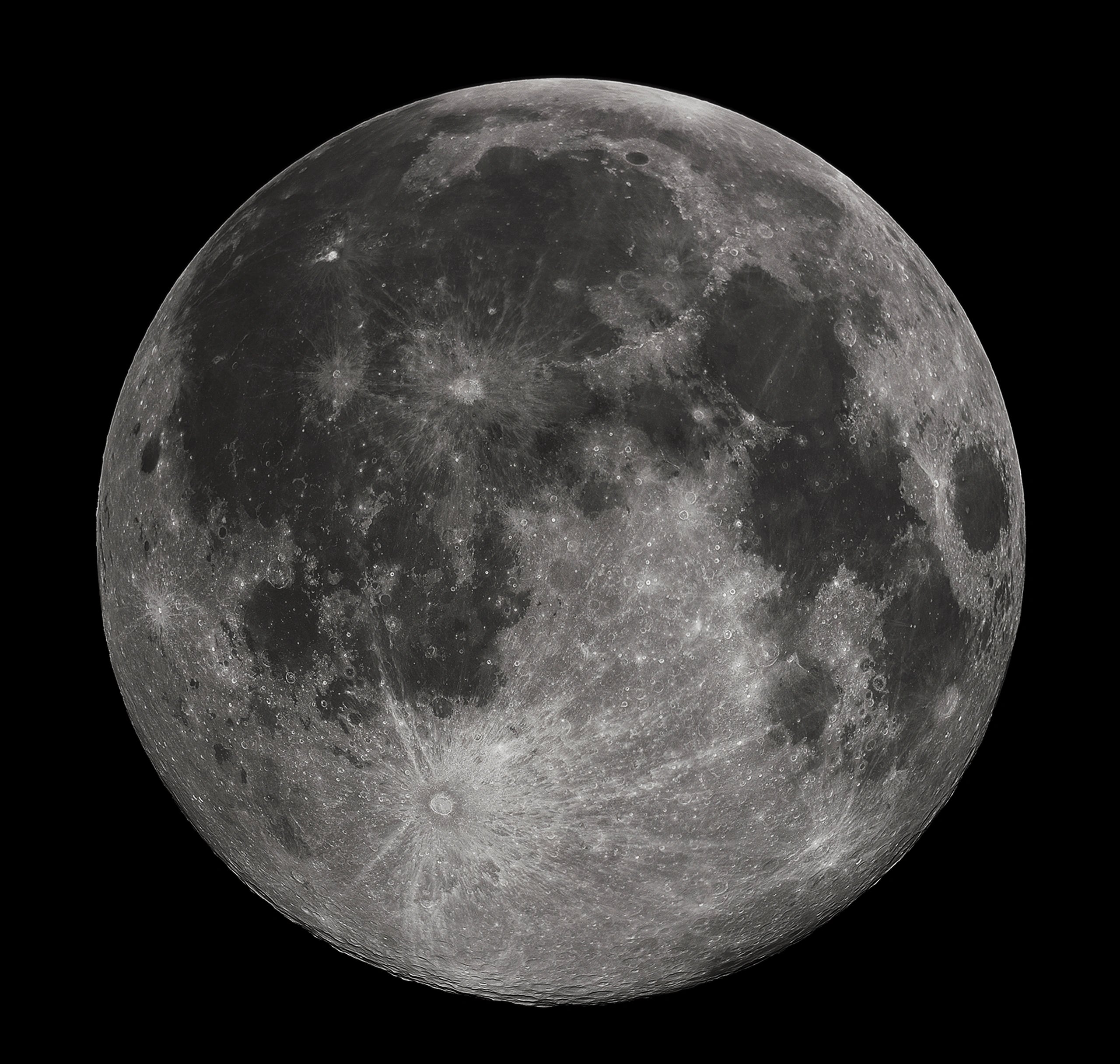
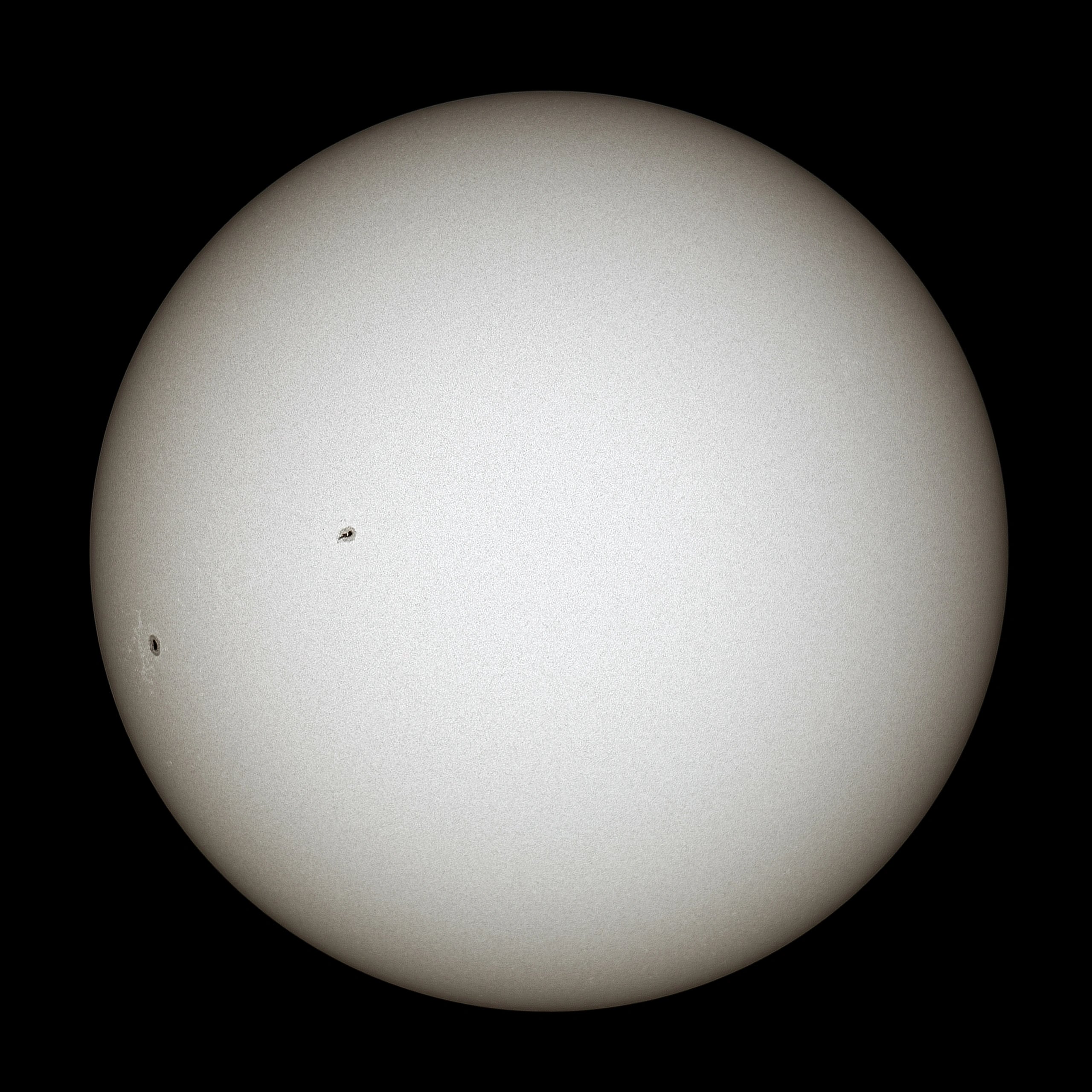
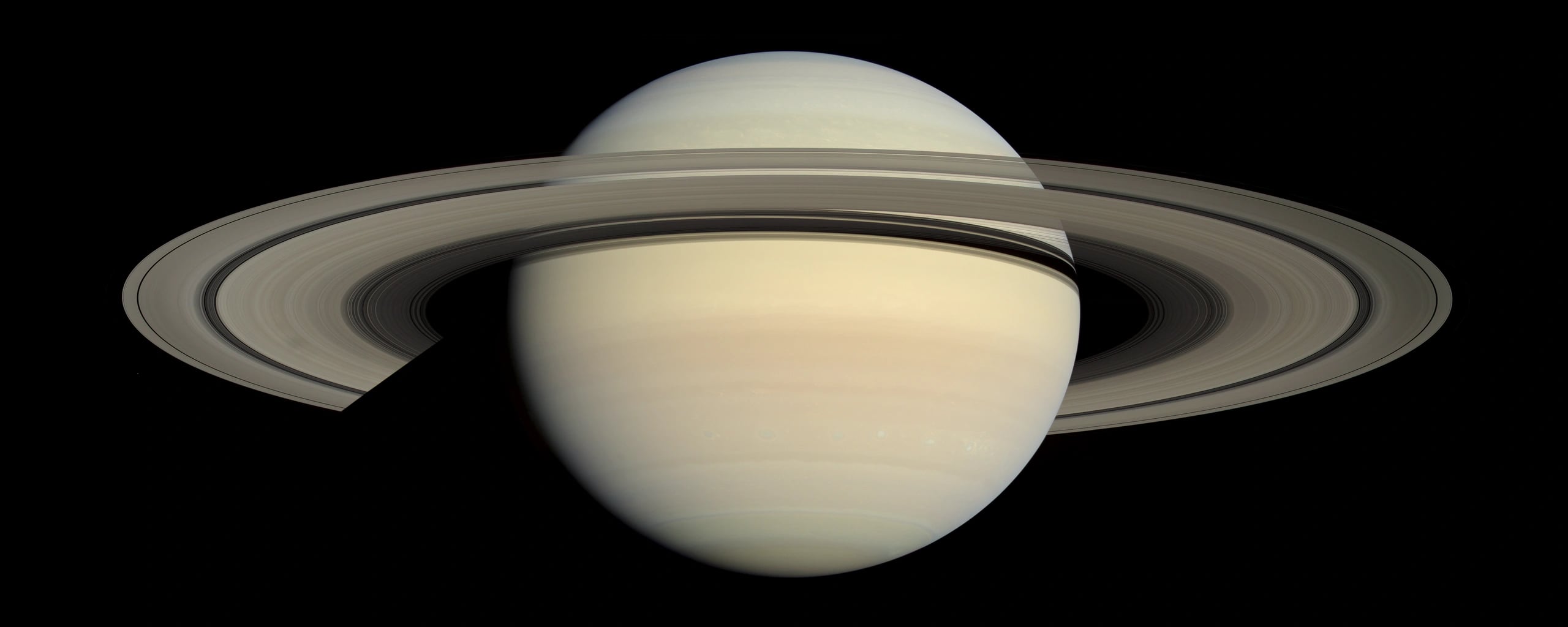
Ganymede is a natural satellite of Jupiter and is the largest and most massive moon in the Solar System. Like Saturn's largest moon, Titan, it is larger than the planet Mercury, but has somewhat less surface gravity than Mercury, Io, or Earth's Moon due to its lower density compared to the three. Ganymede orbits Jupiter in roughly seven days and is in a 1:2:4 orbital resonance with the moons Europa and Io, respectively.
Ganymede is composed of silicate rock and water in approximately equal proportions. It is a fully differentiated body with an iron-rich, liquid metallic core, giving it the lowest moment of inertia factor of any solid body in the Solar System. Its internal ocean potentially contains more water than all of Earth's oceans combined.
From Wikipedia and its contributors, under CC BY-SA 4.0. Text reformatted for this reading view.