Tools and Weapons
Brad Smith and Carol Ann Browne
13m18 ch
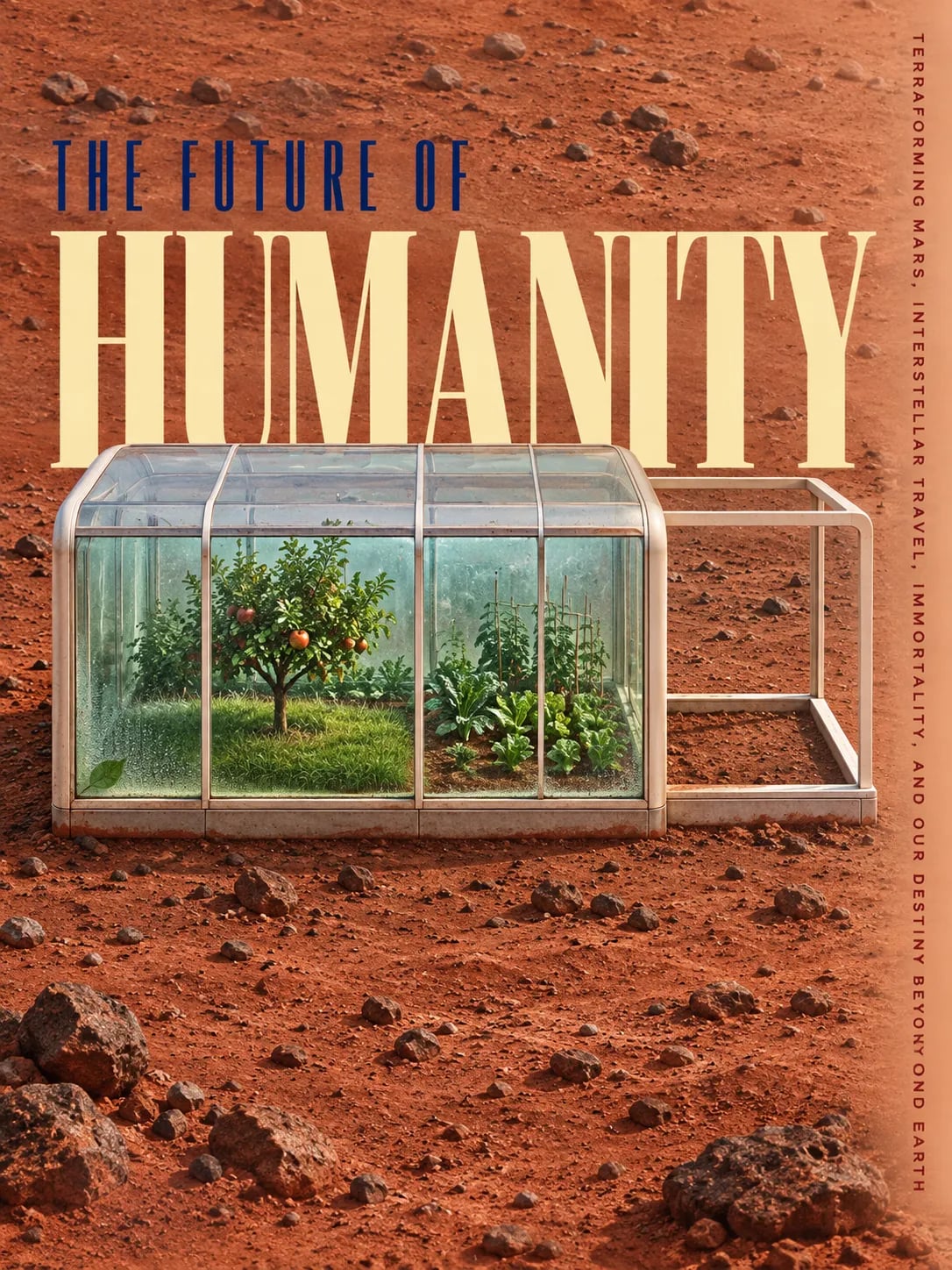
The Future of Humanity explores the critical imperative for humanity to become a multiplanet species, highlighting the existential threats that necessitate expanding beyond Earth for long-term survival. The book delves into the revolutionary scientific and technological advancements that will make this future possible, from the development of reusable rockets and the potential for asteroid mining to the roles of artificial intelligence and genetic engineering in establishing off-world colonies. Readers are guided through the challenges and possibilities of interstellar travel, the ongoing search for exoplanets and extraterrestrial life, and the ethical considerations inherent in modifying human biology for new environments. Ultimately, the narrative speculates on the evolution of advanced civilizations and envisions humanity's ultimate destiny to potentially escape the eventual death of the universe by mastering cosmic forces and exploring the multiverse.
Press play to hear the insight read aloud. Each word highlights in sync with the narration.
Intro
Far beyond our familiar blue planet lies the future toward which humanity's destiny may be heading. This book delves into the incredible scientific and technological leaps that could enable us to venture forth, not just to nearby worlds, but to the very stars themselves. It explores our deepest fears about extinction and our most ambitious dreams of becoming a multi -planet species, painting a vivid picture of the challenges and breathtaking possibilities that lie ahead.
1. Facing Cosmic Realities
Facing Cosmic Realities For much of our existence, humanity has faced the relentless threat of extinction, from ancient volcanic cataclysm that nearly wiped us out 75 ,000 years ago, to the ever -present danger of large asteroid impacts, and even the eventual death of our own son 5 billion years from now, the odds have always seemed stacked against us. Unlike other life forms that passively accept their fate, we possess the unique ability to shape our own destiny. This understanding underscores a basic responsibility, to venture to other worlds and secure our long -term survival, essentially creating an insurance policy for our species.
Continue reading with the cont. app
The full chapter-by-chapter breakdown is waiting for you in the app.
Continue readingI. THE IMPERATIVE TO LEAVE EARTH: AN INSURANCE POLICY FOR OUR SPECIES
Existential Threats: Humanity faces an array of dangers, from natural cataclysms like supervolcanoes (e.g., Toba eruption 75,000 years ago, Yellowstone) and asteroid impacts, to the ultimate fate of our sun expanding into a red giant. Self-inflicted threats like global warming, modern warfare, and weaponized microbes also loom.
Carl Sagan's Vision: Astronomer Carl Sagan stressed the need for an "insurance policy" for humanity, advocating that we become a "two planet species". This is a fundamental responsibility to ensure our long-term survival.
Human Destiny: The book posits that humanity's ultimate destiny is to become a multiplanet species, spreading across the solar system and eventually the Milky Way galaxy.
II. THE NEW GOLDEN AGE OF SPACE TRAVEL: A RENAISSANCE DRIVEN BY INNOVATION
Shifting Landscape: Unlike past, predominantly government-led space efforts, the current resurgence is fueled by a unique blend of private funding from Silicon Valley entrepreneurs (e.g., Jeff Bezos, Elon Musk) and governmental financing, alongside a significant drop in space travel costs.
Pioneers and Their Legacy:
Konstantin Tsiolkovsky developed the foundational physics and mathematics of rocketry, including the crucial exponential rocket equation. His philosophy, "The Earth is our cradle, but we cannot be in the cradle forever," remains a guiding principle.
Robert Goddard built the first liquid-fueled, multi-stage rockets with gyroscopic stabilization, laying practical groundwork despite initial ridicule.
Wernher von Braun leveraged government support (initially Nazi Germany, later the U.S.) to create gargantuan rockets like the V-2, which achieved spaceflight, and later the Saturn V for Apollo missions.
Reusable Rockets: Innovators like Elon Musk (SpaceX's Falcon rocket) and Jeff Bezos (Blue Origin's New Shepard) are pioneering reusable booster rockets, drastically reducing launch costs and making space travel more accessible, akin to a "used-car market" for rockets.
Space Tourism: The emergence of companies like Blue Origin and Virgin Galactic signals a future where space tourism becomes a reality, offering suborbital flights with views of Earth.
NASA's Realigned Focus: After periods of funding cuts and indecision, NASA has formally declared its long-term goal to send astronauts to Mars, using the moon as a stepping stone via the Space Launch System (SLS) and Orion capsule.
III. LEAVING THE EARTH: MOON, ASTEROIDS, AND MARS
Returning to the Moon: The moon is seen as a crucial "cosmic gas station" due to its water ice (convertible to rocket fuel and oxygen) and potential helium-3 for future fusion reactors. Establishing permanent bases would involve utilizing lava tubes for radiation shielding, 3-D printing, and lunar soil for construction.
Mining the Heavens (Asteroids): Asteroids are "flying gold mines" containing vast amounts of valuable metals like platinum and rare earths. Companies like Planetary Resources aim to extract these. Ceres, the largest object in the asteroid belt, is a prime candidate for a permanent space station and staging area due to its size, weak gravity, and water ice.
The Mars Imperative:
Terraforming Mars: The ultimate goal for Mars is to transform its desolate environment into a "Garden Planet" capable of sustaining agriculture and cities. Strategies include:
Introducing greenhouse gases (methane, water vapor, CO2) to trigger a self-sustaining warming "tipping point".
Using orbital solar satellites to focus sunlight on ice caps.
Deflecting methane-rich comets or asteroids to impact Mars, releasing greenhouse gases.
Even controversially, detonating hydrogen bombs above the ice caps.
Challenges of Mars Travel: A nine-month, one-way journey to Mars poses significant physical and psychological challenges: muscle and bone atrophy from weightlessness, cosmic radiation causing brain and eye damage, and the psychological stress of prolonged confinement.
Robert Zubrin's Mars Direct: This innovative plan proposes sending an unmanned vehicle first to Mars to manufacture return fuel from Martian CO2 and a small amount of hydrogen, greatly reducing mission costs and enabling humans to "live off the land".
Beyond Mars (Gas Giants' Moons): Moons like Europa (Jupiter) and Enceladus (Saturn) are prime candidates for future exploration due to evidence of vast subsurface liquid water oceans, heated by tidal forces from their parent gas giants. Titan (Saturn's moon) is also considered for human exploration due to its thick atmosphere and methane/ethane lakes, offering potential fuel sources.
Interstellar Stepping Stones: The Oort Cloud of comets at the solar system's edge could serve as "cosmic Route 66" waypoints for interstellar journeys, providing resources and locations for future relay stations.
IV. VOYAGE TO THE STARS: ADVANCED TECHNOLOGY AND HUMAN TRANSFORMATION
The Role of Robots and AI:
Automatons in Space: True automatons, capable of independent decision-making and operating in hazardous environments (e.g., radiation fields, lava tubes), will be essential for building and maintaining space colonies and exploring distant worlds.
Nanotechnology: Materials like graphene and carbon nanotubes will revolutionize space construction, offering super-strong, lightweight, and even transparent building blocks for cities on other planets.
Learning Machines: Future AI will employ deep learning and neural networks, allowing robots to learn from experience and adapt to unforeseen scenarios in space, overcoming current limitations in common sense and pattern recognition.
Self-Replicating Robots: The ultimate goal is to create machines that can reproduce themselves, using local raw materials (e.g., lunar regolith), drastically reducing the need for Earth-based supplies.
Ethical AI: The book delves into the potential dangers of self-aware AI, stressing the need to program machines with human-aligned objectives and fail-safes. Consciousness is defined as the ability to build models of oneself in space, society, and time, with human consciousness distinguished by its temporal simulation capabilities.
Quantum Computing: This nascent technology, operating on "qubits" (atoms in mixed states), could provide the processing power for high-level planetary planning and manipulation, far exceeding current digital computers.
Building a Starship:
Sub-Light Speed Travel: For initial interstellar missions, propulsion systems like laser sails (e.g., Breakthrough Starshot), ion engines, plasma engines, nuclear fission/fusion rockets (e.g., Project Daedalus), and nuclear pulsed rockets (e.g., Project Orion) are discussed. Nanoships propelled by ground-based lasers could reach Proxima Centauri in 20 years.
Space Elevators: These structures, enabled by nanotechnology, could drastically reduce the cost of launching payloads into space, serving as effortless gateways to orbit.
Faster-Than-Light (FTL) Travel:
Wormholes (Einstein-Rosen bridges): Shortcuts through space-time that could connect distant points. Their stability requires hypothetical negative matter or negative energy.
Alcubierre Drive (Warp Drive): A theoretical solution to Einstein's equations that compresses space in front of a starship and expands it behind, allowing FTL travel without violating local speed limits. It also requires negative energy.
String Theory: The leading candidate for a "theory of everything" that could unify gravity and quantum mechanics. It postulates that all particles are vibrating strings in ten (or eleven) dimensions. String theory is necessary to calculate the stability of wormholes and warp drives in the presence of quantum fluctuations. It also offers explanations for dark matter (as a "sparticle" partner of photons).
A Universe Teeming with Planets:
Exoplanet Discoveries: Missions like the Kepler spaceflight have revealed thousands of exoplanets, showing that our solar system's arrangement is quite rare. There could be 20 billion Earth-like planets in our galaxy alone.
Diverse Worlds: Discoveries include "hot Jupiters" close to their stars, "super-Earths" (rocky planets 1.5-2 times Earth's size), and even rogue planets (wandering without a star) which might host life via internal radioactive heat.
Habitable Zones: The book highlights planets like Proxima Centauri b and the TRAPPIST-1 system as promising candidates for life due to their location within their stars' habitable zones where liquid water could exist.
V. LIFE IN THE UNIVERSE: ADAPTATION AND ADVANCEMENT
Immortality & Life Extension:
Motivation for Long Voyages: Interstellar travel spanning centuries necessitates extending human lifespans, using suspended animation, or sending genetic material as embryos or digitized consciousness.
Scientific Approaches: Research into aging involves caloric restriction, telomerase (enzyme that prevents chromosome shortening), and identifying "age genes".
Digital Immortality: The Human Connectome Project aims to map every neuron in the brain, potentially allowing consciousness to be uploaded and "laser-ported" across the galaxy at the speed of light. This offers an alternative to physical travel and allows for inhabiting diverse robotic avatars on alien worlds.
Transhumanism and Human Enhancement:
Adapting to Alien Environments: To thrive on planets with different gravity, atmospheres, or radiation, humans may need cybernetic or genetic enhancements.
Superpowers: Technologies like brain-computer interfaces (BCI) enable paralyzed individuals to walk (exoskeletons), and can lead to telepathy (mental communication) and telekinesis (mind control of machines). Genetic engineering (e.g., "Mighty Mouse gene" for muscle enhancement, "smart mouse gene" for memory) could alter physical and mental capabilities.
CRISPR Revolution: This gene-editing technology offers cheap, efficient, and precise ways to modify DNA, raising profound ethical questions about "designer children" and altering humanity's genetic heritage.
"Caveman Principle": Despite technological potential, human enhancements will likely be limited by our inherent desire for social acceptance and perceived status, preventing grotesque alterations and maintaining a recognizable human form.
Search for Extraterrestrial Life (SETI):
First Contact Caution: Stephen Hawking and others warn against open contact, drawing parallels to colonial encounters on Earth. Hollywood depictions of easily defeated aliens are unrealistic.
Drake Equation: Used to estimate the number of intelligent civilizations, now refined by exoplanet data, suggesting billions of Earth-like planets. However, factors like the presence of large moons and Jupiter-sized planets (to clear asteroids) reduce the number of truly habitable worlds.
Likely Alien Characteristics: Based on Earth's evolution, intelligent aliens would likely possess: stereo eyes (for hunting), a grasping appendage (for tool manipulation), and language (for information transfer and cooperation). Octopus-like or bird-like intelligences are contemplated, but challenges exist for aquatic species to develop advanced technology.
Fermi Paradox: "Where are they?" Possible explanations include self-destruction, non-interference ("Prime Directive"), or humanity simply being "in the way" of galactic development.
VI. ADVANCED CIVILIZATIONS AND THE END OF THE UNIVERSE
Kardashev Scale: Civilizations are ranked by energy consumption:
Type I: Utilizes all sunlight falling on its home planet (we are currently Type 0.7). This transition faces threats like nuclear proliferation, global warming, and bioterrorism. Future energy sources will include fusion power and space-based solar energy.
Type II: Utilizes all energy from its home star, potentially through Dyson spheres (colossal structures to harvest stellar energy). They are virtually immortal and can manipulate planetary orbits. The mystery is why we haven't detected their waste heat.
Type III: Harnesses the energy of an entire galaxy, including black holes. Communication might occur via gravity waves. They could explore the galaxy via self-replicating von Neumann probes or by laser-porting consciousness.
Type IV (Hypothetical): Manipulates energy beyond a single galaxy, potentially harnessing dark energy or the energy of the entire visible universe.
Humanity's Future Trajectory: The book suggests humanity could:
Splinter and Diverge: If limited to sub-light speeds, human colonies across the galaxy might evolve into distinct branches, genetically and culturally.
Unify with FTL Travel: If Type III civilizations master faster-than-light travel (via wormholes or warp drives), they could unify disparate branches of humanity into a single galactic civilization, echoing Asimov's Foundation series.
The Universe's Fate: Einstein's theory predicts three ultimate fates:
Big Crunch: Universe collapses back on itself.
Big Freeze: Universe expands forever, cooling to absolute zero.
Big Rip: Recent discovery of accelerating expansion due to dark energy suggests space itself will tear apart galaxies, solar systems, and even atoms.
Escaping Cosmic Doom: A Type IV civilization might manipulate dark energy to create spheres of reversed expansion or use wormholes to escape to other, younger universes within the multiverse (a "bubble bath" of universes predicted by string theory). This concept unifies creationist (Big Bang) and eternal (Nirvana) theological views.
Humanity's Ultimate Destiny: To evolve beyond physical constraints into beings of pure energy, eventually merging with a "master computer" in hyperspace to potentially create entirely new universes, becoming "gods" themselves. This concludes Asimov's "The Last Question" from a scientific perspective.
More like this
Editorial insight by cont. Not affiliated with, endorsed by, or sponsored by the author or publisher. Buy or borrow the full book at Amazon.