Tools and Weapons
Brad Smith and Carol Ann Browne
13m18 ch
by Terrence J. Sejnowski
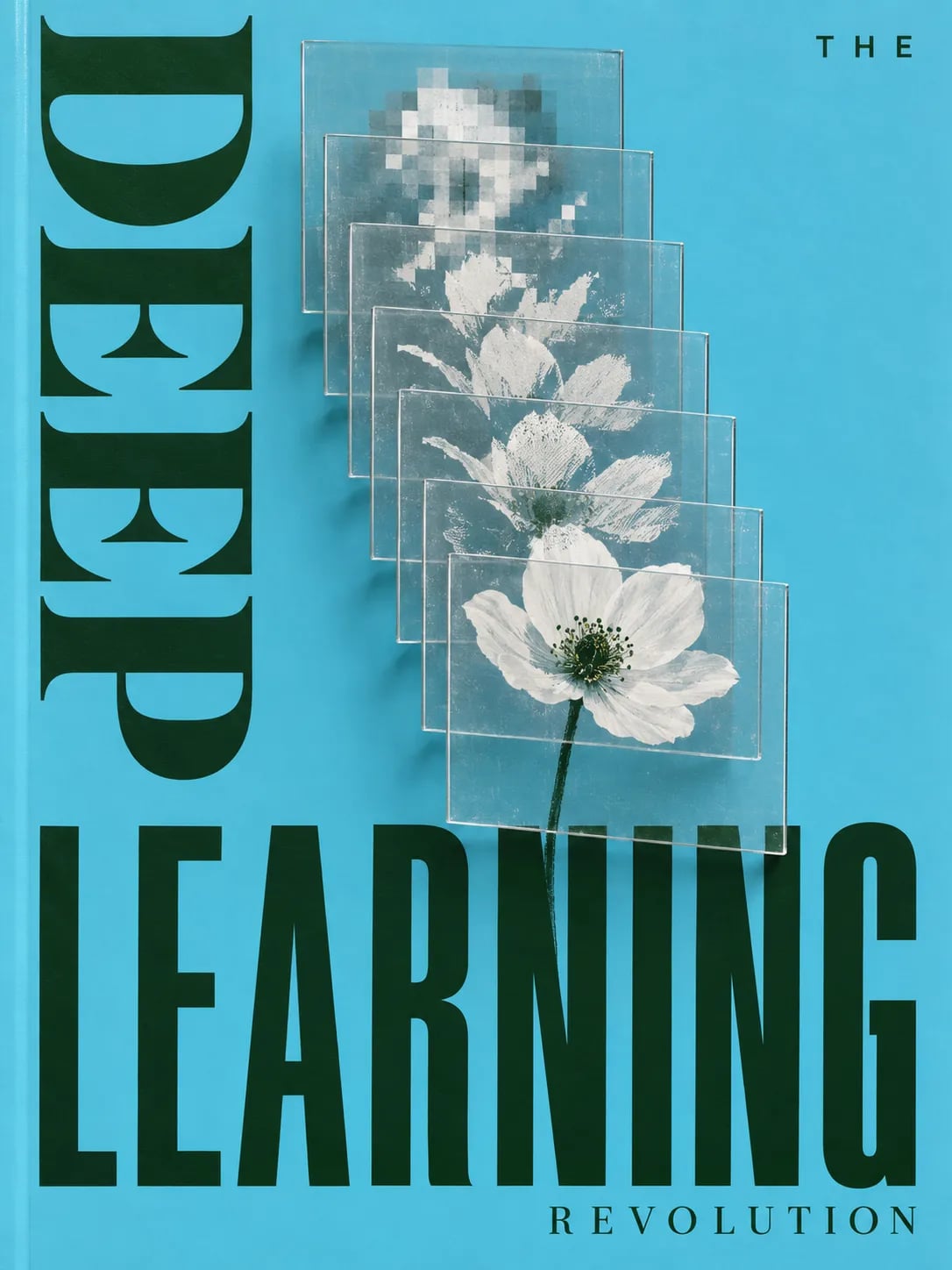
Terrence J. Sejnowski's "The Deep Learning Revolution" offers a firsthand account of the transformative journey of artificial intelligence, from its contentious origins to its current global impact. The book guides readers through the pivotal conceptual advancements and the community of researchers who pioneered deep learning and neural networks. It illuminates how biologically inspired learning algorithms, fueled by abundant data and increasing computational power, have enabled breakthroughs in fields like speech recognition, language translation, self-driving cars, and medical diagnosis. Sejnowski explores the technological and scientific implications of this revolution, contemplating the future of machine intelligence and its profound societal shifts. This insightful narrative provides a comprehensive understanding of how deep learning is reshaping our world and challenging long-held intuitions about intelligence.
Press play to hear the insight read aloud. Each word highlights in sync with the narration.
Intro
Prepare to embark on a journey through one of the most transformative periods in human history, the era of intelligence reimagined. For centuries, the nature of intelligence from the simplest bacterial forms to our own intricate human minds has remained a profound mystery, each uniquely adapted to its niche. Now, we stand at the precipice of a revolution, as artificial intelligence begins to take its place on this vast spectrum, potentially offering a fresh lens through which to comprehend the very essence of biological intelligence itself. This is not merely a tale of technological advancement, but a deeply human story of persistence, insight, and the profound shifts occurring in our world.
1. The Unfolding Revolution of Machine Learning
The Unfolding Revolution of Machine Learning In recent years, a remarkable shift has occurred in the world of artificial intelligence, driven by a concept known as deep learning. If you've ever used voice recognition on a phone or Google Translate, you've engaged with these sophisticated systems. This powerful technology has generated immense profits from major companies, enabling them to fund ambitious futuristic projects. The progress stems from insights inspired by how brains function, particularly how neurons communicate and adapt through experience. While early network models were small, today's systems boast millions of artificial neurons and dozens of layers, achieving breakthroughs on problems once deemed intractable. This leap forward was made possible by persistence, vast amounts of data, and significantly more computing power. We often underestimate the future impact of new technologies. Just as the internet reshaped nearly every aspect of daily life, the full scope of deep learning and artificial intelligence remains beyond our current imagination.
Continue reading with the cont. app
The full chapter-by-chapter breakdown is waiting for you in the app.
Continue readingThe central theme of the revolution is a profound shift in artificial intelligence (AI) from explicitly programmed, rule-based systems to intelligent systems that learn directly from vast amounts of data. Early AI efforts, often characterized by handcrafted rules and logical reasoning (e.g., Blocks World, expert systems like MYCIN), proved cumbersome and brittle when applied to complex, ambiguous real-world problems like vision or common sense. The intuition that human-easy tasks like seeing would be easy for computers proved misleading, leading to an "AI winter".
Early Inspirations from Biology: The understanding that the brain excels at pattern recognition and general-purpose learning from experience, rather than explicit rules, provided crucial clues. The brain's massively parallel architecture was also a key insight.
The Perceptron: Introduced by Frank Rosenblatt, this early neural network model could learn to classify patterns from examples by adjusting "weights". While initially limited to linearly separable categories, it laid the groundwork for future deep learning.
The Hopfield Net: John Hopfield introduced a type of recurrent neural network that could store and retrieve memories as "attractor states". This mathematically guaranteed convergence for a complex nonlinear network was a major breakthrough.
The Boltzmann Machine: Developed by Geoffrey Hinton and Terry Sejnowski, this multilayer network model proved that learning was possible even with "hidden units". It learned probability distributions and could even "go to sleep" to learn, mirroring biological processes.
Backpropagation of Errors (Backprop): While the Boltzmann machine was powerful, David Rumelhart, Geoffrey Hinton, and Ronald Williams developed backprop, a more efficient algorithm for training multilayer feedforward networks. This allowed networks to learn intricate "representations" and enabled faster progress. NETtalk, a network that learned to pronounce English text, was an early, impressive demonstration of backprop's capabilities, even babbling like a baby.
Convolutional Networks (ConvNets): Inspired by the hierarchical organization of the visual cortex, ConvNets drastically improved object recognition by using local receptive fields, shared weights, and pooling layers for translation invariance. AlexNet's dramatic reduction in error rate in 2012 marked a turning point, rapidly accelerating development in computer vision.
Big Data: The explosion of digital information, accumulating in massive data centers, became the "fuel" for training large deep learning networks. Companies like Google and Facebook leverage petabytes of data to create "external intelligence".
Increased Computational Power: Advancements in microprocessors (Moore's Law) and the development of special-purpose chips like Google's Tensor Processing Unit (TPU) provided the necessary processing power to handle compute-intensive deep learning applications efficiently. Neuromorphic chips, inspired by the brain's energy efficiency, represent a future direction for specialized hardware.
New Algorithms (beyond basic backprop): Innovations like dropout (a regularization technique to prevent overfitting), Long Short-Term Memory (LSTM) for handling temporal sequences and long-range dependencies in data like language and music, and Generative Adversarial Networks (GANs) for creating realistic synthetic data significantly expanded deep learning's capabilities.
Reinforcement Learning: This approach allows systems to learn optimal actions to maximize future rewards through trial and error, as demonstrated by TD-Gammon (backgammon) and AlphaGo (Go). It is believed that dopamine neurons in the brain implement temporal difference learning, a core reinforcement learning algorithm.
Deep learning is profoundly transforming various sectors:
Transportation: Powering self-driving cars, promising increased highway capacity, reduced parking needs, and enhanced safety through collective intelligence.
Communication: Enabling quantum leaps in language translation (e.g., Google Translate's seamless sentences) and achieving human-level performance in speech recognition (e.g., voice assistants like Alexa, Siri, Cortana). This paves the way for real-time cross-cultural communication.
Healthcare: Revolutionizing medical diagnosis by accurately identifying skin cancer, analyzing sleep disorders, and improving genetic data analysis for treatments like cancer immunotherapy. Deep learning combined with human expertise can achieve near-perfect diagnostic accuracy.
Finance: Driving automated trading, improving credit evaluations, predicting market trends from social media, and enhancing biometric security.
Legal Profession: Automating routine tasks like document review and compliance, potentially making legal advice more accessible and faster.
Gaming: Achieving superhuman performance in complex games like poker (DeepStack) and Go (AlphaGo), even learning from scratch without human input (AlphaGo Zero).
Science: Vastly amplifying traditional approaches to data analysis in fields like physics and astronomy.
Education: Offering promise for personalized learning through digital tutors, freeing teachers for emotional support and intellectual inspiration. Massive Open Online Courses (MOOCs) like "Learning How to Learn" leverage insights into how the brain learns to improve study skills. Brain training games can also improve cognitive and motor skills.
Social Robots: Advancements in facial expression analysis and human-robot interaction are leading to more empathetic and engaging social robots.
Ethical Concerns: The "black box" nature of deep learning systems, where reasoning isn't easily explained, raises concerns in critical applications like medicine. Biases in training data can lead to discriminatory outcomes. Defining cost functions to incorporate fairness alongside profit optimization is crucial.
Job Market Transformation: While some routine jobs may be automated (e.g., bank tellers, paralegals), new jobs requiring different skills are also created. The shift highlights the need for lifelong learning and continuous skill renewal.
Human-AI Partnership: The book advocates for a future where humans and machines work together as partners, leveraging their respective strengths (e.g., expert diagnosis combined with deep learning).
Defining Intelligence: Deep learning's success challenges traditional notions of intelligence, suggesting it is fundamentally about learning and pattern recognition, rather than strict logic or rules.
Future Trajectory: While AI is evolving at "warp speed" compared to human evolution, it's still far from human-level general intelligence, especially common sense, emotion, and empathy, which are deeply embodied and developed through rich interaction with the world. Continued research is needed to explore the vast "space of learning algorithms" and to integrate more brain-inspired functions for greater autonomy. The ongoing investment by nations like China underscores the global race in AI development.
The book emphasizes that "nature is cleverer than we are," as many of the successful deep learning algorithms and architectures echo solutions found in biological brains evolved over millions of years.
More like this
Editorial insight by cont. Not affiliated with, endorsed by, or sponsored by the author or publisher. Buy or borrow the full book at Amazon.