A Life on Our Planet
David Attenborough
20m15 ch
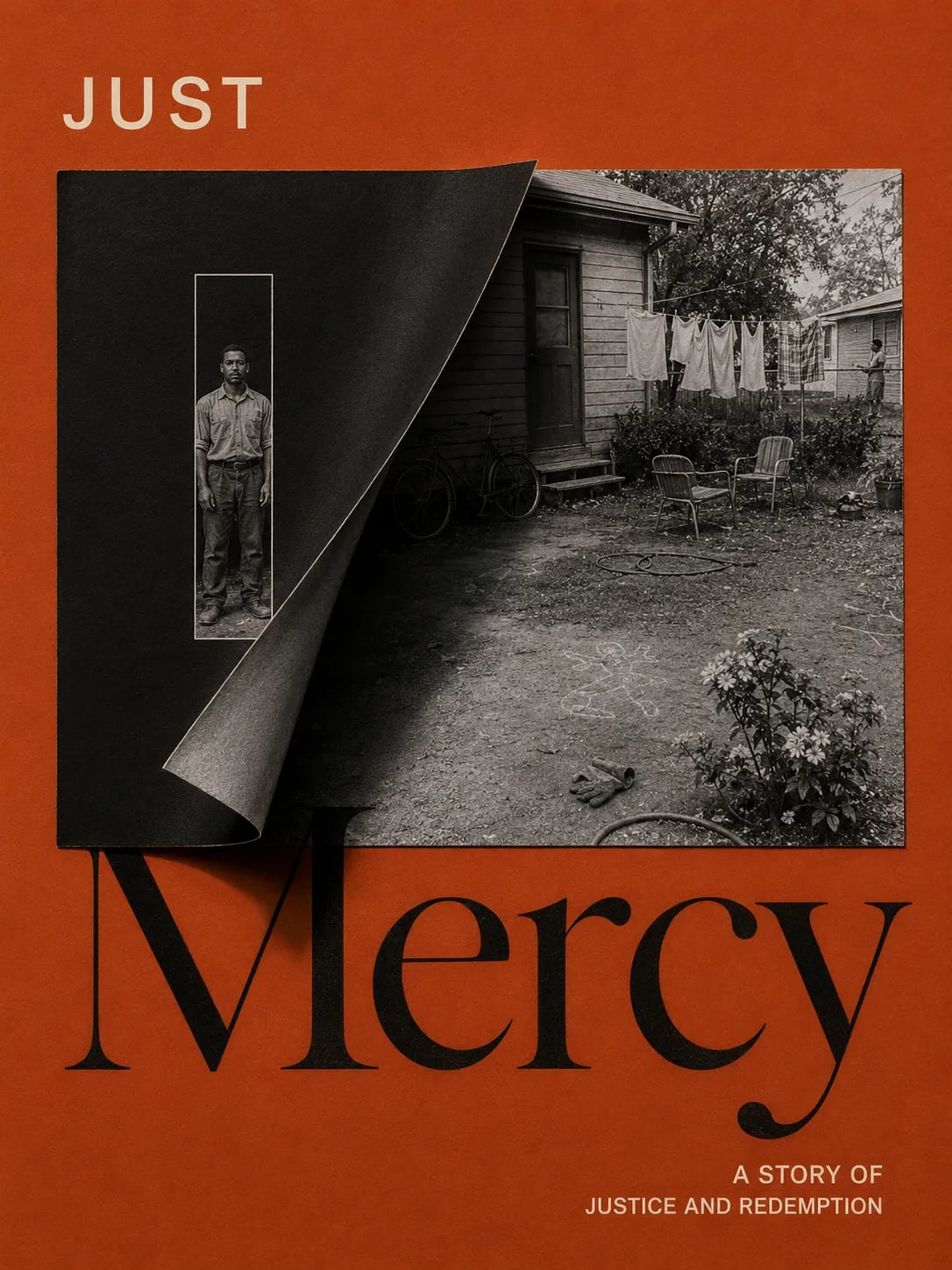
Bryan Stevenson, a young Harvard Law student, unexpectedly finds his calling working with condemned prisoners on death row in Georgia. This experience, particularly meeting Henry, profoundly shifts his understanding of justice and humanity, compelling him to dedicate his life to legal advocacy for the marginalized. The book vividly recounts Stevenson's fight for innocent individuals like Walter McMillian, wrongly convicted and sentenced to death in a racially biased system. Through their stories, it exposes the systemic brokenness of American criminal justice, highlighting issues of poverty, racial inequality, and the extreme punishment of children and the mentally ill. Readers witness the human cost of mass incarceration and learn the importance of proximity, mercy, and challenging injustice, even when confronting overwhelming odds and personal threats. Ultimately, the narrative reinforces the profound impact of compassionate engagement on both victims and advocates within a deeply flawed system.
Press play to hear the insight read aloud. Each word highlights in sync with the narration.
Intro
A narrative that dives into the deepest currents of American justice, tracing an intensely personal journey through the crisis of mass incarceration and extreme punishment. It is a story rooted in the conviction that true understanding of injustice requires proximity to the condemned, the wrongly accused, and the disfavored. This account reveals how readily fear, anger, and distance allow society to condemn the most vulnerable, creating a staggering system of imprisonment that has no historical parallel. Today, the United States holds the highest rate of incarceration in the world, having seen the prison population skyrocket from 300 ,000 in the early 1970s to 2 .3 million people today. Through harrowing legal battles fought for the lives of men, women, and children trapped on death row, this journey reveals a humbling truth. The measure of our character is not determined by how we treat the rich, the powerful, or the respected, but by how we treat the poor, the accused, the incarcerated, and the condemned. This work is guided by the profound belief that love is the motive, but justice is the instrument.
1. The Astonishing Gift of Higher Ground
The Estonishing Gift of Higher Ground The commitment to this work began in 1983 during an internship while I was a 23 -year -old student at Harvard Law School. I was profoundly inexperienced and worried that the condemned man I was to visit would be disappointed to see me. My legal studies, despite being motivated by issues of poverty and racial inequality, had felt esoteric and disconnected from the real world. My destination was Georgia's death row in a remote prison outside Jackson, Georgia. My terrifyingly simple job was to deliver one message to a prisoner who had been isolated for over two years. He would not be killed for at least a year. The man Henry was overcome with relief, gripping my hands tightly. We sat and talked for three absorbed hours, bonding over life, family and music, shattering the intense anxiety I felt. When the guard finally intervened, he was angry, roughly shackling Henry's hands and ankles so tightly, Henry grimaced in pain. As the officer shoved him toward the door, Henry resisted the humiliation by tilting his head back, closing his eyes and singing in a tremendous, clear, baritone voice. The song, an old hymn, was Lord plant my feet on higher ground. This powerful conviction and astonishing measure of his humanity altered my understanding of redemption and hopefulness. Proximity to the condemned made the question of each person's humanity urgent and meaningful, motivating me to plunge deeply into the study of law related to race, poverty and power.
Continue reading with the cont. app
The full chapter-by-chapter breakdown is waiting for you in the app.
Continue readingIntroduction to the Fight for Justice The narrative begins with Bryan Stevenson's early, disorienting experience as a law student interning in Georgia, where he first encountered a condemned man on death row. This initial exposure to the realities of capital punishment and the desperation of incarcerated individuals profoundly shifted his academic focus, making abstract legal studies deeply relevant. He was particularly influenced by his grandmother's insistence that "You can’t understand most of the important things from a distance... You have to get close". This principle of "getting close" became a guiding philosophy for his life's work. It underscored the belief that "the true measure of our character is how we treat the poor, the disfavored, the accused, the incarcerated, and the condemned". This conviction led him to return to the Deep South after law school to found the Equal Justice Initiative (EJI) in Alabama, a nonprofit dedicated to providing free, quality legal services to those on death row and facing extreme punishment.
The Central Case: Walter McMillian Walter McMillian's story serves as a stark illustration of pervasive injustice. Wrongfully convicted and sentenced to death for a murder he did not commit, Walter's case highlighted numerous systemic failures:
Racial Bias and Interracial Relationships: Walter, an African American man, was targeted due to an interracial affair with a white woman, Karen Kelly, which inflamed local prejudices in Monroe County, Alabama. Sheriff Tom Tate reportedly threatened Walter with racial slurs, referencing the lynching of Michael Donald, an African American man in Mobile, further underscoring the racial animosity.
Fabricated Evidence and Witness Coercion: The prosecution's case rested primarily on the inconsistent and coerced testimony of Ralph Myers, a psychologically complex and physically scarred individual who was pressured and threatened with the death penalty himself. Myers initially failed to identify Walter, and his fantastical stories changed multiple times. Another key witness, Bill Hooks, a jailhouse informant, was paid by the sheriff and had charges dismissed in exchange for his false testimony.
Suppression of Exculpatory Evidence: Law enforcement and prosecutors illegally withheld crucial evidence that would have proven Walter's innocence, including multiple recantations from Myers and documentation proving Walter's truck was not a "low-rider" at the time of the murder, contradicting witness testimony.
Judicial Misconduct and Jury Selection: Judge Robert E. Lee Key, despite Walter's unquestionable alibi supported by a dozen witnesses, manipulated the legal process. He moved the trial to a predominantly white county (Baldwin), where the jury was almost entirely white, facilitating a conviction in a racially charged atmosphere. The practice of "judge override" was also critical, where a judge could overrule a jury's life sentence and impose death, as almost happened in Walter's case. This practice was used almost exclusively to replace life verdicts with death sentences.
Pretrial Death Row Confinement: Walter and Ralph Myers were unprecedentedly housed on death row before their trials or convictions, an illegal maneuver designed to coerce testimony. This exposed Walter to the harrowing realities of "Yellow Mama," Alabama's electric chair, and the psychological torment of impending execution.
After years of tireless advocacy by EJI, including compelling new evidence and a highly publicized 60 Minutes broadcast, Walter's conviction was overturned, and he was finally exonerated and released after six years on death row.
Broader Systemic Injustices The book extends beyond Walter's case to reveal systemic problems in the American justice system:
The Death Penalty: It is described as meaning "them without the capital get the punishment". The narrative exposes its arbitrary and disproportionate application to the poor and people of color, as well as its inhumanity through botched executions (e.g., Horace Dunkins, John Evans). The Supreme Court's changing stance on death penalty appeals, moving from heightened scrutiny to a focus on "finality, not fairness," further enabled these injustices.
Juvenile Incarceration: The U.S. has the world's highest per capita rate of juveniles sentenced to death or life without parole, with Alabama being a leading state in this practice. Children as young as thirteen, like Joe Sullivan and Ian Manuel, are condemned to adult prisons, where they face severe trauma, sexual assault, and psychological deterioration due to isolation. The "super-predator" myth of the 1990s, though later debunked, fueled policies that increased children's exposure to adult prosecution. EJI's work led to landmark Supreme Court rulings banning mandatory life-without-parole sentences for juveniles convicted of non-homicide crimes and mandatory life without parole for homicides, recognizing the developmental differences between children and adults.
Mental Illness in Prisons: American prisons have become "warehouses for the mentally ill," often due to a lack of community-based mental health services. Mentally disabled individuals are particularly vulnerable to abuse, solitary confinement, and wrongful convictions due to inadequate legal representation and a system that fails to recognize their special needs. Avery Jenkins's case illustrates how profound mental illness and trauma were overlooked, leading to a death sentence.
Criminalization of Poverty and Women: The book highlights how the justice system disproportionately targets the poor and women, particularly for minor offenses. Women are incarcerated at an alarming rate for nonviolent drug or property crimes, and often for "unexplained deaths" of their children, often stillbirths, due to sensationalized media and a presumption of guilt. Marsha Colbey's story exemplifies this, as she was wrongly imprisoned for the stillbirth of her child.
Victims' Rights and Disparity: While the victims' rights movement gained momentum, the system often disfavors poor and minority victims. Mozelle and Onzelle, the aunts of murder victim Vickie Pittman, experienced indifference from authorities because of their socioeconomic status, highlighting that "some victims are more protected and valued than others". The race of the victim is also shown to be a major predictor of who receives the death penalty.
The Power of Proximity, Brokenness, and Mercy A core philosophical tenet is that "proximity has taught me some basic and humbling truths, including this vital lesson: Each of us is more than the worst thing we’ve ever done". This means that engagement and empathy are crucial for justice, challenging society's tendency to reduce individuals to their worst acts.
The concept of "brokenness" is central: recognizing that everyone is flawed and affected by life's hurts—whether through personal choices, societal injustices, or trauma. This shared human condition fosters compassion, suggesting that embracing one's own brokenness enables the capacity for mercy toward others, even "the undeserving". As Stevenson reflects, "Why do we want to kill all the broken people? What is wrong with us, that we think a thing like that can be right?". Mercy is presented not as a weakness but as a transformative force capable of breaking cycles of victimization and retribution, leading to healing and deeper understanding of shared humanity.
Hope and the Ongoing Struggle Despite the overwhelming challenges, the narrative emphasizes the crucial role of hope – not as naive optimism, but as "an orientation of the spirit" that enables perseverance in seemingly hopeless situations. The successes, like Walter's exoneration and the Supreme Court rulings on juvenile sentencing, offer rays of hope in a system resistant to change.
The book concludes by highlighting the four institutions that have shaped America's approach to race and justice:
Slavery
The Terror Era (post-Reconstruction until WWII, including convict leasing and racial terror lynchings)
Jim Crow (legalized segregation and suppression of rights)
Mass Incarceration (the current system of extreme punishment disproportionately affecting people of color and the poor)
These institutions, poorly understood by many, continue to perpetuate racial bias and injustice. The ongoing work of EJI and other advocates aims not just for legal victories but for a deeper societal transformation—a commitment to justice that acknowledges history, embraces shared brokenness, and extends mercy to all. It poses the profound question: "Do we deserve to kill?".
More like this
Editorial insight by cont. Not affiliated with, endorsed by, or sponsored by the author or publisher. Buy or borrow the full book at Amazon.