
Just Mercy
Bryan Stevenson
15m16 ch
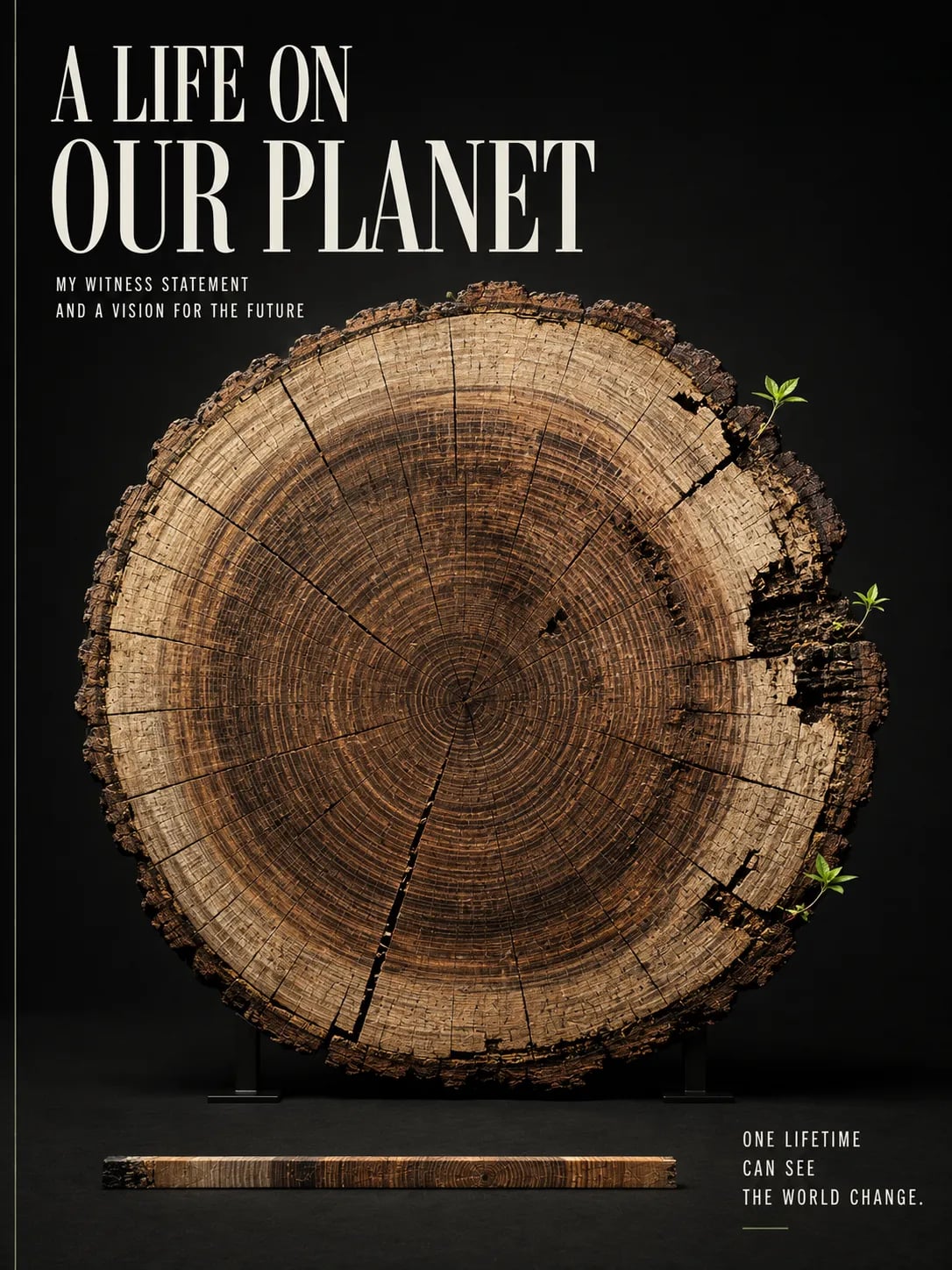
A Life on Our Planet by David Attenborough presents a deeply personal witness statement of the natural world's profound decline over his 94-year lifetime. It asserts that humanity's rapid, unsustainable expansion, termed the "Great Acceleration," has led to a catastrophic "Great Decline" in biodiversity and planetary stability. The book starkly warns of an impending environmental breakdown, far more destructive than past disasters, threatening the Earth's life-sustaining services. However, it pivots to offer a hopeful and detailed vision for the future, demonstrating how humanity can rewild the world and achieve a sustainable coexistence with nature. Attenborough outlines actionable solutions, including transitioning to clean energy, adopting plant-based diets, restoring marine and terrestrial ecosystems, and stabilizing human population through global social development. Ultimately, the book empowers the reader by showing that a healthy, rewilded planet is not only possible but within our grasp, requiring collective will and a fundamental shift in our relationship with the natural world.
Press play to hear the insight read aloud. Each word highlights in sync with the narration.
Intro
This is a story of a life lived, witnessing profound change across our planet. It is a journey through time, observing the natural world in all its immense variety and wonder, and seeing, with one's own eyes, a spiraling decline. But more than that, it is a statement of what lies ahead if we continue on our current path, and crucially, a hopeful vision for a future where humanity can yet mend its ways, restore balance, and thrive in harmony with the living world.
1. The Haunting Silence of Pripyat
– The Haunting Silence of Pripyat Imagine a town once vibrant with almost 50 ,000 people, now utterly desolate, its buildings crumbling and silent. This is Pripyat in Ukraine. A modernist utopia built for engineers and scientists in the 1970s emptied overnight on April 26, 1986, when reactor number 4 of the nearby Chernobyl nuclear power plant exploded. This catastrophic event, born of bad planning and human error, released 400 times more radioactive material than the Hiroshima and Nagasaki bombs combined, contaminating much of Europe and breaking into the food chain. Pripyat stands as a monument to humankind to create worlds and then to destroy them. Yet, this isn't the most costly environmental catastrophe in history. A far greater, silent tragedy has been unfolding globally, barely noticeable day -to -day for the last century, the spiraling decline of our planet's biodiversity. This decline, driven by widespread human error and a damaging lack of care, threatens to destabilize and collapse everything we rely upon. We now live our comfortable lives in the shadow of this self -made disaster.
Continue reading with the cont. app
The full chapter-by-chapter breakdown is waiting for you in the app.
Continue readingI. Our Current Predicament: The Great Mistake
Pripyat as a Warning: The abandoned city of Pripyat, near Chernobyl, is a powerful symbol of humanity's capacity to create and then destroy, resulting from bad planning and human error. It also demonstrates nature's profound resilience, as the forest has reclaimed the deserted city.
The Holocene Era: For the past 10,000 years, Earth has experienced an unprecedented period of environmental stability (global temperature variations of less than 1°C). This stability was crucial for human civilization to flourish, enabling agriculture and the development of complex societies. This "Garden of Eden" was maintained by the planet's rich biodiversity, including vast forests, phytoplankton, and grazing animals, which regulated greenhouse gases and helped reflect sunlight.
The Great Acceleration: Since the 1950s, human activity has seen an exponential surge in consumption and environmental impact, likened to bacteria overpopulating a sealed dish. This period has led to the "spiralling decline of our planet’s biodiversity," which is considered "the true tragedy of our time" because it destabilizes Earth's essential life-support systems.
Planetary Boundaries Breached: Earth system scientists have identified nine critical thresholds that define a "safe operating space" for humanity. We have already pushed through four of these: disrupting nitrogen and phosphorus cycles, converting natural habitats to farmland, rapidly warming the Earth, and causing biodiversity loss at a rate over 100 times the average. Climate change and biodiversity loss are identified as "core boundaries".
A New Perspective: The Apollo 8 photograph of Earth from space in 1968 profoundly changed human perception, revealing our planet as "small, isolated and vulnerable," with an "edge to our existence".
Shifting Baseline Syndrome: Over generations, we have forgotten the true richness and abundance that nature once provided, becoming accustomed to an "impoverished planet".
II. What Lies Ahead: The Great Decline
Forecasted Catastrophes: If current trends continue, the living world is predicted to collapse with increasing speed, leading to profound and irreversible damage within the lifespan of someone born today. This is the "Great Decline," an "equal and opposite reaction" to the Great Acceleration.
2030s: The Amazon rainforest is predicted to reach a tipping point, leading to widespread "dieback," transforming into a dry forest or savannah. This would release over 100 billion tonnes of carbon, cause catastrophic biodiversity loss, and lead to droughts and mass migration. The Arctic Ocean is expected to experience its first ice-free summer, further accelerating global warming.
2040s: The thawing of permafrost in the Arctic is projected to release an estimated 1,400 gigatonnes of stored carbon (four times more than human emissions in the last 200 years), creating a "gas tap" of greenhouse gases that would be impossible to turn off.
2050s: The entire ocean could become sufficiently acidic to trigger a calamitous decline in marine life. Coral reefs, already weakened by bleaching, are particularly vulnerable, with 90% potentially destroyed. This would decimate fish populations, impact plankton, and affect the livelihoods of over half a billion people.
2080s: Global food production on land could reach a crisis point due to exhausted soils, climate-induced failures, and the loss of insect pollinators (affecting three-quarters of our food crops). The risk of new pandemics is also linked to habitat destruction.
2100s: Coastal cities face significant sea level rise, making them uninhabitable, leading to the largest enforced human migration in history. Global temperatures could rise by 4°C, making vast areas unfarmable and potentially leading to global conflicts. The sixth mass extinction would become unstoppable.
III. A Vision for the Future: How to Rewild the World
The Path Forward: Rewilding: To restore stability to our planet, we must restore its biodiversity, which inherently maximizes carbon capture and storage. This requires a return to a philosophy of balance, moving from being "apart from nature" to "a part of nature".
The Doughnut Model: This framework, developed by economist Kate Raworth, serves as a compass for a sustainable future. It defines an "ecological ceiling" (planetary boundaries we must not exceed) and a "social foundation" (minimum human well-being requirements). The goal is a "safe and just future for all" where resources are shared more evenly.
Moving Beyond Perpetual Growth: In a finite world, nothing can increase forever; like natural ecosystems, human society needs to mature and reach a "plateau" where it thrives without demanding perpetual growth.
Green Growth: This concept aims for economic growth with no negative environmental impact, driven by innovation in energy efficiency, clean technologies, and the digital sector. This "sustainability revolution" is already underway with developments like solar power and plant-based foods.
New Measures of Success: Countries are exploring alternatives to Gross Domestic Product (GDP), such as the Happy Planet Index, which combines ecological footprint with human well-being. New Zealand has notably adopted its own index prioritizing "profit, people and planet".
Switching to Clean Energy:
Urgency: Fossil fuels accounted for 85% of global energy in 2019, and we have less than a decade to transition to clean energy to stay within our carbon budget.
Renewable Potential: Solar, wind, waves, tides, and geothermal power are inexhaustible and becoming more affordable.
Overcoming Barriers: While challenges like energy storage and affordability remain, the most formidable obstacle is "vested interests". Solutions include redirecting fossil fuel subsidies to renewables, incentivizing household generation, and implementing a high global "carbon tax".
Nature-Based Carbon Capture: Rewilding the world is a powerful, win-win method of capturing enormous amounts of carbon from the air and locking it away in expanding wilderness, simultaneously increasing biodiversity.
Rewilding the Seas:
Marine Protected Areas (MPAs): Establishing a global network of "no-fish zones" is crucial. These areas allow fish to grow larger and produce disproportionately more offspring, creating a "spill-over effect" that repopulates neighboring waters and boosts fishing catches (e.g., Cabo Pulmo, Mexico).
Smarter Fishing: This includes using trawl nets with escape exits for non-target species, pole-and-line fishing for large predators, banning destructive seabed dredging, and strict monitoring to ensure sustainable yields. Blockchain technology can help trace fish from "dock to dish" to verify sustainable sources.
Sustainable Aquaculture: Best practices in fish farming involve lower densities to reduce disease, vaccinations, feeding predatory fish with agricultural oils and insect protein, and multi-layered farms that utilize waste.
Ocean Forestry: Cultivating fast-growing seaweeds like kelp can capture immense amounts of carbon, provide habitat for marine life, and offer new sources of bioenergy, food, or other products.
Taking Up Less Space on Land:
Problem: Farmland now covers over half of Earth's habitable land, being the single greatest cause of biodiversity loss and greenhouse gas emissions. Industrial farming depletes soils and relies on external inputs, making it unsustainable.
Solutions for More Food from Less Land:
High-Tech & Regenerative Farming: Innovative Dutch farms demonstrate maximizing yield with renewable energy and minimal impact through hydroponics, climate control, and natural pest management. Regenerative farming revives exhausted soils by bringing organic matter back, eliminating tillage, reducing fertilizers, and using cover crops and rotation. This can make abandoned land productive and lock away carbon.
Urban and Vertical Farming: Growing food within cities on rooftops, in abandoned buildings, or vertically stacked layers, using controlled environments and hydroponics, reduces transportation emissions and maximizes space.
Dietary Shift: A global transition to a "largely plant-based diet with much less meat, especially red meat," is essential. Meat production uses nearly 80% of global farmland for only a small fraction of calories.
Alt-proteins: Plant-based alternatives (milk, burgers) and "clean meats" (lab-grown animal tissue) offer sustainable and efficient alternatives to traditional livestock farming.
Impact: These changes could allow humanity to feed itself on just half the land currently farmed, freeing vast areas for rewilding and carbon capture.
Rewilding the Land:
Halting Deforestation: The immediate cessation of deforestation worldwide is crucial, especially in tropical rainforests. We must support nations in benefiting from these forests without losing them, changing the "meaning of value" from pure commercial gain to the immense ecological services they provide.
Valuing Biodiversity: Prioritizing biodiversity inherently maximizes carbon capture and storage. Practices like respectful surveying, sustainable logging, and ecotourism can provide income without reducing biodiversity.
Community-Led Conservation: Empowering local and indigenous communities to lead rewilding initiatives is key, as demonstrated by the Maasai conservancies in Kenya, where communities are choosing to value wild herds over domestic ones for long-term benefit.
Wildland Farms: Farmers can adopt "wildland farm" approaches (e.g., Knepp Estate in the UK). By letting a mix of livestock mimic native communities, biodiversity can explode, capturing carbon and mitigating flooding. Farmers can become "custodians of the wild," deriving income from eco-tourism, clean energy, and carbon trading.
Reintroducing Large Predators: On a large scale, reintroducing top predators like wolves (as in Yellowstone National Park) can trigger "trophic cascades" that restore entire ecosystems, leading to increased biodiversity and carbon capture.
Costa Rica's Success: This nation recovered its forest cover from 25% to 50% in 25 years through government grants for replanting, showing what is possible with the right motivations.
Planning for Peak Human:
Population Stabilization: The world population is still growing, but the growth rate has been slowing since 1962.
Demographic Transition: Nations typically move through stages of development where birth rates fall as societies become more advanced, leading to population stabilization (e.g., Japan).
Speeding the Transition: The best way to stabilize population growth is to help least developed nations improve their living standards rapidly.
Empowering Women: Providing women with education, healthcare, contraception, and freedom of choice is the most significant factor in reducing family size and accelerating the demographic transition. Investing in education globally could bring "peak human" to 8.9 billion by 2060, 50 years earlier than current projections.
Win-Win Solution: Improving people's lives and empowering women aligns with a fair and just future, regardless of its impact on population numbers.
IV. Achieving More Balanced Lives: Our Greatest Opportunity
A Sustainable Lifestyle: In a thriving, sustainable future, daily life would involve a largely plant-based diet, clean energy, sustainable investments, minimal waste, and automated carbon offsetting.
Circular Economy: Mimicking nature's cycles, where "waste from one process becomes the food for the next," by designing products for reuse and recycling.
Food Waste: Globally, one-third of all food produced is lost or wasted. Solutions include improved infrastructure, feeding waste to livestock or insect farms, and converting fibrous waste into bioenergy or biochar to capture carbon.
Technical Cycle: Designing products (plastics, synthetics, metals) to be durable, easily disassembled, and made from recyclable materials. Removing non-recyclable or dangerous chemicals like HFCs.
Green Cities: Cities, where most of the world's population will live, have immense potential for sustainability. By prioritizing pedestrians and cyclists, efficient public transport, centralized heating, and green infrastructure (parks, green roofs/walls), cities can reduce their carbon footprint, purify air, and improve well-being. The ambition is for cities to "give back rather than just take," becoming net generators of renewable energy and hosts of biodiversity.
Global Cooperation: The dangers we face are global and require nations to unite, just as they did for whaling bans and gorilla conservation. We must support international agreements that prioritize the well-being of the entire natural world.
Hope and Wisdom: While nature will recover with or without humanity, we have the intelligence and tools to avert catastrophe. The "Anthropocene" can mark a new, sustainable relationship with the planet. It will require "wisdom" to learn from mistakes and the "will" to implement the solutions and secure a stable, rich, and healthy world for all generations.
More like this
Editorial insight by cont. Not affiliated with, endorsed by, or sponsored by the author or publisher. Buy or borrow the full book at Amazon.