Messy
Tim Harford
17m17 ch
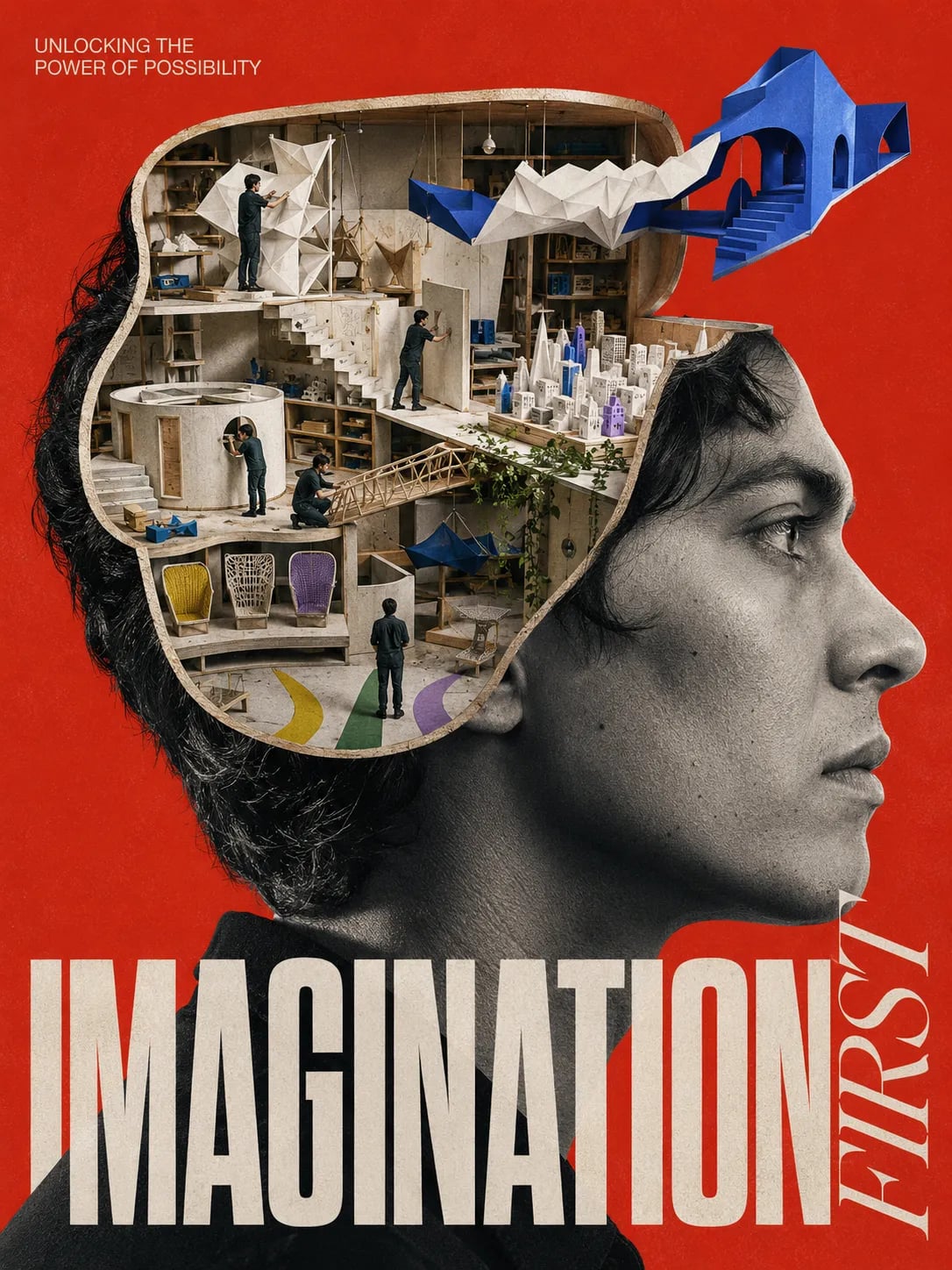
by Eric Liu and Scott Noppe-Brandon
This book argues for prioritizing imagination as the foundational capacity for creativity and innovation. It debunks common myths, asserting that imagination is a malleable skill everyone can develop and should actively cultivate. The authors highlight imagination's critical role in economic vitality, navigating change, forecasting the future, and making education relevant. The text also explores the deep-seated fears that often suppress imaginative thinking. Through a "field manual" of 29.5 practical exercises, readers are guided to overcome resistance and actively apply their imaginative capacities in personal, professional, and societal contexts. Ultimately, the book encourages readers to harness a purpose-driven imagination to foster positive change and unlock a richer world of possibility.
Press play to hear the insight read aloud. Each word highlights in sync with the narration.
Intro
Possibility takes on new meaning when its boundaries are fluid, waiting to be formed, expanded, or rewritten by the strength of human thought. This is not a distant dream, but a potent reality that lies within each of us. This exploration delves into the profound power of imagination, revealing it not as a whimsical luxury, but as the essential spark that ignites innovation, drives progress, and ultimately determines the trajectory of our lives and society. Prepare to embark on a journey that will challenge your perceptions and unlock an extraordinary capacity for possibility you never knew you possessed.
1. The Foundational Spark of Possibility
– The Foundational Spark of Possibility At the heart of all advancement lies imagination, the fundamental capacity to conceive of what is not. It's the ability to conjure new realities and possibilities to look at things as if they could be otherwise. Often, we use words like imagination, creativity, and innovation interchangeably, but they represent distinct phases of a continuum. Imagination comes first, as the initial conception of what does not exist. Creativity is imagination applied, doing or making something with that initial conception. Finally, innovation emerges when an act of creativity advances the form. Without a healthy and well -fed imagination, creativity and innovation simply cannot exist. Imagination is the sign qua non. Sadly, society often suffers from a failure of imagination. Persistent problems like millions without healthcare, communities left in tatters, failing public schools, climate change, and declining economic competitiveness are not primarily failures of will, but rather a lack of collective imagination. We struggle to conceive of what solutions might look like. This is compounded by path dependence, where institutional arrangements become locked in and self -reinforcing, making it difficult to even contemplate alternatives, like the Quirty Keyboard layout. The challenge is to unlearn helplessness and see each moment as a critical juncture for new possibilities. The 9 -11 commission even cited a failure of imagination as a key factor, urging intelligence agencies to routineize imagination. This profound work of routinely cultivating imagination belongs to every one of us, not just extraordinary geniuses, and can lead to entering systemic change.
Continue reading with the cont. app
The full chapter-by-chapter breakdown is waiting for you in the app.
Continue readingThis book, "Imagination First: Unlocking the Power of Possibility," presents a compelling argument that imagination is the foundational human capacity from which all creativity and innovation stem. It challenges common myths about imagination and offers a practical framework for its cultivation, both individually and collectively.
I. The Core Premise: Imagination First
Defining Imagination: Imagination is the capacity to conceive of what is not—things that don't yet exist or aspects of reality we cannot currently perceive. It's about "looking at things as if they could be otherwise".
The ICI Continuum: The book posits an "ICI Continuum" where Imagination comes first, leading to Creativity (imagination applied), which then, if it advances a form, becomes Innovation (novel creativity). Imagination is considered the most critical and foundational element.
Debunking Myths: The book dispels three pervasive myths:
"You either have it or you don't": This is false; everyone has imagination, as evidenced by the ability to dream or ask "what if," and it is completely malleable and can be developed.
"Imagination is a mystery": While poetic, this view allows people to avoid exploring how it works. The process can be demystified and understood through practices.
"Imagination cannot be taught": This resistance often stems from fear—fear of isolation, failure, or admitting personal "stuckness." However, imagination is teachable and cultivable through intentional practices.
II. Why Imagination Matters (The "Why")
Imagination is presented not as a luxury but as an indispensable tool for survival and progress across various domains.
Economic Vitality: It is deemed the greatest domestic renewable resource for maintaining competitive advantage in a global economy where other skills are easily outsourced. Without it, innovation dwindles.
Navigating Change: In a world of accelerating change, imagination helps us unlearn helplessness, see new possibilities, and act as agents rather than victims of change.
Forecasting and Preparation: It allows us to forecast the future beyond mere extrapolation, considering "black swans"—rare, game-changing events—not just as predictions but as preparation for new causal chains.
Educational Relevance: Imagination is the most basic and fundamental aspect of good education, making learning relevant and motivating for students. It prepares students for "What If" rather than just "what".
Overcoming "Path Dependence": We often follow established ways (like the QWERTY keyboard layout) even when better alternatives exist. Imagination allows us to challenge these "givens" and envision new paths.
III. The Resistance to Imagination (The "Fear")
Fear as the "Enemy": Fear is a powerful inhibitor, described as originating in the gut and animal instincts, preceding conscious thought. Confronting fears—of failure, exclusion, isolation, or mockery—is essential to exercising imagination.
"What if is Scary": The words "What if" evoke not only possibility but also danger. As adults, we often prefer a known bad situation to an unknown one, especially when reputation, status, and power are at stake.
Purpose Trumps Fear: A strong sense of purpose can be the force that allows individuals to push through fear and explore uncharted courses.
IV. Cultivating Imagination (The Practices)
The book outlines numerous practices to push through resistance and foster imagination, framed around the Capacities for Imaginative Learning developed by Lincoln Center Institute. These meta-skills include: noticing deeply, embodying, questioning, making connections, identifying patterns, exhibiting empathy, living with ambiguity, creating meaning, taking action, and reflecting and assessing.
Some key practices highlighted:
Make Mist (Ready, get still, go): Encourages seeking stillness and quiet to allow ideas to unfold nonlinearly, trusting in silence and magical thinking.
Leave the Campfire (Know your enemy: it is you, scared): Focuses on naming, facing, and grappling with fears that stifle imagination, driven by purpose.
Flip What's Foolish (Make it wise to be foolish, and every fool will generate wisdom): Creates permission to defy convention and invert inhibitions, making what was once "foolish" expected or even wise.
Think Inside the Box (Make greedy, grateful use of limits): Reverses the common advice, showing that severe limitations (of time, materials) can be powerful prompts for inventiveness and open imagination.
Hoard Bits (Collect obsessively; sift; trust that the right bits will emerge): Advocates for diverse and obsessive collection of information and experiences, allowing new insights to emerge from their recombination.
Mix Your Metaphors (Change the metaphors that frame your reality): Challenges us to reexamine and consciously change the metaphors and narratives that shape our understanding, revealing hidden assumptions and creating new realities.
Swap Bodies (Lose yourself in a role): Encourages deep role-play and perspective-taking, fostering empathy and allowing one to transcend personal limitations and self-judgment.
Make a Gap (Obscure part of the picture): Harnesses the brain's natural tendency to fill in missing information by intentionally obscuring parts of a picture or story, stimulating active imagination rather than passive reception.
Routinize Randomness (Regularly rinse out expectations): Proposes incorporating randomness into routines to scramble expectations and open the mind to new possibilities, as expectations are a great enemy of imagination.
Fail Well (Treat failure like a skill): Urges us to embrace failure as a teacher and an ally, rather than denying or hiding it, and to cultivate discernment between areas where "right" answers are critical and those where exploration is key.
V. The Purposes of Imagination
Ultimately, the book compels readers to consider the purpose to which imagination is put.
Directing Imagination for Good: Imagination, likened to fire, can be used for good or ill. The goal is to orient imagination towards positive purpose, to "add to the sum total of good in the world".
Transforming Reality: By consciously choosing to activate imagination constructively, we can transform challenging situations into beneficial outcomes, converting something negative (like land mines) into something positive (like trees).
Challenging the Status Quo: It encourages us to willfully challenge inadequate realities and societal problems, rather than accepting them as "foreordained" or "always been that way". This requires a "youthful naivete" and a child's habit of running thought experiments.
"Imagination First": The concluding message reinforces that changing oneself and the world, at any scale, demands a purpose-fed, positively charged, playful imagination.
More like this
Editorial insight by cont. Not affiliated with, endorsed by, or sponsored by the author or publisher. Buy or borrow the full book at Amazon.