Ring-tailed lemur
Species of mammal from Madagascar
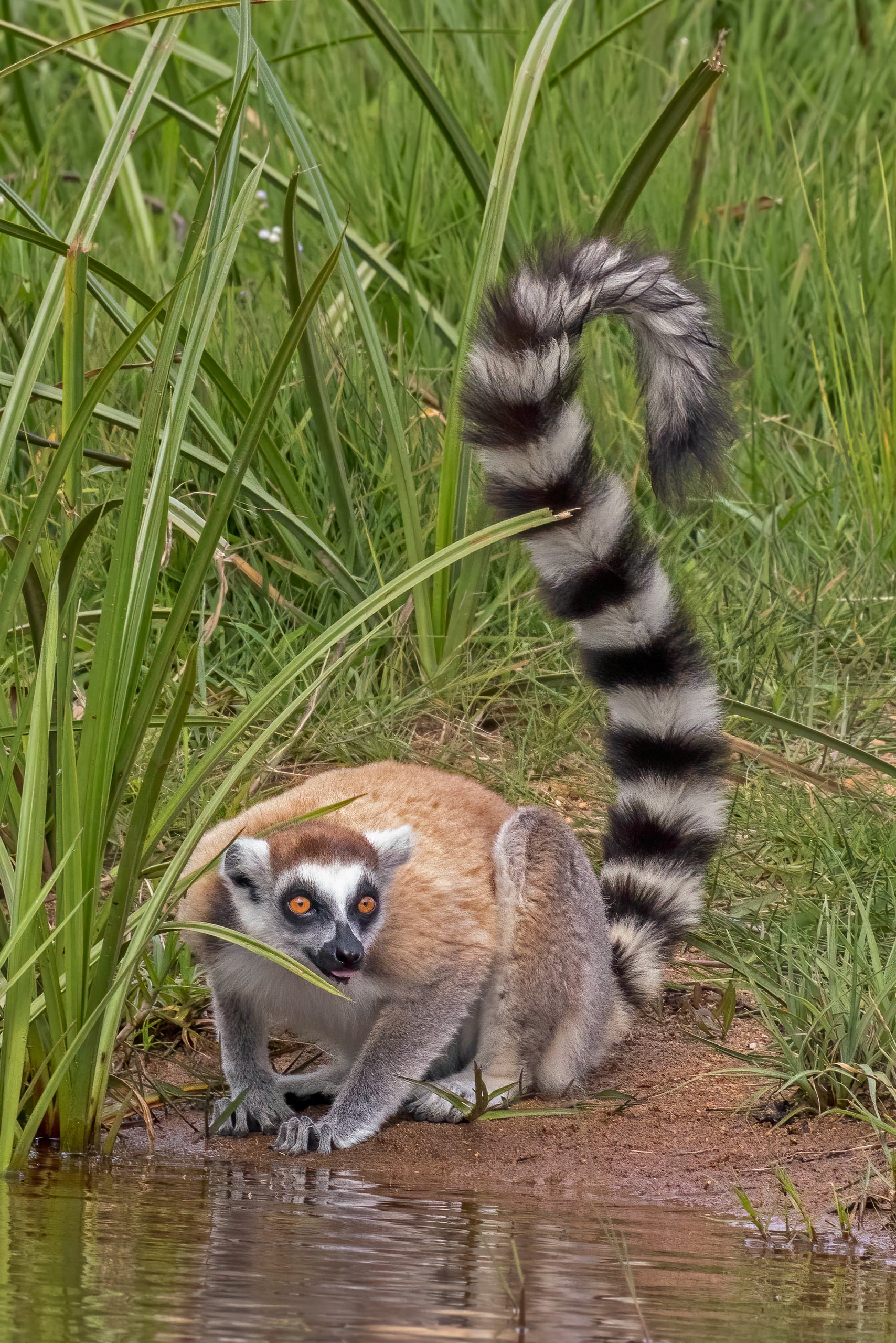
The ring-tailed lemur (Lemur catta) is a medium- to larger-sized strepsirrhine (wet-nosed) primate and the most internationally recognized lemur species, owing to its long, black-and-white, ringed tail. It belongs to Lemuridae, one of five lemur families, and is the only member of the Lemur genus. Like all lemurs, it is endemic to the island of Madagascar, where it is endangered. Known locally in Malagasy as maky ([makʲ] , spelled maki in French) or hira, it ranges from gallery forests to spiny scrub in the southern regions of the island. It is omnivorous, as well as the most adapted to living terrestrially of the extant lemurs.
The ring-tailed lemur is highly social, living in groups—known as "troops"—of up to 30 individuals. It is also a female-dominant species, a commonality among lemurs. To keep warm and reaffirm social bonds, groups will huddle together. Mutual grooming is another vital aspect of lemur socialization (as with all primates), reaffirming social and familial connections, while also helping rid each other of any potential insects. Ring-tailed lemurs are strictly diurnal, being active exclusively during daylight hours. Due to this lifestyle, they also sunbathe; the lemurs can be observed sitting upright on their tails, exposing their soft, white belly fur towards the sun. They will often also have their palms open and eyes gently closed. Like other lemurs, this species relies strongly on their sense of smell, and territorial marking, with scent glands, provides communication signals throughout a group's home range. The glands are located near the eyes, as well as near the anus. The males perform a unique scent-marking behavior called spur-marking and will participate in stink fights by dousing their tails with their pheromones and "wafting" them at opponents. Additionally, lemurs of both sexes will scent-mark trees, logs, rocks or other objects by simply rubbing their faces and bodies onto it, not unlike a domestic cat.
From Wikipedia and its contributors, under CC BY-SA 4.0. Text reformatted for this reading view.