Nile
Major river in northeast Africa
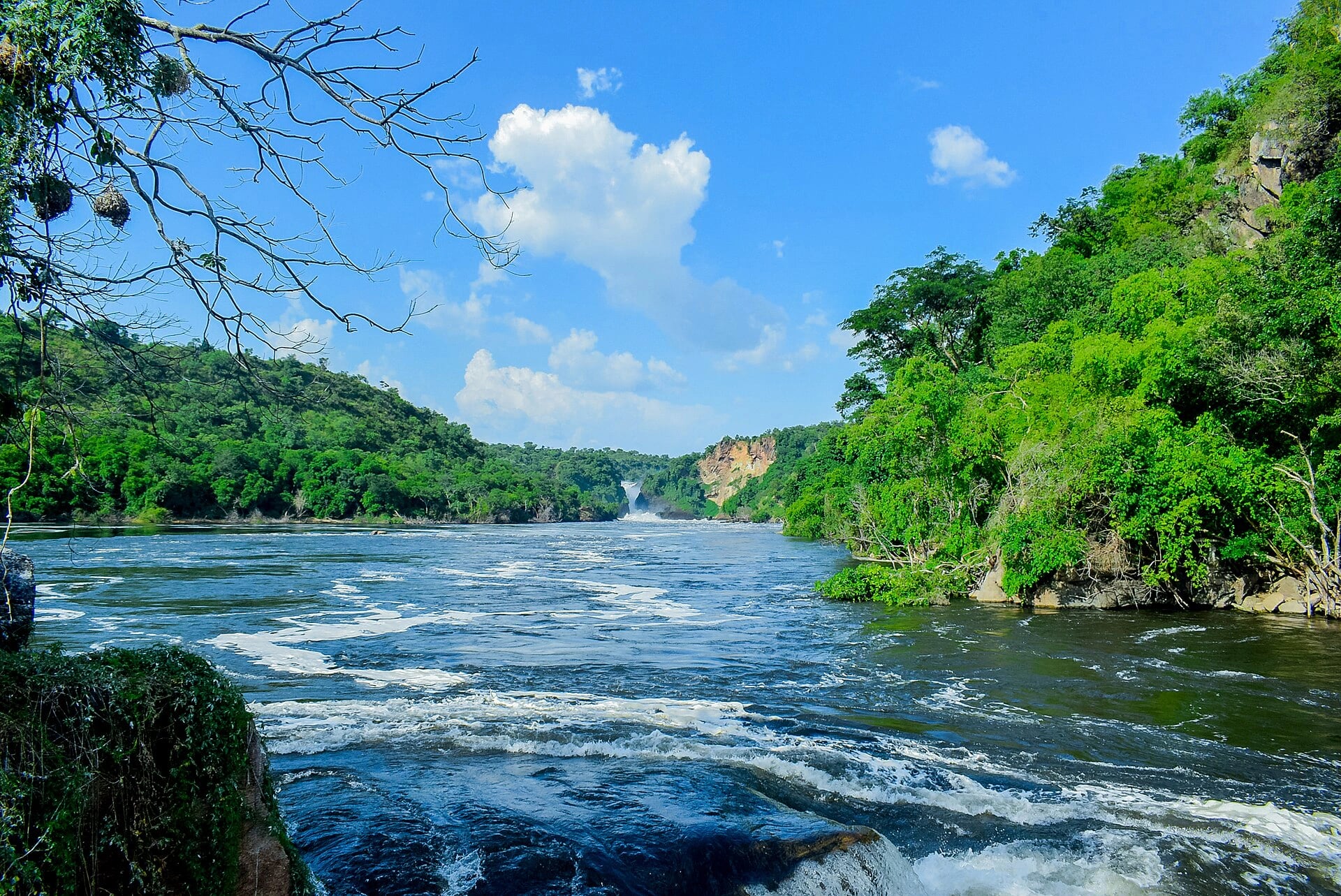
The Nile is a major north-flowing river in northeast Africa which empties into the Mediterranean Sea. At 7,088 kilometers (4,404 mi) long, it is the longest river in the world, although the volume of water it carries is much smaller than other major rivers such as the Amazon or the Congo. The Nile has played a central role in the environmental, economic, and cultural history of Africa for millennia.
The Nile has two major tributaries: the White Nile and the Blue Nile. The White Nile is longer and is considered to be the headwaters, yet the Blue Nile contributes over twice the water volume of the White Nile. The White Nile begins near Lake Victoria and flows through Uganda and South Sudan, while the Blue Nile begins near Lake Tana in Ethiopia and flows into Sudan from the southeast. The two rivers meet at the Sudanese capital, Khartoum. From there, the Nile flows north through the Nubian Desert to Egypt's capital, Cairo, and finally empties into the Mediterranean Sea near Alexandria, where it has formed a large river delta.
From Wikipedia and its contributors, under CC BY-SA 4.0. Text reformatted for this reading view.