Hippopotamus
Species of large semi-aquatic mammal
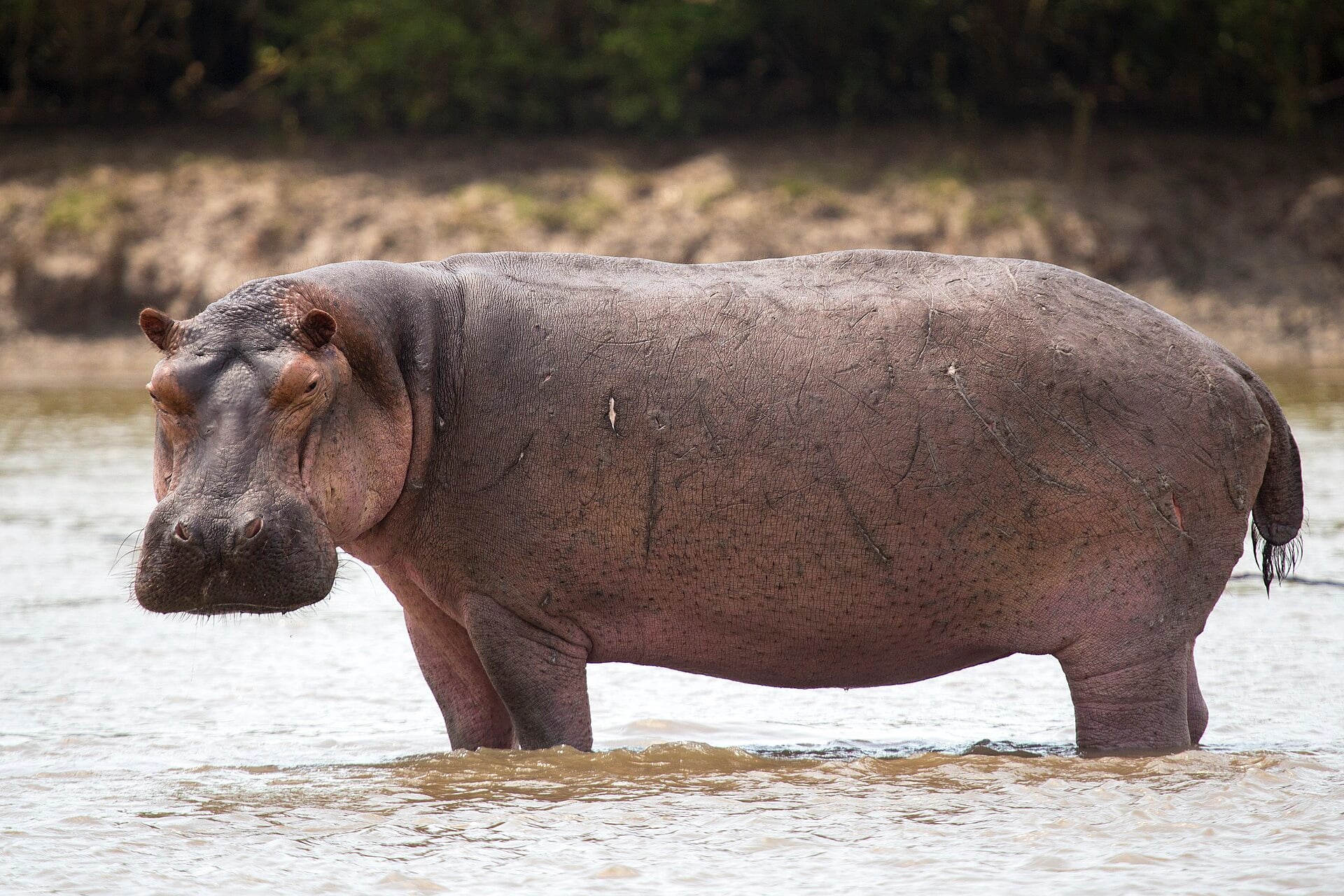
The hippopotamus (Hippopotamus amphibius; ; pl.: hippopotamuses or hippopotami), often shortened to hippo (pl.: hippos), further qualified as the common hippopotamus, Nile hippopotamus and river hippopotamus, is a large semiaquatic mammal native to sub-Saharan Africa. It is one of only two extant species in the family Hippopotamidae, the other being the pygmy hippopotamus (Choeropsis liberiensis or Hexaprotodon liberiensis). Its name comes from the Ancient Greek for "river horse" (ἱπποπόταμος).
After elephants and rhinoceroses, the hippopotamus is the next largest land mammal. It is also the largest extant land artiodactyl. Despite their physical resemblance to pigs and other terrestrial even-toed ungulates, the closest living relatives of the hippopotamids are cetaceans (whales, dolphins, porpoises, etc.), from which they diverged about 55 million years ago. Hippos are recognisable for their barrel-shaped torsos, wide-opening mouths with large canine tusks, nearly hairless bodies, short legs, and large size: adults average 1.5 t (1.7 short tons) for bulls (males) and 1.3 t (1.4 short tons) for cows (females).
From Wikipedia and its contributors, under CC BY-SA 4.0. Text reformatted for this reading view.