Chimpanzee
Species of great ape
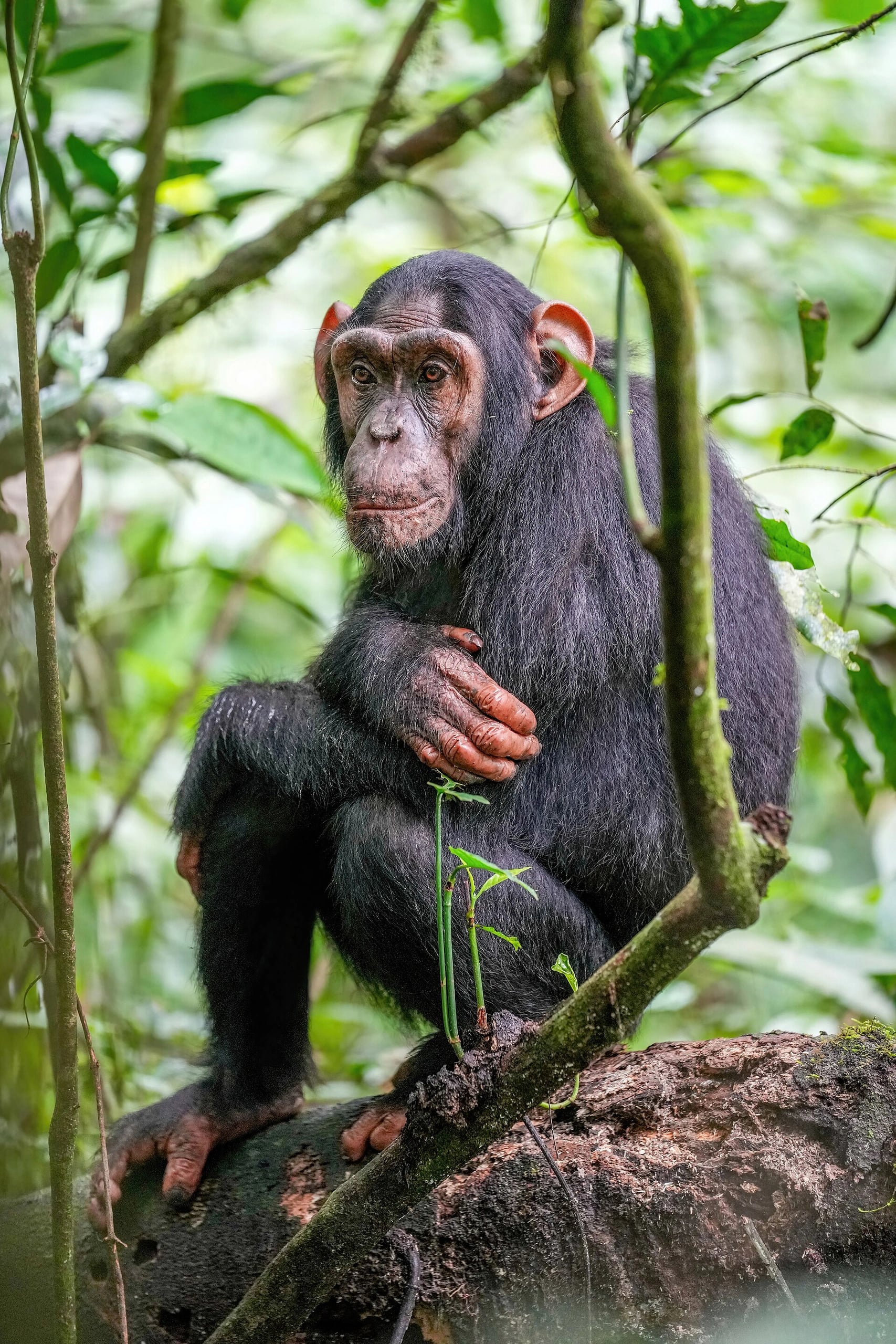
The chimpanzee (; Pan troglodytes), commonly abbreviated to chimp, is a medium-sized great ape species found in the forests and savannas of equatorial Africa. It has four confirmed subspecies and a fifth proposed one. The chimpanzee shares the genus Pan with the bonobo. Evidence from fossils and DNA sequencing shows that the two species are humans' closest living relatives. The chimpanzee is bigger and more robust than the bonobo. It is covered in coarse black hair but has a bare face, fingers, toes, palms of the hands, and soles of the feet.
Chimpanzees primarily eat fruit, but will also consume other plant material, as well as insects and will even hunt smaller monkeys. The species lives in groups which can number over 200 members, although individuals travel and forage in much smaller groups during the day. They live in a strict male-dominated hierarchy, where disputes are generally settled without the need for violence. They will sometimes attack other groups for control of resources and mates. Nearly all chimpanzee populations have been recorded using tools, modifying sticks, rocks, grass and leaves and using them for hunting and acquiring honey, termites, ants, nuts and water. Gestation in the species lasts eight months. The infant is weaned at about three years old but usually maintains a close relationship with its mother for several years more. Chimpanzees communicate with a variety of vocalisations, facial expressions, gestures and body postures.
From Wikipedia and its contributors, under CC BY-SA 4.0. Text reformatted for this reading view.