Benty Grange helmet
7th-century boar-crested Anglo-Saxon helmet
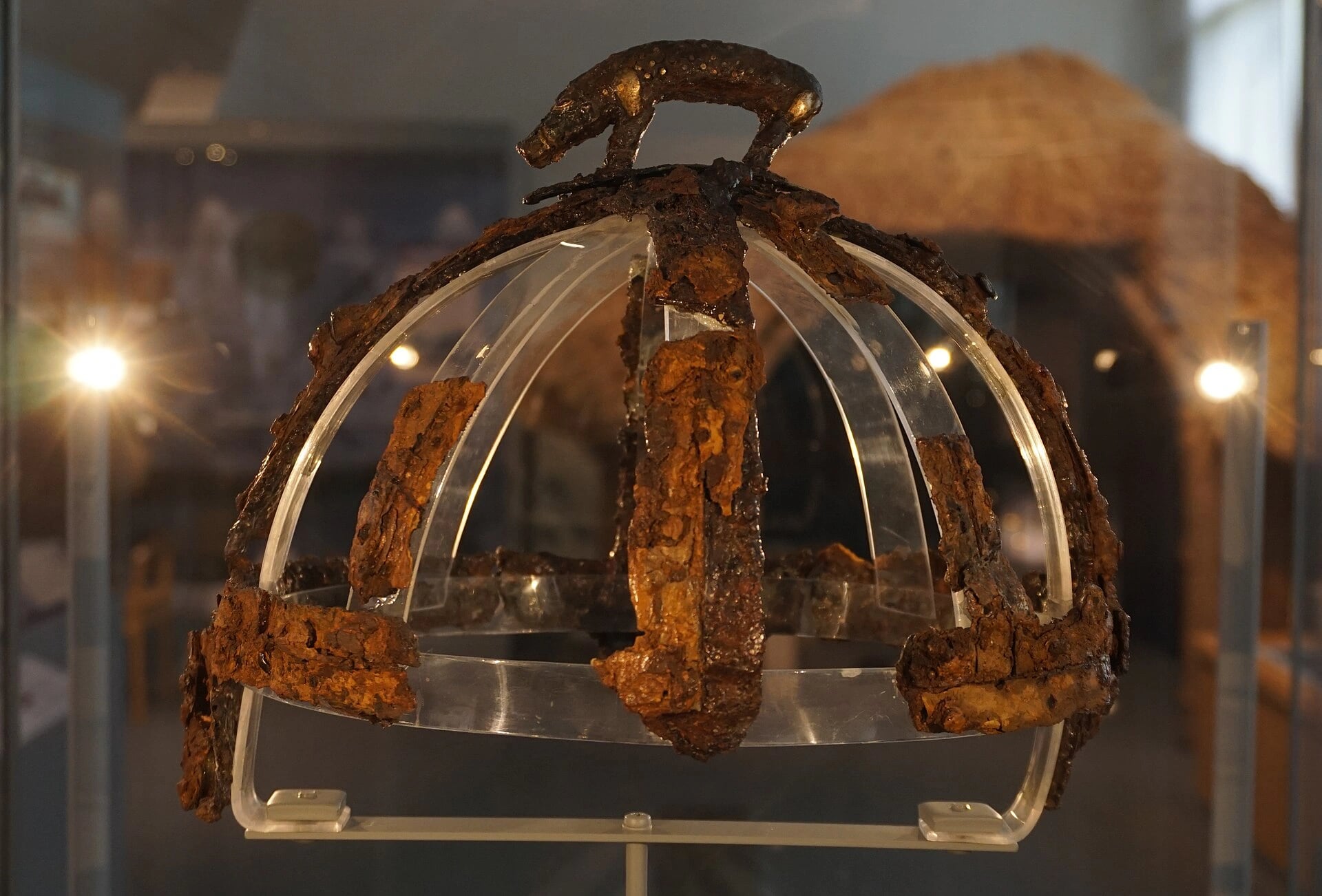
The Benty Grange helmet is an Anglo-Saxon boar-crested helmet from the 7th century AD. It was excavated by Thomas Bateman in 1848 from a tumulus at the Benty Grange farm in Monyash in western Derbyshire. The grave had probably been looted by the time of Bateman's excavation, but still contained other high-status objects suggestive of a richly furnished burial, such as the fragmentary remains of a hanging bowl. The helmet is displayed at Sheffield's Weston Park Museum, which purchased it from Bateman's estate in 1893.
The helmet was constructed by covering the outside of an iron framework with plates of horn and the inside with cloth or leather; the organic material has since decayed. The helmet would have provided some protection against weapons, but was also ornate and may have been intended for ceremonial use. It was the first Anglo-Saxon helmet to be discovered, with five others found since: Sutton Hoo (1939), Coppergate (1982), Wollaston (1997), Shorwell (2004) and Staffordshire (2009). The helmet features a unique combination of structural and technical attributes, but contemporaneous parallels exist for its individual characteristics. It is classified as one of the "crested helmets" used in Northern Europe from the 6th to 11th centuries AD.
From Wikipedia and its contributors, under CC BY-SA 4.0. Text reformatted for this reading view.