Content Rules
Ann Handley and C.C. Chapman
15m20 ch
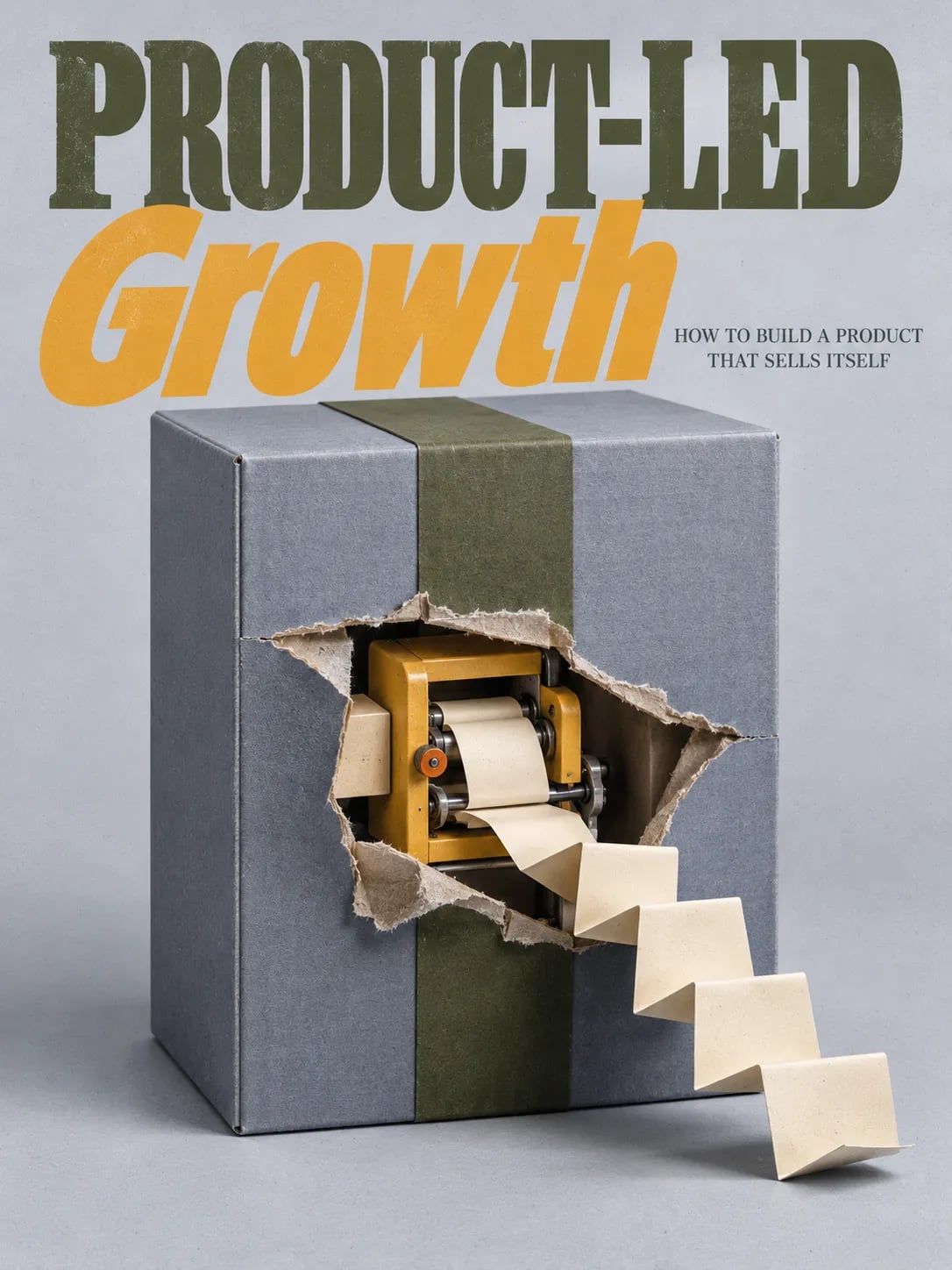
This book guides readers through a fundamental shift in business strategy, advocating for a product-led approach where the product itself becomes the primary driver of customer acquisition, activation, and retention. It presents a clear framework for designing, building, and optimizing this strategy, emphasizing the importance of deeply understanding customer value and delivering it frictionlessly. Readers learn to navigate market dynamics, refine pricing, and implement continuous improvement processes to foster loyalty and maximize revenue. By adopting this methodology, businesses can avoid market disruption, significantly lower costs, and build a sustainable engine for long-term growth. The journey ultimately empowers companies to create products that genuinely improve lives and establish an enduring legacy.
Press play to hear the insight read aloud. Each word highlights in sync with the narration.
Intro
The world of commerce is undergoing a profound transformation, a shift so fundamental it redefines how businesses connect with their customers. Imagine a future where the product itself isn't merely an offering, but the most compelling salesperson, the most patient teacher, and the most reliable guide. This isn't a distant dream, but the undeniable reality emerging before us. It's an invitation to build companies that don't just sell, but truly empower and engage. Where every interaction with your creation becomes a journey of discovery and inherent value. This insightful exploration delves into the heart of this revolution, unveiling an approach that promises not only robust growth, but also a more authentic enduring relationship with those you serve. It's about letting your innovation speak for itself, allowing its intrinsic worth to captivate and draw people in, fostering loyalty and sustainable success in a rapidly changing landscape.
1. The Unstoppable Tides Reshaping Business Growth
one, the unstoppable tides reshaping business growth. The traditional blueprints for attracting and retaining customers are confronting a monumental challenge akin to powerful tidal waves reshaping the very coastline of industry. We are witnessing three seismic shifts that demand a new way of operating. Firstly, the financial burden of scaling a business has skyrocketed. Customer acquisition costs have surged by over 55 % in just five years. While paradoxically, buyers willingness to pay for features has plummeted by 30%. This creates an unsustainable chasm between expenditure and profitability. Secondly, the modern buyer, whether an individual consumer or a seasoned business professional, overwhelmingly prefers to conduct their own research and experience products firsthand, rather than engaging in lengthy sales dialogues. Forester's research indicates that three out of four B2B buyers would rather self -educate than interact with a sales representative. They crave immediate, frictionless interaction and self -service. Lastly, the product experience itself has become an indispensable part of the buying journey. Think of services like Netflix. The entire onboarding and upgrade process is seamlessly handled by the product, requiring no human intervention. The product must now shoulder the crucial task of bringing new users up to speed. These three tidal waves are not fleeting trends. They are here to stay driven by inherent consumer demand. Businesses that fail to adapt risk being swept away by competitors leveraging more efficient product -centric models. While a sales -led strategy might allow for closing high lifetime value LTV, particularly for HyperNiche or entirely new categories, it comes with significant drawbacks. Astronomically high customer acquisition costs, protracted sales cycles, leaky acquisition funnels, when 98 % of marketing -qualified leads never convert. And an organizational structure that often treats the product as an afterthought. In contrast, a product -led approach places every team from marketing to sales, customer success, and engineering at the nexus of product improvement, fostering a culture built around enduring customer value. This dynamic shift empowers companies with shorter sales cycles, dramatically lower -cap, higher revenue per employee, a wider top of funnel, and the capacity for rapid global scaling, giving them a dominant growth engine and a significant competitive advantage.
Continue reading with the cont. app
The full chapter-by-chapter breakdown is waiting for you in the app.
Continue readingI. Core Concept & Importance
What is Product-Led Growth (PLG)? A go-to-market (GTM) strategy using the product as the primary vehicle to acquire, activate, and retain customers. It flips the traditional sales model, giving buyers "keys" to the product to improve their lives.
Why is PLG essential now?
Tidal Wave 1: Rising Costs - Startups are more expensive to grow; Customer Acquisition Costs (CAC) increased over 55% in five years, while willingness to pay dropped 30%.
Tidal Wave 2: Buyer Preference - Buyers prefer to self-educate (3 out of 4 B2B buyers) rather than engage with sales reps.
Tidal Wave 3: Product Experience as Buying Process - Product experiences, like Netflix onboarding, handle the entire journey without human intervention.
Shorter sales cycles, lower CAC, higher Revenue Per Employee (RPE).
Dominant growth engine through wider funnels and rapid global scaling.
Better user experience, as products are built for self-onboarding.
Product-led businesses are valued over 30% higher than public-market SaaS Index Fund.
Organizational Shift: Every team (marketing, sales, customer success, engineering) influences the product to help users succeed and generate enduring customer value.
II. Designing Your Strategy (MOAT Framework)
Decision Framework: Use MOAT (Market Strategy, Ocean Conditions, Audience, Time-to-Value) to choose between Free Trial, Freemium, or Demo models.
Free Trial: Partial or complete product, free for limited time.
Freemium: Access to part of the product, free without a time limit.
Dominant: Do something much better, charge significantly less. Freemium is vital here, requiring significant user volume.
Differentiated: Do a specific job better than competition, charge significantly more (specialization). Works well with free trials and demos, less with freemium due to complexity/market size.
Disruptive: Charge less for a simpler, "inferior" product to over-served customers. Freemium thrives, free trial is an option but weaker.
Red Ocean: Competing for existing demand in crowded markets. PLG is advantageous for widening funnels, decreasing CAC, and global expansion.
Blue Ocean: Creating new market space and demand. May need sales-led initially for education if the product is complex. If there is a quick time-to-value (TTV), PLG can work.
Top-Down: Targets executives, large product rollouts, high ACV, additional services, low churn. High CAC, long sales cycles, poor revenue distribution, product often an afterthought. Sales-led GTM pairs well.
Bottom-Up: Front-line employees adopt in minutes, spreads organically (e.g., Slack). Works almost exclusively with PLG (free trial/freemium). Benefits: Wider funnel, lower CAC, predictable sales, revenue diversity, fast global scale, fast sales cycles. Challenges: Smaller contract size, many non-paying users, significant investment, expertise shortage.
Time-to-Value (TTV): How fast a user experiences a key outcome without assistance. Essential for PLG.
User Types: Optimize for "Spoiled Users" (high motivation, easy to use).
Improve TTV by strengthening motivation (copywriter), eliminating unnecessary onboarding steps.
Control your TTV, unlike ocean conditions.
Launch a new product as a product-led arm to de-risk.
Go freemium with trial upgrades for blocked features (e.g., HubSpot).
Go free trial, then offer freemium if conversion fails (e.g., Nudge.ai).
III. Building Your Foundation (UCD Framework)
UCD Framework: Understand, Communicate, Deliver your value. Skipped steps risk mediocre user experience.
Understand Your Value: Focus on outcomes, not just features.
Functional Outcome: Core tasks (e.g., Google Ads for leads).
Emotional Outcome: How customers want to feel or avoid feeling (e.g., excitement from data insights). B2B buyers are often highly emotional.
Social Outcome: How customers want to be perceived by others (e.g., professional report to executives).
Value Metrics: The way you measure value exchange in your product (e.g., videos uploaded, messages sent). Aligns revenue with customer acquisition.
Good Value Metric Qualities: Easy to understand, aligned with value received, grows with customer usage.
Common Mistake: User-based pricing often kills growth because value isn't always tied to user count (Slack is an exception).
Finding Value Metrics: Subjective analysis (brainstorm & test hypotheses) and Data-Driven Approach (analyze best/worst customer usage patterns).
Communicate Your Value: Upfront pricing is key for PLG.
Pricing Page: Must pass 5-second test.
Avoid Pitfalls: Don't create a free plan with no incentive to upgrade. Don't make it easy for the majority of paying customers to downgrade.
Best-Judgement: Gut-based, least effective.
Cost-Plus: Calculates cost + profit margin. Ignore profit potential for SaaS.
Competitor-Based: Benchmarks off rivals. Assumes competitors did their research (7/10 companies don't).
Value-Based: Bases price on value provided to customer. Best for SaaS, helps define packages and features.
Economic Value Analysis: Break down functional, emotional, social value. Use the "10x Rule" (charge 1/10th of value provided).
Market & Customer Research (Van Westendorp Model): Ask questions to find "too expensive," "expensive," "bargain," "too cheap" points to determine acceptable price range. Ideal to survey customers/Product Qualified Leads (PQLs).
Pricing Page Elements: Value metric, willingness to pay, valued features (leaders, fillers, bundle killers), demographic info.
Deliver on Your Value: Align perceived value (marketing promise) with experienced value (product delivery).
Value Gap: Occurs when perceived value > experienced value, leading to churn.
Ability Debt: Price paid when user fails to accomplish key outcome. Reduce friction ruthlessly (e.g., remove email activation).
Misunderstanding Why People Buy: Not knowing the user's desired outcome leads to showing irrelevant features. Catapult users to the most relevant product area.
Poor Value Communication: Misinforming users about product function or time to results.
Convincing Internally: Get CEO buy-in. Launch an MVP free trial in 24 hours by changing CTA from "Demo" to "Free Trial". Use initial "free trials" for manual qualification, understanding user outcomes, and user testing.
IV. Igniting Your Growth Engine
Common Mistake: Launching a PLG model and never updating it.
Solution: Appoint a dedicated "tiger team" (developer, UX, PM, CS, digital marketer/sales, CEO, CPO/CTO) with ownership and resources to optimize.
Optimization Process (Triple A Sprint): A one-month cycle to rapidly identify problems, build solutions, and measure impact.
1. Analyze: Track macro outputs: Signups, Upgrades, ARPU, Customer Churn, ARR, MRR.
Where do you want to go (goals)?
Which levers can you pull (Churn, ARPU, # Customers)? Focus on Churn > ARPU > # Customers have the biggest impact.
Which inputs should you invest in? Brainstorm ideas based on UCD gaps (understanding, communicating, delivering value). Use ICE (Impact, Confidence, Ease) prioritization.
3. Act: Launch 1-2 high-impact, easy-to-implement ideas (start small, get quick wins).
The Bowling Alley Framework: Onboarding strategy using "bumpers" to guide users to the product's promised outcome.
1. Develop Your Straight Line: Shortest path from sign-up (Point A) to experiencing value (Point B). Map every step, label as Green (necessary), Yellow (advanced, delay), or Red (remove completely). Remove red, delay yellow.
2. Create Product Bumpers: Guide users within the application.
Welcome Messages: Greet, restate value, build motivation, set expectations.
Product Tours: Eliminate distractions, guide through 3-5 important "green" steps, often using "focus mode".
Progress Bars: Show progress, increase motivation by starting partially filled ("endowed progress effect").
Checklists: Break down big tasks, motivate completion (Zeigarnik Effect), use "endowed progress effect".
Onboarding Tooltips: Show how to use features, offer tips, guide towards meaningful value (avoid "tooltip abuse").
Empty States: Guide users through initial setup, prompt actions to achieve quick wins (e.g., Gmail, Buffer).
3. Build Conversational Bumpers: Educate users, bring them back to the app, encourage upgrades, notify features.
Purpose: Educate users, set expectations, meet users where they are, increase motivation.
User Onboarding Emails: (Trigger-based vs. Time-based).
Welcome Emails: High open rate, train audience, set expectations, clear CTA.
Usage-Tip Emails: Nudges for success, direct to specific pages/articles, actionable best practices. Only send if the user hasn't completed the action.
Sales-Touch Emails: Timed for after user experiences value ("success meeting" frame).
Case-Study Emails: Combat objections by telling customer stories of success.
Better-Life Emails: Communicate product benefits (functional, emotional, social) to encourage upgrade.
Expiry-Warning Emails: For free trials, notify users, restate value, make upgrading/canceling easy. Must send if a credit card is required upfront.
Customer-Welcome Emails: Sent immediately upon upgrade; reassure, remind capabilities, set expectations.
Post-Trial Survey Emails: Learn why users didn't convert, trigger follow-up actions (e.g., trial extension, CS call, discount).
Smart Conversational Bumper System: Use signals (Signup, Quick Win, Desired Outcome, Customer) to enroll users into personalized email tracks. Avoid one-size-fits-all.
V. Key Growth Levers
Increase Average Revenue Per User (ARPU): Maximizing revenue from existing customers.
Calculation: Total MRR / Total Users. Define "user" clearly (e.g., Average Revenue Per Paying User).
Why care? Helps determine marketing channels, whether direct sales makes sense, and identifies profitable customers.
Use value metrics in pricing.
Improve pricing tiers (reduce choice to 3 or fewer).
Raise prices (many undervalue elasticity of demand).
Treat best users like royalty, optimize for their conversions.
Upselling (additional features, add-ons) and cross-selling (different products).
Slay Your Churn Beast: Reducing customer loss. Increasing retention by 5% can boost profits 25-95%.
Types of Churn: Customer Churn (number of customers lost), Revenue Churn (MRR lost), Activity Churn (users at risk due to inactivity).
Calculating Churn: (Churned Customers / Total Customers) x 100. Industry benchmarks vary by target audience (SMBs have higher churn than enterprise). Focus on your incremental improvements.
Activity Churn: Unique to each product; requires defining engagement activities (e.g., "projects created"). Weigh events by importance, calculate engagement score, normalize scores (1-100), apply to rank users/accounts, track overall product health.
Measure churn metrics (someone must own it).
Start customers off right with robust onboarding.
Conquer ability debt (remove friction).
Send usage-review emails to showcase value.
Restate value when invoicing (e.g., Zapier).
Create churn-prevention campaigns (remarketing, 1:1 meetings).
Robust cancellation process (survey to learn why customers leave).
Tackle delinquent churn (failed credit cards).
Invest in customer success (proactive help).
Fix pricing (use value metrics).
VI. Conclusion
PLG is how companies like Google, Uber, and Slack became giants by making it easy to experience value.
Consumers demand "try before they buy".
Embrace PLG or risk disruption.
More like this
Content Rules
Ann Handley and C.C. Chapman
Building a StoryBrand 2.0
Donald Miller

GO IT ALONE!
Bruce Judson

Unleash Possible
Samantha Stone
The Attention Economy
Thomas H. Davenport, John C. Beck

The Marketing Playbook
John Zagula and Richard Tong

Ogilvy on Advertising in the Digital Age
Miles Young

Good Is the New Cool
Afdhel Aziz and Bobby Jones
Editorial insight by cont. Not affiliated with, endorsed by, or sponsored by the author or publisher. Buy or borrow the full book at Amazon.